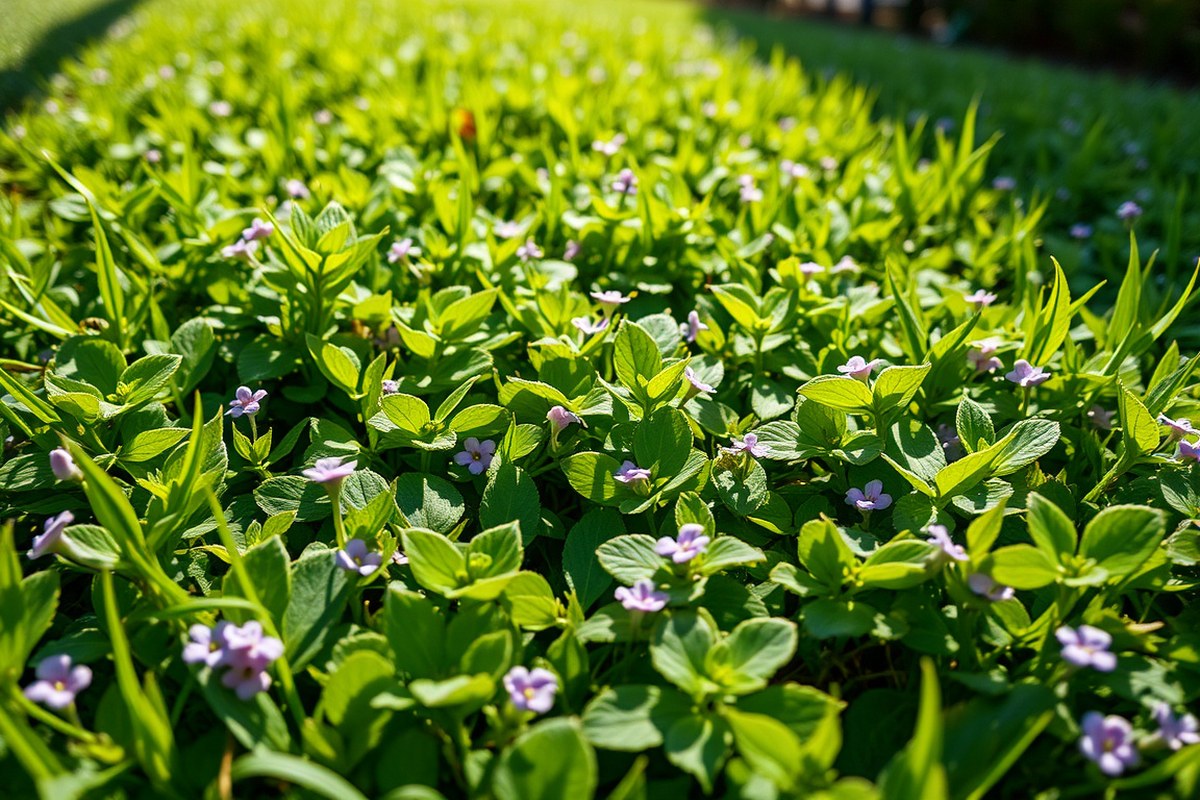
How to Get Rid of Creeping Charlie: 8 Effective Methods and Tips
Getting rid of creeping Charlie requires a combination of strategies: hand-pulling, smothering, and carefully chosen herbicides. Each method suits different levels of infestation and lawn conditions. How to get rid of creeping Charlie effectively also includes maintaining a healthy lawn to prevent its return by proper fertilization, mowing, and watering.
This information is aimed at homeowners and gardeners dealing with this persistent ground ivy. You’ll find clear steps to identify creeping Charlie, stop its spread, remove it safely, and keep your lawn thriving after treatment.
Key Takeaways
- Identify creeping Charlie by its square stem and low-growing vines up to 2 feet long, distinguishing it from similar broadleaf weeds.
- Control creeping Charlie spread by preventing its creeping stems from rooting and damaging lawn roots beneath.
- Use stronger control methods like herbicides in fall when creeping Charlie stores nutrients for winter, and reapply annually as needed.
- Hand-pull creeping Charlie completely, removing roots and runners, preferably when soil is moist for easier extraction.
- Smother creeping Charlie with a 2-3 inch layer of mulch or cover with newspaper, tarp, or cardboard extending 6-12 inches beyond stems to block sunlight.
- Apply broadleaf herbicides with triclopyr, 2,4-D, and dicamba carefully in fall, coating leaves fully and avoiding rain within 24 hours.
1. How to Identify Creeping Charlie and Differentiate It from Similar Weeds
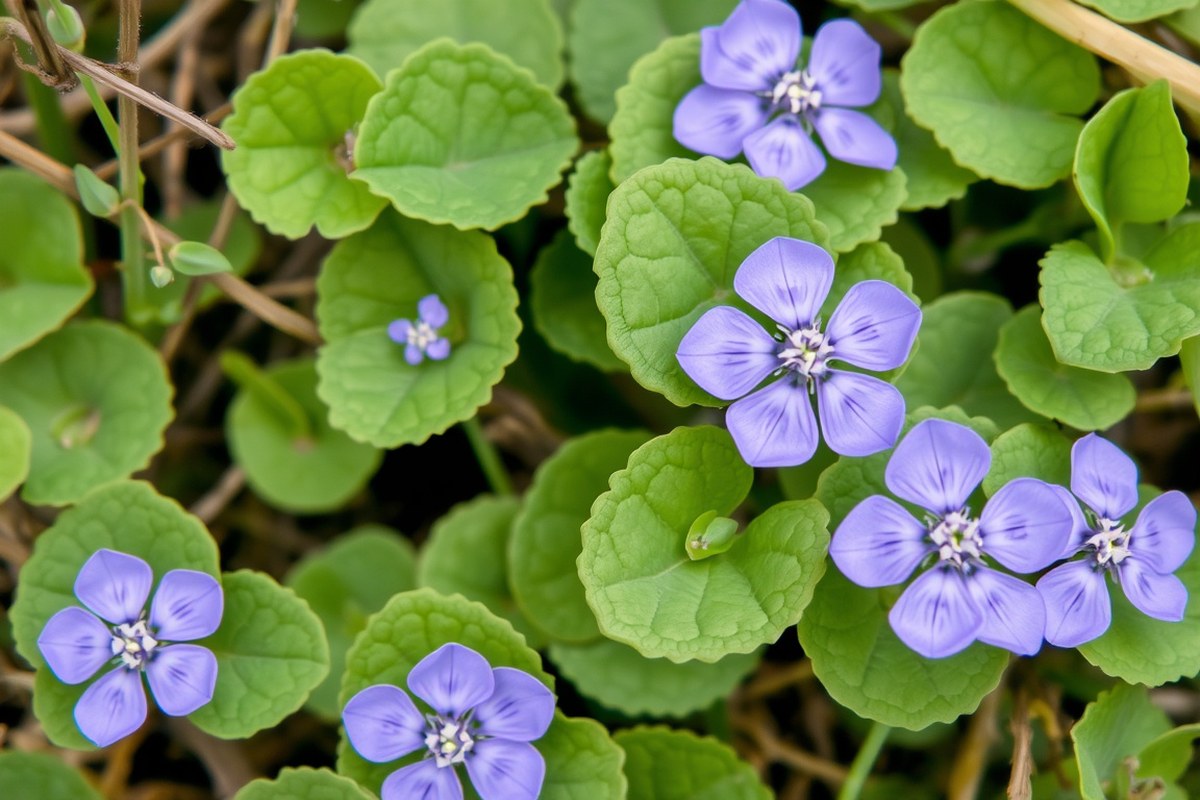
Creeping Charlie, also known as ground ivy (Glechoma hederacea), is a low-growing, perennial weed with distinctive features that make it identifiable if you know what to look for. Its leaves are rounded with scalloped edges and grow on long leaf stalks. The leaf surface has a matte texture, less glossy than similar weeds, and they typically form dense mats across lawns, especially in shady and moist areas. Look for small, tubular flowers in light purple shades appearing in spring and summer, which resemble miniature orchids. These characteristics help confirm you’re dealing with Creeping Charlie.
Differentiating Creeping Charlie from similar weeds like henbit and other ground covers is important before choosing a removal method. Henbit usually has more upright growth with square stems and pinkish-purple flowers that’re a deeper color than Creeping Charlie’s. Henbit leaves are more oblong and less scalloped, often with a hairy texture. On the other hand, ground ivy is sometimes confused with Creeping Charlie due to the overlapping common names. However, ground ivy is actually the same species as Creeping Charlie, it’s just another name for it. Be sure not to confuse it with other ground-hugging plants like deadnettle or violets, which have different leaf shapes and flower types.
Here’s a checklist to identify Creeping Charlie accurately: First, check the leaf shape, rounded with scalloped edges and a matte finish. Second, observe the flowers during spring or summer, they should be light purple, tubular, and clustered. Third, examine growth patterns; Creeping Charlie spreads aggressively in creeping mats rather than upright clumps. Fourth, note the environment, shady, moist lawn areas are its preferred spots. Lastly, compare leaf texture against henbit, which has more elongated leaves with fine hairs and a glossier appearance.
Getting this identification right impacts how you tackle the weed. Misidentifying henbit or other ground covers could lead to ineffective treatments or unnecessary damage to your lawn. Since Creeping Charlie is invasive and adapts well to shade and moisture, it requires persistent attention to control. Look carefully at these features on your lawn, especially if an unknown vine or weed suddenly starts taking over patches of grass. Spending time to confirm you have Creeping Charlie will save effort in the removal phase and help maintain your turf’s health with minimal disruption.
2. How Creeping Charlie Spreads and Damages Your Lawn

Creeping Charlie spreads quickly through multiple methods, making it a persistent problem in lawns and garden beds. Its primary growth mechanism involves creeping underground stems called rhizomes and aboveground stems called stolons that root wherever they touch the soil. This allows it to form dense, carpet-like mats that can expand rapidly across moist, shady areas. Seed production also contributes to its spread, especially along lawn edges near garden beds, fences, tree bases, and hard surfaces. Since it thrives even in conditions where grass struggles, such as damp, shaded spots, it often gains a foothold where lawn grass is less competitive for nutrients and sunlight.
The damage caused by creeping Charlie can be significant if left unchecked. These vigorous mats choke out desirable turfgrass by monopolizing soil nutrients and water. The dense coverage prevents grass from receiving enough sunlight and air circulation, leading to thinning and bare patches in your lawn. Over time, this weakens your turfgrass, reducing its resilience to drought and pests. The weed’s ability to root at any stem node makes it difficult to remove because any small piece left behind can regrow. This resilience means that even aggressive hand-pulling or surface treatments may fail if rhizomes or stolons remain underground.
This persistent growth and spread make creeping Charlie one of the hardest weeds to fully eradicate. Its extensive rhizome network hides below ground, so simply trimming the visible parts won’t stop its expansion. Removing every fragment of root and stem is essential but challenging. Composting pulled plants is risky because seeds and root pieces can survive and spread if wind or animals carry them elsewhere. For effective control, lawn care practices that promote a dense and healthy turf can help prevent creeping Charlie from taking over again. Maintaining mowing heights between 2 and 3.5 inches, depending on your turfgrass type, shades the soil to hinder weed establishment. Proper fertilization and watering also support strong grass growth that competes effectively against the weed.
Avoid composting pulled creeping Charlie since leftover seeds and root fragments can cause it to grow back in new areas.
3. Seasonal Decision Guide: Choosing the Best Removal Method Based on Infestation
Early spring, when temperatures consistently reach 50°F to 65°F, is the best time to start removing creeping Charlie. At this stage, the weed begins active growth, making control efforts more effective. Hand-pulling works well during light infestations, especially on small patches where manual work is manageable and safe for pets and grass. Smothering with a thick barrier such as newspaper or cardboard suits moderate infestations, particularly if you can cover creeping Charlie completely to block sunlight 6 to 12 inches beyond the edges. Large or widespread infestations often require selective herbicides containing triclopyr, applied after mowing to ensure contact with leaves and stems. Regional climate affects timing; cooler northern regions may need to wait until late spring, while warmer southern areas can start earlier. Frequent reapplication of herbicides annually is usually necessary since creeping Charlie can return quickly. The following table outlines a seasonal decision guide for choosing removal methods based on infestation size and lawn conditions:
| Infestation Size | Recommended Method | Best Seasonal Timing | Key Steps | Considerations and Costs |
|---|---|---|---|---|
| Small (isolated patches) | Hand-pulling | Early to mid-spring | Pull by hand when soil is moist for easier removal | Pet safe, minimal cost, labor intensive; repeated sessions may be necessary |
| Moderate (several patches) | Smothering | Late spring to early summer | Cover affected area with layers of newspaper, tarp, or cardboard for 1-3 weeks | Requires materials and effort; effective to starve vines; kills nearby plants under cover |
| Severe (widespread infestation) | Selective herbicide (triclopyr-based) | Late spring to early summer | Mow lawn first, spray creeping Charlie thoroughly, allow 1-2 weeks for effects | Costs vary ($20-$50 per treatment); risk to non-target plants minimized with selective formulas; yearly reapplications recommended |
| Severe with more weed than grass | Nonselective herbicide (glyphosate or glufosinate) | Late spring | Kill all vegetation; permit 2-3 weeks before reseeding lawn | Will kill grass and other plants; reseeding needed; higher possibility of soil exposure to erosion |
Hand-pulling is a safe option but becomes impractical for large areas. Smothering requires consistent covering without gaps to fully starve creeping Charlie, and nearby desirable plants may also die if covered. Using herbicides with triclopyr is effective for heavy infestations and causes less damage to the lawn, but spring applications tend to be more effective than early spring. Consult local extension services for timing adjustments based on your region’s climate, as dryer or cooler areas may require later application for optimal results.
4. How to Hand-Pull Creeping Charlie Effectively and Safely
You can remove creeping Charlie effectively by hand if the infestation is small, but removing all roots is key to prevent it from coming back. Hand-pulling works best when the soil is moist and loose. Regular checks and repeated pulling may be needed because this weed can regrow from any remaining root pieces.
Essential Tools and Safety Gear
Gathering the right tools and safety gear before you start makes hand-pulling creeping Charlie easier and safer. You’ll want to loosen the soil so roots come out more easily and protect your hands from irritation or injury.
- Gardening gloves: Use sturdy gloves to avoid skin irritation from soil or crushed plants and protect against small cuts.
- Garden trowel or hand fork: Helps loosen the soil around the roots for easier removal.
- Weeding tool or dandelion digger (optional): Useful for digging out deeper roots in tougher spots.
- Bucket or garden waste bag: Collect the pulled weeds to prevent spreading seeds or fragments.
- Watering can or hose: Use to moisten soil beforehand, especially if ground is dry and hard.
Step-by-Step Hand-Pulling Process
Follow these steps carefully to hand-pull creeping Charlie thoroughly. Start by preparing the soil and work methodically to remove all roots without breaking them off, which can cause regrowth.
- Moisten the soil: Water the area a day before you pull to soften the soil and improve root removal.
- Loosen soil around the weed: Insert a garden fork or trowel near the base of the plant and gently lift to loosen roots.
- Grasp the plant near the base: Use your gloved hands to firmly hold creeping Charlie at soil level.
- Pull straight up slowly: Avoid snapping the stem to keep roots intact; tugging gently helps get the entire root system.
- Extract any remaining root pieces: Use a hand fork or weeding tool to dig out smaller roots left in the soil.
- Collect and dispose: Place all pulled plants in your bucket or bag to prevent seeds or fragments from spreading.
- Check nearby: Inspect nearby soil for small sprouting runners or seedlings and remove them.
- Repeat weekly: Return weekly to pull new growth promptly, as even one missed root can regrow.
Signs Hand-Pulling Is Working
Effective hand-pulling should reduce and eventually eliminate visible creeping Charlie in your yard, but it takes time. You might see an immediate decrease in weed patches after pulling. However, creeping Charlie can regrow within a week if any roots remain in the soil.
Expect to pull several times over a few weeks, as persistent monitoring is needed. Soil should remain moist so future weeds are easier to remove. Over 3 to 6 weeks of regular pulling, the infestation should significantly decline. If the weed quickly returns or spreads outside your control, combining hand-pulling with other methods may be necessary for full eradication.
5. Using Smothering to Control Creeping Charlie: Materials and Timing
Smothering creeping Charlie works best for small to moderate patches by blocking sunlight and starving the weed. Use durable, opaque materials to cover the area thoroughly and leave them in place for at least 6 to 8 weeks to see significant results. This method suits situations where chemical use is limited or you prefer organic control with less immediate lawn damage.
Choosing Smothering Materials
Opt for thick materials that block all light to prevent creeping Charlie from photosynthesizing. Black plastic sheeting or landscape fabric designed for weed control are the most effective choices. Cardboard or several layers of newspaper also work if properly weighted down, but they may degrade faster and require replacement.
Avoid thin plastic or other materials that let sunlight through, as this will decrease effectiveness. The smothering material should be large enough to cover the entire weed-infested patch with at least a 6-inch overlap onto healthy turf to prevent resurgence along the edges.
Preparing the Area and Coverage
Complete removal of aboveground creeping Charlie growth before smothering improves success. Mowing or hand cutting close to the soil surface reduces the energy the plants can store underground. Make sure to bag and dispose of all trimmings, since any remaining plant material may re-root.
Next, dampen the soil slightly to reduce wind disturbance and help the material lie flat. Cover the patch carefully, securing edges with landscape staples, bricks, or heavy stones to avoid lifting in wind or rain.
- Cut or mow creeping Charlie down to near ground level.
- Bag and discard all trimmings to prevent re-rooting.
- Slightly water the soil to help the material stay flat.
- Lay the smothering material evenly over the affected area, ensuring at least 6-inch overlap onto healthy lawn.
- Secure edges firmly with staples, bricks, or stones.
- Check the covering weekly to make sure it remains in place and adjust as needed.
The edges are where creeping Charlie often escapes, so overlapping the material onto healthy grass is critical to avoid regrowth.
Duration and Monitoring Progress
Keep the smothering material in place for a minimum of 6 weeks, though 8 weeks or longer improves results for tougher infestations. Light deprivation weakens the creeping Charlie’s root system gradually, so patience is necessary.
Regularly inspect the area to confirm no new growth pokes through. If you see surviving patches, consider extending the coverage or combining smothering with hand-pulling or selective herbicide use for a better outcome. After removing the material, reseed bare spots promptly to restore a thick lawn that helps prevent creeping Charlie from returning.
6. Herbicide Options and Safe Application Guidelines
Herbicides containing triclopyr are most effective against creeping Charlie and should be applied in the days right before or after the first frost for best results. Proper application methods and safety precautions are critical to ensure thorough control while protecting yourself and the environment.
Choosing the Right Herbicide Ingredients
Triclopyr is the preferred active ingredient for killing creeping Charlie. It targets broadleaf weeds, effectively reaching roots and preventing regrowth. Postemergence herbicides containing triclopyr work best because they destroy established plants rather than just seedlings. Avoid using vinegar-based solutions since they only kill leaves and do not reach the roots, allowing the weed to return.
Selective herbicides with triclopyr protect your grass by targeting creeping Charlie specifically. Other chemicals like Borax or non-selective herbicides can harm surrounding lawn plants, so they are not recommended for lawn care. Choose products labeled for use on lawns or turfgrass to maintain healthy grass while controlling the weed.
When and How to Apply Herbicides
Apply herbicides containing triclopyr in mid to late autumn, ideally in the days just before or after the first frost. At this time, creeping Charlie moves nutrients to its roots, increasing herbicide absorption and effectiveness. Avoid applications if rain, snow, or freezing temperatures are expected within 24 hours, as this reduces herbicide uptake.
Spray herbicide directly onto all visible creeping Charlie leaves and stems, thoroughly coating the plants without just misting. Complete coverage leads to better root penetration. Do not mow your lawn for at least two days after application to allow the herbicide to work deeply into the root system.
Proper timing and coverage ensure good results. Otherwise, weeds may survive or regrow from root fragments. After the herbicide has taken effect, dig or cultivate the soil gently to remove any remaining root pieces to prevent regeneration. Follow these steps for effective herbicide application:
- Check the weather forecast and choose a day with no rain or snow expected for 24 hours afterward.
- Select a herbicide with triclopyr labeled for creeping Charlie control in lawns.
- Wear safety gear such as gloves, long sleeves, and eye protection.
- Mix the herbicide according to the product label instructions.
- Spray creeping Charlie thoroughly, covering all leaves and stems.
- Avoid mowing the treated area for at least two days to allow absorption.
- Inspect the lawn after a couple of weeks and dig out any remaining roots.
- Repeat treatment in late autumn if necessary to control persistent patches.
Safety Gear and Environmental Precautions
Wear protective gloves, long pants, long sleeves, and eye protection when handling and applying herbicides. Follow all label instructions carefully to avoid skin and eye irritation or inhaling chemicals. Keep children and pets off treated areas until the herbicide has dried completely and the waiting period on the label has passed.
Use a sprayer with a fine nozzle to target plants precisely and minimize herbicide drift onto desired grass or garden plants. Avoid applying herbicides near bodies of water, drainage ditches, or storm drains to prevent contamination. Dispose of herbicide containers safely as directed on the label to protect the environment.
7. Natural and Organic Methods to Reduce Creeping Charlie
Natural and organic methods can reduce creeping Charlie, but they require patience and consistent effort. Horticultural vinegar, which contains a higher acetic acid concentration than household vinegar, is one of the most effective organic herbicides. It works by burning the leaves on contact, which eventually kills the plant if applied thoroughly. Use a solution with around 20% acetic acid for best results, available at garden centers or online for about $10 to $20 per gallon.
To apply horticultural vinegar correctly, spray on a dry, sunny day when the temperature is above 65°F to maximize leaf burn. Cover the entire weed thoroughly, focusing on fresh growth. Avoid overspray on desirable grass or plants, as vinegar is non-selective and can damage other vegetation. Repeat every 7 to 10 days for several weeks because creeping Charlie has deep roots and aggressive spreading runners. Results vary, but visible dieback should start within a few days after spraying.
Natural vinegar treatments work best on smaller, localized patches of creeping Charlie. Large infestations might require combining vinegar applications with physical removal or heavier-duty methods. Vinegar partially kills creeping Charlie rather than fully eradicating it in a single treatment, so follow-up is essential. It’s a good option for you if you want to avoid synthetic chemicals, but don’t expect quick elimination.
Garlic is another organic option with herbicidal properties. You can make a garlic spray by blending several crushed garlic cloves with water, letting it steep for 24 hours, then straining and spraying it on creeping Charlie leaves. Garlic’s impact is milder and may require multiple treatments over weeks. Its advantage lies in being safer around pets and children, as both vinegar and garlic break down quickly and don’t leave persistent residues.
These organic solutions reduce chemical exposure risks, but you still should wash hands and keep pets and kids away until treated areas dry completely. Vinegar’s acidity can irritate skin and eyes. Natural methods are often slower and less consistent than chemical herbicides, so they suit those prioritizing safety and environmental concerns over speed. Combining vinegar or garlic sprays with manual removal or smothering boosts overall effectiveness.
In summary, use horticultural vinegar by spraying creeping Charlie on sunny, warm days with full leaf coverage, repeating weekly for ongoing control. Garlic sprays can be a gentler alternative but need repeated applications over several weeks. Both work best on small patches and must be part of a broader management approach for lasting results without synthetic chemicals.
8. Lawn Care Strategies to Prevent Creeping Charlie’s Return
Keeping creeping Charlie from coming back starts with a strong lawn care routine that favors grass over weeds. Mowing your lawn regularly at a height of 2 to 3½ inches helps grass grow thick and dense, giving creeping Charlie less chance to spread or flower. Mowing too short weakens your grass and opens space for weeds, so resist the urge to scalp your lawn. When you mow properly, you also prevent creeping Charlie from producing seeds that would increase its spread.
Watering plays a key role because creeping Charlie thrives in moist soils. Avoid overwatering and let the soil dry out between watering sessions. Ideally, water deeply but less often, about once or twice a week depending on rainfall, to encourage deep grass roots. Poor drainage or constantly wet spots invite creeping Charlie, so inspect your lawn for low areas that hold water and improve draining there with aeration or soil amendments.
Fertilizing your lawn according to your grass type can help promote a healthy, dense turf that outcompetes creeping Charlie. Use a balanced fertilizer and follow local recommendations for timing and amounts; over-fertilizing can harm your lawn and environment. For cool-season grasses like fescue or bluegrass, applying fertilizer in early fall along with overseeding can thicken the lawn before creeping Charlie starts growing again in the spring.
Soil fertility influences both grass and weed growth. Conduct a soil test to check pH and nutrient levels, aiming for a pH around 6.0 to 7.0. Adjust soil amendments based on test results to support turf growth. A strong, vigorous lawn will naturally resist creeping Charlie better than a thin, weak lawn. If parts of your yard are shaded heavily, consider planting shade-tolerant grass or ground covers under trees since creeping Charlie often exploits thin lawn patches in shade.
Common mistakes include mowing too short, overwatering, and ignoring lawn thinning or drainage problems. Avoid spreading creeping Charlie rhizomes or seeds by not adding lawn clippings or compost that contains root fragments directly into your garden beds. Also, rotating your lawn treatment tactics, combining proper mowing, watering, fertilizing, and spot treatments, prevents creeping Charlie from adapting or returning.
Check soil moisture regularly and adjust watering to avoid consistently wet areas, which encourage creeping Charlie growth.
Step-by-Step Action Plan to Get Rid of Creeping Charlie
Follow this plan to identify, remove, and prevent creeping Charlie in your lawn or garden, restoring healthy green spaces step by step.
- Day 1: Identify Creeping Charlie, Walk your lawn and look for round, scalloped leaves growing close to the ground with purple flowers in spring. Confirm this to avoid confusing it with similar weeds. You’ll know you’re right when the leaves match the distinctive shape and color described.
- Week 1: Hand-Pull and Smother Small Patches, For light infestations, pull up creeping Charlie by the roots in moist soil, then cover the area with cardboard or mulch for 2-3 weeks. Check that no new shoots emerge beneath the cover before moving on.
- Week 2: Apply Herbicide if Needed, For moderate to heavy patches, select an appropriate broadleaf herbicide labeled for creeping Charlie, and apply it on calm, dry days. Effective treatment is evident when leaves yellow and die within 7-14 days.
- Month 1: Use Organic Methods to Support Recovery, Apply a natural vinegar spray or corn gluten meal on surrounding grass to weaken creeping Charlie without harming lawn grass. Success shows as slowed regrowth and fewer new creeping Charlie plants.
- Month 2: Improve Lawn Health, Fertilize your lawn with a balanced fertilizer appropriate for your grass type and mow regularly to encourage thick grass that crowds out creeping Charlie. The weed’s comeback should lessen as your lawn fills in.
- Seasonal Check: Repeat Control Measures, Inspect your lawn every spring and fall, repeating hand-pulling or spot herbicide treatments as needed. Maintaining consistent control stops creeping Charlie from reestablishing.
Frequently Asked Questions
Can I Use Vinegar Alone to Kill Creeping Charlie?
Vinegar can cause foliage dieback but usually won’t kill Creeping Charlie completely on its own. Multiple applications combined with hand-pulling improve results.
Is It Safe to Use Herbicides Around Pets to Control Creeping Charlie?
Many herbicides can harm pets, so avoid treated areas until dry and follow label safety instructions closely. Hand-pulling is a safer alternative around animals.
Should I Reseed My Lawn After Removing Creeping Charlie?
Yes, reseeding bare spots helps restore a dense lawn and prevents new weed invasions like Creeping Charlie. Use grass seed suitable for your region and soil.
How Long Does Smothering Take to Kill Creeping Charlie?
Smothering requires about 4 to 6 weeks to fully block sunlight and kill the vines. Use a heavy tarp or several newspaper layers extending beyond the weed spread.
Why Does Creeping Charlie Keep Returning Despite Treatment?
Creeping Charlie returns if lawn care routines are poor; thin lawns with weak grass allow it to spread. Healthy mowing, watering, and fertilization reduce its comeback.
Can Creeping Charlie Spread Through Lawn Mowing?
Yes, mowing can spread Creeping Charlie by cutting and redistributing stem pieces. Clean equipment between areas and dispose of clippings properly to limit spread.
Before You Go
Getting rid of creeping Charlie takes patience and consistent effort, but you can reclaim your lawn by targeting this weed specifically and following safe removal practices. Start by inspecting your yard today to spot any creeping Charlie patches early, so you can decide on the best removal method before it spreads further. Taking that first step puts you in control of protecting your lawn’s health and appearance.