How to Get Rid of Ants in Kitchen: A Complete Guide for Fast, Safe Results
To get rid of ants in kitchen quickly and safely, start by identifying the ant species to target the right treatment. Then, clean thoroughly, use natural or bait-based solutions, and seal entry points to stop new ants from coming in. These steps clear the current infestation and prevent future ones from developing.
This guide is for homeowners and renters facing ant problems in the kitchen. You’ll learn how to recognize different ants, why they invade your space, immediate steps to take, effective natural remedies, bait use, cleaning tips, and when to seek professional help. Following this approach can keep your kitchen ant-free efficiently and without harsh chemicals.
Key Takeaways
- Identify the ant species in your kitchen by noting their size, color, and behavior to choose the right treatment method.
- Ants enter kitchens attracted by food and moisture, often through cracks near windows, doors, or where utilities enter.
- Wait about 5 minutes after spotting ants before wiping counters to clean them off easily once they stop moving.
- Use natural repellents like peppermint oil, apple cider vinegar, or cinnamon powder to deter ants from entry points.
- Prepare borax or boric acid baits correctly and allow 1 to 2 weeks for the slow-acting bait to eliminate the colony.
- Prevent infestations by keeping food sealed, wiping surfaces with 50/50 vinegar and water, and taking out trash every 1 to 3 days.
How to Identify Kitchen Ant Species and Signs of Infestation
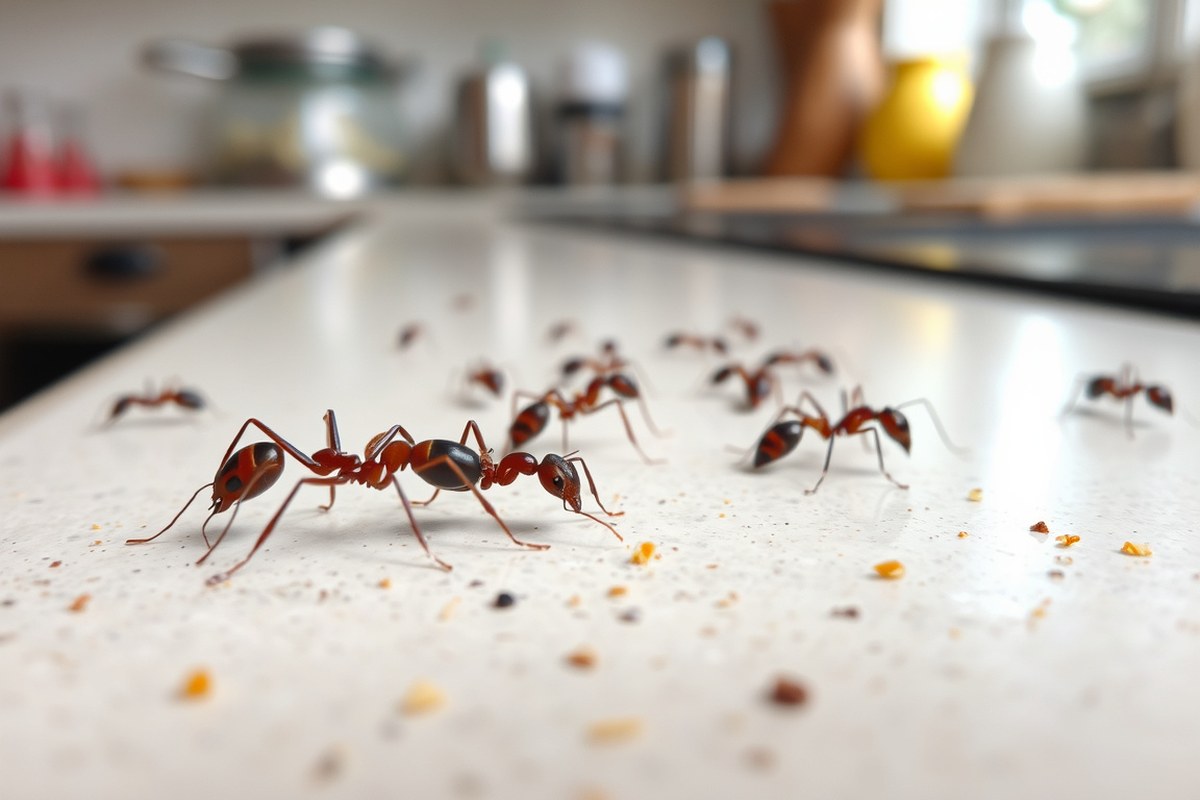
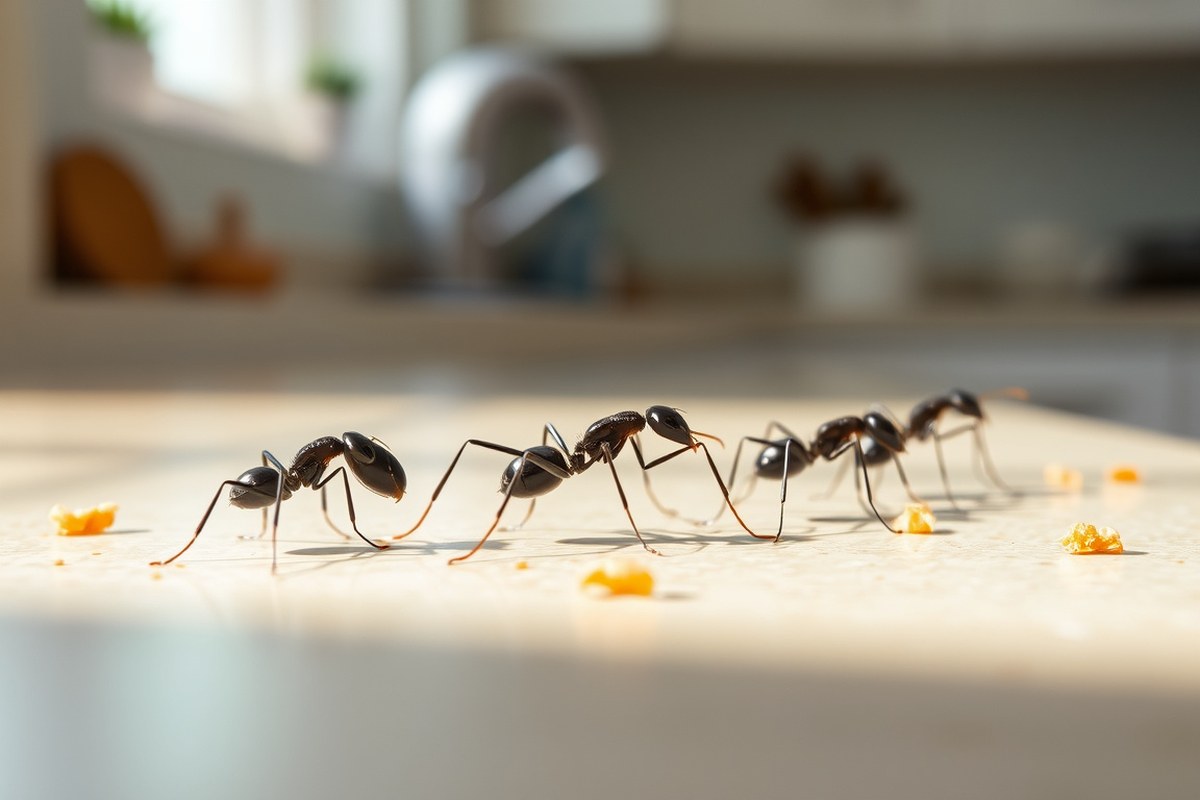
Identifying the species of ants in your kitchen helps tailor the approach to removing them effectively. The four most common species you might find are odorous house ants, Argentine ants, carpenter ants, and Pharaoh ants. Odorous house ants are small, brown-black, and emit a rotten coconut smell when crushed; they prefer sugary foods like honey and baked goods. Argentine ants are small and dark brown, known for quick movement, and seek sugars, oils, and proteins. Carpenter ants are larger, black or reddish, and can damage wood as they often nest there. Pharaoh ants are tiny and yellow-brown, attracted to sugars, meats, and grease, but they can be difficult to control as they may avoid some standard baits.
Recognizing signs that differentiate a minor ant presence from a serious infestation is essential to decide how much effort is needed. A few ants spotted occasionally near food or water sources indicate a minor issue that can be managed with basic cleaning and sealing entry points. However, serious infestations have clear trails or paths of ants moving consistently along walls, countertops, or floors, often appearing in large numbers. Also, seeing ants inside cabinets, drawers, or near nests signals the colony is well-established.
- Small groups of ants near food usually mean a minor problem.
- Visible ant trails or lines indicate a colony active in the kitchen.
- Large numbers of ants inside cabinets or at night suggest infestation.
- Presence of winged ants, or swarmers, can mean the colony is reproducing.
- Finding sawdust or damaged wood may point to carpenter ants nesting inside.
To identify ants accurately, collect a few specimens in a clear container and compare them with photos or descriptions from trusted pest control websites. Pay attention to size, color, and behavior. Serious infestations require prompt treatment using species-specific baits and sealing of entry points, while minor issues usually improve after thorough cleaning of the kitchen and removal of attractants like spilled food or standing water. Different species respond to different treatments, so misidentification can lead to ineffective control and persistent problems.
Why Are Ants Attracted to My Kitchen and How Do They Enter?
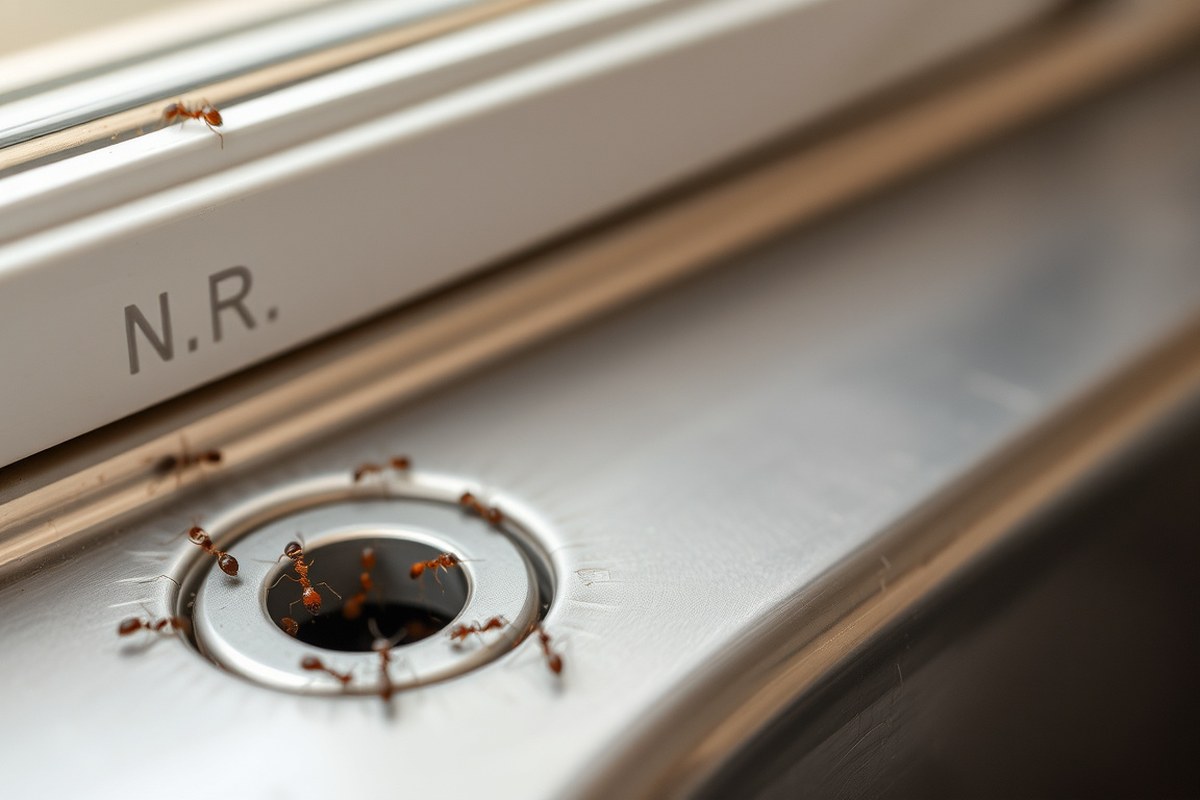
Ants are attracted to kitchens primarily because these spaces offer abundant food, water, and shelter. Even tiny crumbs, food spills, or grease can draw ants inside. Kitchens often hold sugary residues and moisture, creating an ideal environment for ants seeking nourishment and hydration. Since ants require water as much as food, leaky faucets, damp sinks, or standing water on countertops invite them. Once they find a reliable food or water source, ants leave pheromone trails to guide other members of their colony directly to your kitchen.
Ants enter kitchens through the smallest openings. Cracks and gaps in windows, door frames, and floors are their usual entry points. Because many common kitchen ants, such as Little black, Pharaoh, Argentine, or Odorous house ants, are tiny, they can fit through crevices as narrow as a fraction of an inch. Inspect window sills, door thresholds, and areas where plumbing pipes enter walls or cabinets. Pay attention to spaces around baseboards and cracks in tile grout, as these are common pathways for ants. Noticing where ants appear and disappear helps identify these entry points accurately.
To reduce ant intrusion, begin by thoroughly cleaning your kitchen every day. Wipe counters and sweep floors with a 50/50 solution of white vinegar and water to break down ants’ scent trails, which affects their navigation. Vacuuming carpeted kitchen areas is important because crumbs can get trapped in fibers, creating hidden food sources. Removing spilled food and grease eliminates the main attractants, making your kitchen less inviting.
Moisture control is equally important. Repair any leaks under sinks or around dishwashers quickly. Dry wet areas promptly and avoid leaving standing water in sinks or pet bowls overnight. Ants will continue to come back if water sources remain accessible despite food removal.
Monitor and document where ants enter your kitchen carefully; often, sealing just one or two key entry points can drastically reduce ant activity.
Immediate Actions to Take When You Spot Ants in Your Kitchen
Taking immediate action when you first spot ants in your kitchen helps contain their movement and reduces their presence before they establish a larger colony. Because sprays often kill only visible ants and miss the entire colony, quick manual and preventive methods are safer and help avoid further spreading. Addressing ants right away limits the clean-up and damage while avoiding harsh chemicals that can impact your family or pets.
Start by removing visible ants to interrupt their trail. Use damp paper towels or disposable wipes to wipe off ants on counters, tables, and floors. Avoid crushing ants directly since this can leave behind chemical trails that attract more ants. Instead, gently collect them and dispose of the wipes in a sealed trash bag immediately.
- Clear the area of food and water sources. Remove crumbs, spills, and uncovered food that attract ants. Store food in airtight containers or in the refrigerator to cut off their food supply. Dry wet spots such as sinks or pet bowls quickly.
- Use warm, soapy water to wipe down trails and surfaces. Mix a few drops of dish soap with warm water and soak a cloth or sponge. Thoroughly wipe visible trails, counters, cabinet faces, and entry points. Soap breaks down the ants’ scent trails, making wandering ants lose their way back.
- Seal small entry points temporarily. Use tape or rag pieces to block cracks or holes where ants enter, limiting new ants from coming in while you work on long-term sealing solutions.
- Set non-toxic traps or bait near visible ant routes. Place borax and sugar-based baits close to where ants appear, ideally within 5 feet of their entry or food paths. This starts reducing the colony indirectly as ants carry the bait back to their nest.
- Clean kitchen floors and under appliances promptly. Ants often travel on the floor and hide beneath appliances. Vacuuming visible ants and cleaning thoroughly helps eliminate leftover food particles and traces.
- Monitor the situation for the next 24 to 48 hours. Check for new ant activity several times a day and repeat wiping or bait placement as needed. If ants reappear or multiply, further action or targeted treatments may be necessary.
This immediate approach costs little beyond your time and common household items like dish soap and paper towels. The goal is to remove food and water sources, wipe away scent trails that guide ants, and block their entry points quickly before they settle. Visible ants disappear within hours, but ongoing monitoring helps confirm the infestation is under control without harsh chemicals.
Using Natural Remedies and DIY Sprays to Repel or Kill Ants
Natural remedies like vinegar sprays, essential oils, and spices such as cinnamon and peppermint can reduce ant presence by disrupting their scent trails and acting as repellents or mild insecticides. Preparing these remedies correctly and applying them thoughtfully helps disrupt ant paths and makes your kitchen less inviting without harmful chemicals.
Preparing Vinegar and Essential Oil Sprays
Vinegar, especially white vinegar, works well because it removes ant pheromone trails and repels ants due to its strong scent. Essential oils such as peppermint or tea tree oil can also repel ants when diluted properly in water. Mixing vinegar or essential oils with dish soap can improve effectiveness by breaking down the ants’ scent trails further and killing stray ants on contact. Here’s a simple step-by-step to prepare a natural ant spray:
- Pour 1 cup of white vinegar into a spray bottle.
- Add 1 cup of water to dilute the vinegar.
- Add 10 to 15 drops of peppermint or tea tree essential oil for added repellent power.
- Add 1 teaspoon of liquid dish soap to break down trails and kill ants.
- Close the bottle and gently shake to mix the ingredients well.
- Spray the mixture directly on ants and along their trails, including window sills, counters, and baseboards.
- Repeat application every two to three days or after cleaning surfaces to maintain effectiveness.
- Store the spray in a cool, dark place when not in use to preserve the oils’ potency.
Using Cinnamon and Peppermint for Repelling Ants
Cinnamon contains trans-cinnamaldehyde, a natural compound studied for its ability to kill and repel ants. Sprinkling ground cinnamon where ants enter or travel can block their paths and discourage further incursion. Peppermint oil is another natural repellent; its strong scent confuses ants and deters them from settling in your kitchen. Applying these methods works best combined with regular cleaning to remove food residues and scent trails.
For cinnamon, sprinkle a thin line across entry points or near ant hotspots daily. For peppermint, dilute about 10 drops per cup of water in a spray bottle and mist around doorways, window sills, and plants. Both methods are inexpensive and nontoxic, making them suitable for homes with pets or children.
How Pheromone Trails Influence Ant Behavior
Ants leave chemical pheromone trails to guide other colony members to food sources and safe paths back to their nest. These scent trails help ants navigate efficiently, often leading to repeated visits to your kitchen. Removing or masking these trails is essential for effective ant control using natural remedies.
Vinegar, lemon juice, and soapy water dissolve these pheromone chemicals, disrupting ant navigation. Applying natural sprays to the floors, counters, and walls where ants travel erases their scent map and confuses scouts, reducing the number of ants that find your kitchen. Consistent cleaning combined with repellent sprays helps prevent ants from reestablishing their trails and returning to your kitchen.
How to Prepare and Use Borax or Boric Acid Baits Correctly
Borax or boric acid baits work best when ants carry the poison back to their colony. Prepare a mix of borax with a sugary attractant, place it in spots where you see ants, and give it 1 to 2 weeks to take effect. Avoid using repellents alongside baits since repellents can keep ants from finding the bait and reduce its effectiveness.
Mixing the Correct Bait Proportions
Creating an effective bait requires a careful balance between the borax or boric acid and the sweet attractant to lure ants while ensuring they carry enough poison back to the nest. Use sugar or honey as bait because many kitchen ants prefer sweet foods. Too much borax can repel ants, while too little won’t kill the colony.
- Measure 1 cup of granulated sugar to create the sweet base.
- Add 1.5 tablespoons of borax powder to the sugar and mix thoroughly.
- Slowly add about 1.5 cups of warm water to dissolve the mixture, stirring until clear.
- Pour the solution into shallow containers or bottle caps for the ants to access easily.
- Alternatively, mix 3 parts sugar or honey to 1 part borax powder for a thicker paste bait if liquid isn’t preferred.
- Prepare fresh bait every few days to keep it appealing and effective.
Avoid using too much borax, as a stronger solution can deter ants from feeding on the bait.
Where and How to Place Bait Stations
Placement is important for bait success. Position the bait where ants are active but away from children and pets. Common spots include along baseboards, under sinks, near trash cans, and behind appliances.
- Identify trails by watching where ants travel and feed.
- Place bait containers in those trails without disturbing the ants’ path.
- Use shallow dishes or bait stations that allow ants to enter but keep bait contained.
- Avoid placing baits directly on countertops or areas where food is prepared to maintain hygiene.
- Check and refill bait every 2 to 3 days, especially if it dries out or disappears quickly.
Keep baits out of reach of pets and children, as boric acid can be harmful if swallowed in large amounts.
Expected Timeline and Safety Precautions
Borax or boric acid baits are slower than sprays but target the entire colony, including the queen. You can expect to see a reduction in ants within a few days, but full colony elimination usually takes 1 to 2 weeks. Patience is essential because quick kills do not solve the problem if the queen survives.
Do not mix repellents or sprays near bait stations. Repellents may drive ants away from the bait and reduce bait uptake. Wait until the bait completely controls the ants before considering repellents.
Safety is important in a kitchen. Always follow product label directions, wear gloves when handling borax powders, and store bait stations away from food preparation areas. If you are concerned about pets, small children, or improper use, consider buying prepackaged bait stations or hiring a licensed professional.
Cleaning, Food Storage, and Moisture Control to Prevent Ants
Keeping your kitchen clean is the first line of defense against ants. Food crumbs, spills, and residue attract ants quickly, so wipe down countertops, sweep floors, and clean sinks daily. Make sure to empty trash bins regularly and use a trash can with a tight-fitting lid to limit ant access to food waste. Pay special attention to cracks or gaps where ants could be entering while cleaning, focusing your efforts there to disrupt their paths inside.
Keeping food sealed properly helps reduce the scent paths that draw ants. Place all food, including pet meals, in airtight glass or durable plastic containers. Ants are especially attracted to sugary, greasy, and sweet substances like baked treats, syrup, and fruit, so make sure these are tightly closed. Quickly store perishables in the fridge to lower the chance ants will be interested and to prevent spills.
- Wipe counters and sweep floors at least once daily, more often if you cook frequently
- Store food in tightly sealed containers, avoiding bags or boxes that ants can chew through
- Empty trash daily and use bins with lids
- Check under appliances and behind cabinets for crumbs and clean weekly
- Fix leaky faucets or pipes promptly, since moisture attracts ants
- Use a dehumidifier or exhaust fan to reduce kitchen humidity below 50%
- Inspect plumbing and underlying cabinets monthly for signs of leaks or dampness
Moisture is another key factor in ant problems. Leaks under sinks, drippy faucets, or condensation on pipes create damp environments ants seek out for hydration and nesting. Regularly inspect plumbing and repair leaks quickly to cut off these water sources. In kitchens prone to moisture buildup, running a vent fan during cooking and drying wet areas immediately will discourage ants.
Daily diligence in cleaning combined with effective food storage helps break the food supply chain ants rely on, reducing the chance of infestations. Moisture control plays a supporting role by eliminating water access that makes your kitchen inviting. Together, these steps make your kitchen less attractive to ants and support any other methods used to eliminate a current infestation.
Sealing Entry Points: DIY vs. Professional Help and Best Materials
Start by inspecting your kitchen’s windows, doors, baseboards, and any areas where pipes or wires enter walls. Look closely for small cracks, gaps, or holes that ants could use to get inside. You can use a flashlight and a magnifying glass to check less obvious spots, such as around window frames and under door thresholds. Ants often follow pheromone trails, so watching their paths during active times helps pinpoint entry points.
Use silicone or acrylic latex caulk for sealing cracks smaller than a quarter inch. These materials are flexible, weather-resistant, and easy to apply with a standard caulking gun, which usually costs around $10 to $20. For larger gaps or holes, expanding foam sealant works better, but it’s less neat and more challenging to remove if you need future access. Before sealing, clean surfaces thoroughly and let them dry to ensure proper adhesion. Insert the caulking tip directly into the crack, then squeeze steadily to fill it fully. Smooth the caulk with a damp finger or tool to seal gaps completely and promote faster drying.
DIY sealing works well for visible, accessible cracks and small entry points. It normally takes a few hours spread over a day to complete sealing, including drying time, and costs under $30 if you already own basic tools. Good results include no visible gaps after drying, and you’ll notice fewer ants crossing those spots over the following week. If you find new trails near sealed areas, it may mean some cracks were missed or the ants have found alternative entrances.
Call a professional for sealing when you notice large numbers of ants, especially if they seem to be nesting inside walls, or you detect damage to structural elements like wood framing. Professionals can identify hidden entry points behind walls or under flooring using specialized tools and offer more complete sealing services using industrial-grade materials. Their service cost ranges widely, often starting at $100, depending on inspection and repair complexity. Hiring an expert is advisable if your sealing attempts don’t reduce ant activity after two weeks or if you’re unsure about safely sealing near electrical wiring or plumbing.
Using household items like baking soda sprinkled near cracks can help repel ants temporarily, but these do not replace physical sealing. Spraying vinegar-water solution on and around suspected entry points before caulking disrupts ant pheromone trails, improving sealing effectiveness. Be patient and monitor for any fresh activity; sealing entry points is a key step to preventing recurring kitchen ant infestations and improving your home’s overall energy efficiency by cutting drafts.
When to Call a Professional and What to Expect from Treatments
Calling a professional pest control service becomes necessary when ants persist despite your own efforts, when nests are visible near or inside your home, or when you notice multiple ant trails that are difficult to control. Professionals use specialized treatments not available to consumers, and they know how to apply them safely around food and children. Knowing what to watch for can help you decide the right time to seek expert help and avoid common mistakes that can prolong infestations.
Signs You Need Professional Help
Persistent ant activity for more than two weeks after using baits or borax and sugar mixes indicates that professional help is needed. Visible ant nests, especially if they look like piles of dirt inside or close to your home, suggest the infestation is larger than surface sightings alone might show. Multiple ant trails entering your kitchen from outside or hidden locations also call for expert intervention, as these often mean several nests are involved.
Failure to control ants after trying various DIY remedies signals that an Integrated Pest Management (IPM) approach by a licensed professional is likely required. This includes methods to locate nests, assess the species involved, and apply targeted treatments that can safely eliminate the source of the infestation.
Professional vs. DIY Treatments
Professionals have access to insecticides and equipment that are not sold to consumers. These include advanced baits with delayed-action ingredients, non-repellent sprays that ants cannot detect, and dust formulations for cracks and wall voids. Unlike over-the-counter traps or sprays, these tools can eliminate entire colonies rather than just killing individual ants on contact. Here’s a comparison of typical DIY and professional treatments:
| Treatment Type | Availability | Application | Effectiveness | Cost Range |
|---|---|---|---|---|
| Borax and Sugar Baits | Consumer | Self-applied on kitchen surfaces | Effective for small infestations | Under $10 (materials) |
| Commercial Ant Sprays | Consumer | Direct spray on ants and trails | Temporary kill, not colony elimination | $5-$20 per can |
| Non-repellent Insecticides | Professional only | Applied in wall voids, cracks, perimeter | Colony elimination | $150-$300 per treatment |
| Insect Growth Regulators (IGRs) | Professional only | Added to bait or sprayed | Prevents reproduction, lasting control | Included in service cost |
The higher upfront cost of professional services often reflects longer-lasting results and fewer repeating treatments, saving time and money over months.
Safety and Effectiveness of Sprays and Baits
Consumer sprays often carry warnings to keep away from food preparation areas and children. Professionals use liquids and dusts labeled for indoor use that comply with safety standards and typically apply them in places that limit exposure. Non-repellent insecticides, for example, are applied in cracks and behind appliances, areas children and pets rarely reach.
Using sprays alone rarely eliminates an infestation. Baits are safer around food and children when placed strategically out of reach and away from pet access. Effectiveness depends on placement and persistence, ants may take several days to consume baits and remove dead workers.
Always follow label instructions carefully and avoid spraying directly onto food surfaces or where children play.
Common Ant Control Mistakes to Avoid
One major mistake is using sprays that repel ants instead of killing the colony, causing them to relocate and return later. Frequent spraying without addressing nests or entry points also prolongs problems. Another error is relying solely on sprays without baits, since sprays don’t eliminate the queen or colony. Incomplete cleaning and leaving food out provide ongoing attractants for ants.
Overlooking hidden nests or not sealing entry points lets ants keep coming inside. Hiring professionals once DIY methods fail can prevent these costly delays. Professionals combine inspection, treatment, and follow-up visits, aiming for lasting control within weeks.
Step-by-Step Action Plan to Get Rid of Ants in Your Kitchen
Follow this plan to identify, eliminate, and prevent ants in your kitchen effectively. Each step sets a clear action and a way to check your progress.
- Day 1: Identify Ant Species and Infestation Signs, Examine your kitchen for ant trails, nests, or entry points. Knowing what type of ants you have helps choose the right treatment. Confirm success by spotting no new trails the next day.
- Day 1: Remove Food Sources and Clean Thoroughly, Clean countertops, sweep floors, and store all food in sealed containers. Success means no crumbs, sticky spots, or accessible food remains anywhere in the kitchen.
- Day 1, 2: Set Up Borax or Boric Acid Baits Properly, Prepare baits according to instructions, place near ant trails and suspected entry points. Monitor by checking if ants are taking the bait; reduction in observed ants shows effectiveness.
- Days 2, 4: Use Natural DIY Sprays to Repel Ants, Apply sprays like diluted vinegar or essential oils along entry points and trails. A drop in ant sightings around treated areas indicates the sprays are working.
- Week 1: Seal Entry Points, Use silicone or acrylic caulk to close cracks and gaps around windows, doors, and pipes. Inspect after sealing; no new ant entry near these spots means success.
- Week 2: Control Moisture Levels, Fix leaks and reduce humidity by venting or using a dehumidifier. Less visible moisture and fewer ants suggest you’re reducing their attraction.
- Week 3: Monitor and Maintain Cleanliness, Continue food storage practices and clean daily to prevent reinfestation. Absence of ants after a week confirms ongoing control.
- After 3 Weeks: Consider Professional Help If Needed, If ants persist despite your efforts, schedule an inspection with a licensed pest control professional. Expect a thorough treatment plan targeted to your specific infestation.
Frequently Asked Questions
What Is the Best Way to Get Rid of Ants in the Kitchen Permanently?
The best way is to combine thorough cleaning, baiting, and sealing entry points. Keeping your kitchen free of food crumbs and moisture stops ants from coming back.
Can Ant Infestations Return After Treatment?
Yes, ants can return if entry points aren’t sealed or food sources remain accessible. Ongoing cleanliness and maintenance are essential to prevent new infestations.
How Long Does It Take to Get Rid of an Ant Colony in the Kitchen?
It usually takes about one to two weeks with proper baiting and cleaning. Baits need time to eliminate the entire colony, not just visible ants.
Are Natural Remedies Effective for Eliminating Ants in the Kitchen?
Natural remedies can repel ants temporarily but may not kill the entire colony. Combining them with baits improves long-term success.
Can Ants Damage Kitchen Appliances or Cabinets?
While ants don’t usually damage appliances, some species may nest inside walls or cabinets. Regular checks and sealing cracks can prevent this issue.
Is It Safe to Use Borax-Based Baits Around Children and Pets?
Borax baits can be safe if placed out of reach. Always follow label instructions and avoid direct access to pets and children.
Wrapping Up
Getting rid of ants in your kitchen requires a mix of quick action, proper cleaning, and blocking their entry points. Start by thoroughly cleaning your counters and floors today to remove any food traces that attract ants. Keeping your kitchen clean not only stops current ants but also helps prevent new infestations from starting.