How to Get Rid of Tapeworms in Cats: Complete Steps for Fast, Safe Treatment
To get rid of tapeworms in cats, use a veterinarian-recommended medication like praziquantel, which works quickly, often clearing the infection within 24 to 48 hours. Controlling fleas is also essential since cats usually ingest tapeworms by grooming fleas off their fur. Combining medication with effective flea prevention helps stop reinfection and keeps your cat healthy.
Cat owners concerned about tapeworms will find clear information on symptoms, treatment options, flea control, and prevention strategies. Understanding safe medications, environmental care, and when to seek veterinary help empowers you to protect your cat from these common intestinal parasites and maintain their well-being.
Key Takeaways
- Use praziquantel to treat tapeworms in cats, as it typically kills parasites within 24 to 48 hours after dosing.
- Control fleas rigorously since they are the primary carriers of tapeworm larvae, preventing reinfection effectively.
- Monitor cats for symptoms like weight loss, scooting, or visible rice-like segments near the anus for early tapeworm detection.
- Only give monthly topical preventives to cats that are at least 8 weeks old and weigh 1.8 pounds or more to keep the treatment safe.
- Schedule regular veterinary check-ups for fecal exams to diagnose tapeworms and other intestinal parasites accurately.
- Practice thorough environmental cleaning and flea control to reduce tapeworm transmission risks and avoid treatment failure.
What Are Tapeworms in Cats and How Do They Infect

Tapeworms are flat, segmented intestinal parasites that commonly infect cats. Adult tapeworms can reach lengths between 4 and 28 inches and attach their heads to the lining of the cat’s intestines to absorb nutrients. These parasites grow by adding segments, which often break off and exit the cat’s body through feces or around the anus. This shedding of segments is often the first sign of a tapeworm infection.
The most common tapeworm species found in cats is Dipylidium caninum. This species infects cats primarily through the ingestion of infected fleas. When cats groom themselves, they may swallow fleas carrying tapeworm larvae. Once inside the digestive tract, the larvae develop into adult tapeworms. Because fleas are the method of transmission, controlling fleas is critical to reducing the risk of Dipylidium caninum infections.
Taenia taeniaeformis infects cats that catch and eat rodents like mice and rats. Larvae live inside the muscles of these rodents, and when a cat eats one, the larvae develop into adult tapeworms inside the cat’s intestines. This type is mostly found in outdoor cats that hunt and consume infected prey.
A third, less common species in cats is Echinococcus multilocularis, which is primarily found in wild canids like foxes and coyotes but can infect cats that eat infected rodents. Echinococcus infections are rare but important because of their potential to transfer to humans under certain circumstances, making this a zoonotic concern.
Cats typically get tapeworms by swallowing infected intermediate hosts, such as fleas or rodents. Indoor cats are most at risk from flea-borne Dipylidium caninum, while cats allowed outdoors face a risk from hunting rodents carrying other tapeworm varieties. Reinfection is common if the cat’s environment remains infested with fleas or infected prey animals, so ongoing flea control and limiting hunting are important to prevent new infections.
Recognizing Symptoms and Signs of Tapeworms in Cats
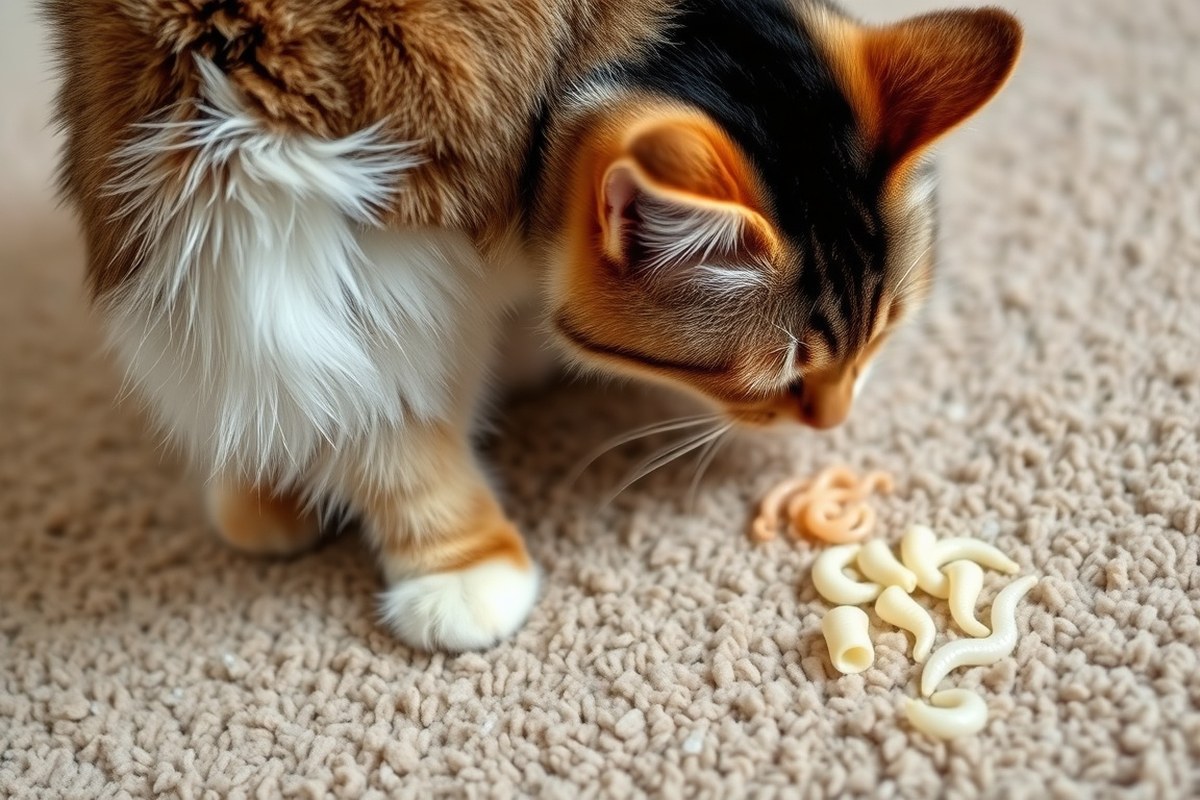
Tapeworm infections in cats often show subtle signs but can be detected by looking for small, rice-like segments in their feces or around the anus. Symptoms can take days to weeks to appear depending on the infection source, making early recognition key to prompt treatment.
Common Behavioral Changes in Infected Cats
Many cats with tapeworms may not display obvious symptoms, yet some behavioral changes can suggest an infection. Cats might seem more restless or uncomfortable, particularly around the rear end, where itchiness is common due to tapeworm segments irritating the skin. You may also notice increased grooming or licking of the anus caused by this irritation.
Other behaviors related to tapeworm infections include decreased appetite or slight weight loss, especially in cases with heavier worm burdens. These signs can be subtle, so careful observation over several days helps detect early infection indicators before more serious symptoms develop.
Identifying Tapeworm Segments on Fur and Feces
The most distinctive sign of tapeworms is spotting tapeworm segments, called proglottids. These segments are tiny, white or cream-colored, and resemble grains of rice. You might find them in your cat’s feces or stuck to the fur near the anus. Sometimes, the segments move slightly because they are alive, making them easier to spot.
Look for these signs in places like bedding, litter boxes, or areas where your cat rests. Touching the fur around the rear end for small, dry rice-like particles can be revealing, especially if your cat has been scratching or grooming frequently.
- Small, white rice-like segments in stool
- Rice-like pieces stuck to fur near the anus
- Segments moving slightly on the fur or in stool
- Rice-like segments found in bedding or litter box
- Signs of scratch marks or irritation near the rear end
Keep an eye on fresh feces and the fur near the anus daily; catching tapeworm segments early can simplify treatment.
Veterinarians often confirm tapeworm infections by identifying these proglottid segments. Fecal exams can also detect eggs, although the segments are more commonly observed by cat owners.
Latency Period Before Symptom Onset
The time from when your cat acquires tapeworms to when you see symptoms or signs can vary. Most tapeworm segments appear in feces or near the anus within 2 to 3 weeks after infection. This period depends on factors like the tapeworm species and how the cat was infected, often via ingestion of infected fleas or small prey.
During the early stages, cats may not show any signs, making it easy to miss detecting the infection. However, once the tapeworm matures and produces segments, those rice-like proglottids generally become visible consistently, which is the typical first indication of tapeworm presence.
Digestive Issues Associated with Infestation
Although many tapeworm infections cause minimal digestive symptoms, some cats experience mild nausea, vomiting, diarrhea, or abdominal discomfort. These symptoms arise as the tapeworm irritates the intestinal lining or causes partial blockages if the infestation is severe.
Weight loss can also occur if infections persist without treatment. Watch for loose stools mixed with rice-like pieces, which signify tapeworm shedding through feces. In more serious cases, vomiting of tapeworm segments is possible, but this is not common in typical infections.
Safe and Effective Medications to Treat Tapeworms in Cats
Praziquantel and epsiprantel are the safest and most effective medications to get rid of tapeworms in cats. Both drugs target tapeworms by paralyzing and dissolving the parasites inside your cat’s intestines. Treatment is typically quick, often requiring just a single dose, with very few side effects reported in cats.
Oral Medications: Praziquantel and Epsiprantel
Praziquantel is widely regarded as the treatment of choice for tapeworm infections in cats. It works by breaking down the tapeworm’s outer layer, causing the parasite to disintegrate and be expelled through the digestive tract. Praziquantel is available as oral tablets, injections, or topical formulations, giving you options on how to administer it depending on your cat’s comfort level.
Epsiprantel functions similarly to praziquantel but is usually given in oral tablet form. Both drugs efficiently remove common tapeworm types like Dipylidium caninum and Taenia taeniaeformis. The standard dosage is based on your cat’s body weight, often around 5 to 10 mg per kilogram. These medications are generally safe for kittens older than six weeks and cause minimal side effects such as mild vomiting or lethargy, which tend to be rare.
Topical Dewormers and Their Use
Several topical dewormers include praziquantel in combination with other ingredients that also target parasites like fleas. These treatments usually come in a pipette or drop-on form that you apply to your cat’s skin between the shoulder blades. Topical options like Profender contain praziquantel and provide dual protection against tapeworms and other worms, plus they aid in flea control to prevent reinfection.
Topical dewormers are a convenient choice to avoid oral administration, especially for cats resistant to pills or injections. One treatment usually clears tapeworm infection, but your veterinarian will advise on application frequency if your cat is at high risk for reinfection.
| Medication | Form | Dosage | How It Works | Side Effects | Treatment Duration |
|---|---|---|---|---|---|
| Praziquantel | Oral tablets, injection, topical | 5, 10 mg/kg | Paralyzes and dissolves tapeworm | Mild vomiting, lethargy (rare) | Single dose usually effective |
| Epsiprantel | Oral tablets | 5, 10 mg/kg | Disrupts tapeworm structure | Rare, mild digestive upset | Single dose usually effective |
| Profender (topical) | Topical solution | Dosage by weight on packaging | Combines praziquantel and other agents targeting worms and fleas | Very few, possible mild skin irritation | Single application; repeat as advised |
Duration and Follow-Up After Treatment
Most cats clear tapeworm infections within a few days after a single treatment dose. Praziquantel starts killing tapeworms shortly after administration, with full elimination typically completed within 24 to 48 hours. There is usually no need for repeated doses unless reinfection occurs.
Follow-up includes monitoring your cat’s stool and fur for tapeworm segments for several days after treatment. Since cats catch tapeworms from fleas, effective flea control is important to prevent reinfection. Your veterinarian may recommend repeating praziquantel every 3 to 6 months if your cat is at high risk for tapeworm or other parasite infections.
How Fleas Affect Tapeworm Infections and Control Protocols
Fleas are important in spreading tapeworms to cats because they act as carriers for the common tapeworm Dipylidium caninum. When a cat grooms and swallows a flea carrying tapeworm larvae, those larvae grow into adult worms inside the cat’s intestines. Keeping fleas under control helps stop the cycle and prevents your cat from getting tapeworms again.
Eliminating fleas requires a thorough approach that targets your cat, other pets, and the environment. Just treating your cat for tapeworms without addressing fleas leaves a high chance of reinfection. Regular and consistent flea prevention throughout the year reduces not only tapeworm risks but also other health problems caused by fleas. Since even indoor cats can encounter fleas brought in on clothing or other pets, maintaining strict flea control is important. Follow these steps to get rid of fleas and help protect your cat from future tapeworm infections:
- Consult your veterinarian to select a safe and effective flea treatment and tapeworm medication appropriate for your cat’s health and age. Your vet may recommend oral or topical products specifically targeting fleas and tapeworm larvae.
- Administer flea prevention medication to all pets in your home. Options include monthly spot-on treatments, oral pills, or flea collars that provide continuous protection. Treating only the infected cat allows fleas to persist elsewhere and spread again.
- Clean your cat’s living areas by washing bedding, vacuuming carpets, rugs, and furniture thoroughly. Empty vacuum bags or canisters immediately to prevent flea eggs or larvae from returning. Repeat this cleaning weekly until flea signs disappear.
- Treat your home environment with flea sprays or foggers labeled for indoor use. These products help kill fleas at all life stages, eggs, larvae, and adults, especially in carpets and cracks where fleas hide. Follow the product instructions carefully and keep pets out until it’s safe to return.
- Monitor your cat regularly for fleas by checking the fur and using a flea comb to catch any that slip through treatments. Early detection helps prevent the tapeworm cycle from restarting.
- Maintain year-round flea control with regular medication and environmental cleaning. Fleas can survive indoors despite weather changes, so ongoing prevention is necessary to keep your cat tapeworm-free.
Preventing Tapeworm Reinfection Through Environmental and Pet Care
To prevent your cat from getting tapeworms again, cleaning and hygiene are key. Tapeworm segments can shed into your cat’s litter box and surrounding areas, so regular cleaning removes eggs and limits reinfection chances. Aim to scoop the litter box at least once daily, and completely change the litter and wash the box with hot water and mild detergent weekly. Heat above 140°F helps kill parasite eggs, so avoid cold rinses.
All pets in your household should get treated if one tests positive for tapeworms. Cats and dogs can pass tapeworms between each other through fleas or contaminated feces. Consulting your veterinarian for medication options for every pet is essential to stop a reinfection cycle. Flea control must be consistent and year-round for all pets, as fleas are the most common tapeworm carriers. Prevent your cat from hunting rodents indoors or outdoors, since mice and rats can also transmit tapeworms.
- Scoop litter box daily and wash box weekly with 140°F+ water
- Dispose of feces carefully, sealing in plastic bags before trashing
- Treat all pets in the home with prescribed tapeworm medication
- Use veterinarian-recommended flea prevention on all pets year-round
- Keep cats indoors or limit hunting opportunities to reduce rodent contact
- Vacuum carpets and furniture regularly to remove fleas and egg segments
- Wash bedding and pet toys frequently in hot water to eliminate parasites
Always wash your hands after cleaning the litter box to avoid accidental transmission of tapeworm eggs to yourself or other family members.
Maintaining these habits takes daily attention and a small investment in cleaning supplies and preventive medications but protects your cat and others from a painful and messy reinfestation. Also, monitor your cat closely for signs of tapeworms even after treatment to catch any return early.
When to Seek Veterinary Help and How Cats Are Diagnosed
Veterinarians primarily diagnose tapeworm infections in cats through a fecal examination. During this test, a microscopic analysis is performed on your cat’s stool to identify tapeworm eggs or segments called proglottids. These visible segments near the cat’s anus or in the feces often prompt the initial vet visit. Identifying the specific type of tapeworm helps your vet select the most effective treatment. A simple physical exam usually accompanies this diagnostic step, especially if your cat hunts or shows symptoms such as itching around the rear.
Many cats with tapeworms don’t display obvious symptoms, which is why stool testing is important even if you don’t see signs. Since tapeworms cling onto the intestinal lining, their eggs can be hard to detect in every sample. For this reason, your vet may recommend multiple fecal tests spaced days apart. Telemedicine veterinarians can also assist by reviewing symptoms and stool photos if coming in person is difficult, but they cannot replace physical exams or microscopic stool checks completely.
You can treat tapeworms at home only after a proper diagnosis from a veterinarian. Over-the-counter remedies might target other worms but will not work on tapeworms, making veterinary treatment necessary. Prescription medications from vets are targeted to kill tapeworms effectively. Consider this decision rule: if you spot tapeworm segments or your cat has consistent discomfort near the anus, contact a vet for testing before starting treatment. Self-treating without confirmation risks ongoing infection or ineffective care.
If your cat’s tapeworm symptoms persist after treatment, schedule another visit. Returning proglottids or symptoms may mean the dose was too low, your cat was reinfected, or fleas remain uncontrolled. Additional treatments, such as supportive care for severe cases, might be needed. Clear communication with your vet about your cat’s response to treatment helps adjust plans. A sample script could be, “My cat was treated for tapeworms two weeks ago, but I still notice small white pieces near the tail and scratching. What’s the next step?” This approach ensures the vet understands your concerns and can order follow-up diagnostics or alternative medicines as necessary.
Regular vet visits for cats that roam or hunt also help prevent tapeworms by ensuring timely parasite control and flea prevention. Remember that untreated worm infections can last silently, so a vet’s diagnosis and guidance protect your cat’s health and reduce infection risks to family members. Emergency care is required if your cat shows severe symptoms like vomiting, weight loss, or lethargy, signaling complications beyond routine tapeworm infection.
Risks of Tapeworms to Cats and Potential Human Transmission
Tapeworm infections in cats can cause health problems that vary depending on the severity of the infestation. Although tapeworms themselves are unlikely to kill a cat, heavy infections can lead to weight loss, decreased appetite, and nutritional deficiencies. These issues arise because the tapeworms compete with the cat for nutrients, sometimes causing gastrointestinal discomfort and inflammation. Kittens are especially vulnerable, as untreated infections may result in stunted growth or even intestinal blockages, which can be life-threatening without veterinary care.
Transmission of tapeworms requires an intermediate host, typically fleas, so tapeworms are not passed directly from cats to humans or other pets. However, some species of tapeworms can infect humans if eggs are accidentally ingested. Practicing good hygiene, such as washing hands after handling pets and cleaning litter boxes regularly, can significantly reduce this risk. Although rare, a group of tapeworms known as Echinococcus can cause serious disease in humans, making flea control and prompt treatment in pets more important for public health.
Aside from the potential for human infection, tapeworms can occasionally spread to other pets in the household if those pets ingest fleas or infected intermediate hosts. You can limit this by maintaining strict flea control and cleanliness. Observing your cat closely for symptoms like segments of tapeworms in the feces or around the anus helps catch infections early. Early detection and treatment prevent complications such as malnutrition or weight loss. If your cat continues losing weight despite treatment or shows ongoing digestive symptoms, consult your veterinarian promptly to reassess the treatment plan.
Failing to address a tapeworm infection can allow the parasites to multiply, worsening your cat’s condition. Over time, untreated infestations can cause intestinal inflammation and even blockages. Home remedies are not reliable and can be harmful, so using professional veterinary medication is necessary. The cost of treatment usually ranges from $20 to $60 for deworming medications, which your veterinarian can prescribe based on the tapeworm species and severity. After treatment, maintaining flea control and hygiene is important to prevent reinfection and decrease the chance of spreading tapeworms within your home.
Common Tapeworm Treatment Mistakes and How to Avoid Them
Many pet owners make errors during tapeworm treatment that can lead to repeated infections or incomplete elimination. Common mistakes include neglecting flea control, stopping medications too soon, and failing to treat all pets in the household. Indoor cats also face risks that are often overlooked. Successful elimination depends on a consistent approach that addresses both the parasite and its flea hosts.
Skipping Flea Treatments
Not treating fleas thoroughly is the most frequent mistake during tapeworm treatment. Because Dipylidium tapeworms require fleas as an intermediate host, controlling fleas is essential to breaking the infection cycle. Relying solely on deworming medications without flea prevention means your cat can easily become reinfected when it encounters fleas again.
To ensure effective flea control, use veterinarian-recommended flea prevention products consistently year-round or according to your local flea season. These include topical treatments, oral medications, or flea collars. Flea control reduces flea populations on your cat and in its environment, lowering tapeworm risk. Cleaning bedding, vacuuming floors, and washing pet areas weekly also help.
- Apply flea treatments at the same time every month as directed
- Wash pet bedding in hot water weekly
- Vacuum carpets, furniture, and floors frequently
- Treat all pets in the household simultaneously for fleas
- Keep outdoor areas trimmed and debris-free to reduce flea habitats
- Ask your vet about environmental flea sprays or foggers if infestations persist
Consistent flea control is the foundation of tapeworm prevention; never pause flea treatments even after deworming your cat.
Stopping Medication Early
Stopping tapeworm medication too soon is another common error. Tapeworm dewormers prescribed by veterinarians are very effective but must be administered at the full recommended dosage and schedule to fully eliminate parasites. Some owners discontinue medicine as soon as symptoms improve or after a single dose, risking partial treatment.
Your vet will prescribe the correct treatment length, usually one or two doses of prescription dewormer spaced a week apart. Follow this precisely. If your cat vomits or spits out medication, contact your vet for advice on repeating the dose. Avoid over-the-counter remedies unless recommended, as they often lack the strength to clear tapeworms.
Ignoring Other Pets
Leaving other pets untreated is a mistake that allows tapeworms and fleas to persist within the household. Fleas and parasites move easily between cats and dogs living together, increasing everyone’s infection risk. Treating only one cat ignores this cycle and results in reinfection over time.
All pets sharing your home require flea control and, if appropriate, tapeworm treatment, even if they show no symptoms. Your vet can determine which treatments suit each pet’s species, age, weight, and health. Consistent monitoring and coordinated treatment reduce parasite spread and safeguard your entire pet family.
Underestimating Indoor Cat Risks
Indoor cats are less exposed to tapeworms, but they are not immune. Fleas can hitch a ride into your home on humans, clothing, or other pets. Outdoor rodents carried in by cats or trapped indoors can also transmit tapeworms of the Taenia type. Dismissing indoor cats as risk-free delays diagnosis and treatment.
Maintain flea prevention for all cats regardless of lifestyle. Regular veterinary check-ups and deworming during kitten growth and adulthood reduce risk. Watch for signs like small white segments around your cat’s rear or in litter. Taking action quickly helps protect indoor cats from an infection that is often considered strictly outdoor.
Step-by-Step Action Plan to Get Rid of Tapeworms in Your Cat
Use this plan to identify tapeworm signs, treat the infection fully, prevent reinfection, and know when to get veterinary help.
- Day 1: Check for Symptoms, Look for visible tapeworm segments near your cat’s anus or in its feces, and note any unusual itching or changes in appetite. Confirming these signs means it’s time to act.
- Day 2: Begin Medication, Administer a vet-recommended dewormer specific for tapeworms, such as praziquantel, following label doses exactly. Successful treatment means segments stop appearing within a few days.
- Days 3, 7: Treat Fleas Thoroughly, Apply flea control products on all cats and clean your home to eliminate fleas, which carry tapeworm larvae. Check your cat daily; no new flea bites suggest effective control.
- Week 2: Monitor Symptoms, Watch for any ongoing signs like segments or itching. If signs persist after two weeks, a veterinary evaluation is necessary.
- Week 3: Clean Environment, Vacuum carpets, pet bedding, and wash linens to remove flea eggs and tapeworm eggs in the environment. Consistent cleaning reduces reinfection risk.
- Month 1: Prevent Reinfection, Maintain flea prevention year-round using vet-approved products, keep your cat indoors when possible, and regularly check for tapeworm signs. Absence of symptoms indicates long-term success.
- Any Time: Consult Your Vet, If your cat shows weight loss, vomiting, or severe diarrhea, or medication doesn’t clear the infection, have a veterinarian diagnose and adjust treatment.
Frequently Asked Questions
Can I Touch My Cat If He Has Tapeworms?
Yes, you can touch your cat safely even if he has tapeworms. Just wash your hands afterward to avoid transferring flea eggs or tapeworm eggs that might be on your cat’s fur.
Can a Cat Get Rid of Tapeworms on Their Own?
Cats usually cannot get rid of tapeworms without treatment. Tapeworms require specific medication to eliminate, so a vet-prescribed dewormer is necessary for a quick and effective cure.
How Long Can a Cat Survive with Tapeworms?
Cats can survive with tapeworms for a long time, but untreated infections may cause discomfort and nutritional issues. Treating tapeworms promptly helps keep your cat healthy and prevents complications.
How Likely Is It for Humans to Get Tapeworms from Cats?
It is very unlikely for humans to get tapeworms directly from cats because tapeworms need an intermediate host, like fleas, to spread. Practicing good hygiene and flea control reduces any risk further.
Can Tapeworms Come Back After Treatment in Cats?
Yes, tapeworms can return if your cat is exposed to fleas again after treatment. Ongoing flea prevention is key to stopping reinfection and protecting your cat’s health.
What Should I Do If I Find Tapeworm Segments in My Cat’s Stool?
If you see tapeworm segments in your cat’s stool, schedule a vet visit promptly. Your vet can confirm the infection and prescribe effective treatment to clear the tapeworms quickly.
The Bottom Line
Clearing tapeworms from your cat requires timely treatment and ongoing flea control to break the cycle of reinfection. Start by scheduling a vet visit to get a proper diagnosis and safe medication tailored to your cat’s needs. Taking action today to manage fleas around your home will help protect your cat and family from future tapeworm problems.