Do Pest Control Companies Spray for Mosquitoes? A Complete Guide to Treatments and Safety
Yes, pest control companies do spray for mosquitoes as part of their service offerings. This is a common method used alongside other strategies to reduce mosquito populations and minimize bite risks. Spraying is typically done during early morning or late evening hours when mosquitoes are most active to maximize effectiveness and limit impact on beneficial insects.
Homeowners and property managers looking for professional mosquito control solutions will find detailed information here about insecticides used, safety measures for people and pollinators, environmental considerations, and alternatives to spraying. Guidance on choosing a reputable mosquito control company and preparing for treatments is also provided to help you make informed decisions for your property.
Key Takeaways
- Most pest control companies spray for mosquitoes, with 63% reporting increased demand for mosquito services in 2022.
- Common insecticides like Anvil 10+10, a registered product, are applied mainly on shrubs and trees before 10 AM to protect pollinators.
- Professional mosquito treatments reduce populations by targeting resting areas and can last several weeks, depending on environmental conditions.
- Certified applicators avoid spraying blooms and use safety gear to minimize risks to people, pets, and beneficial pollinators.
- Environmental risks include harming non-target insects like monarch butterflies, and resistance to insecticides can develop with repeated use.
- Complementary mosquito controls include habitat elimination, larvicides, and physical barriers to reduce dependence on chemical spraying.
Do Pest Control Companies Spray for Mosquitoes and How Common Is It?

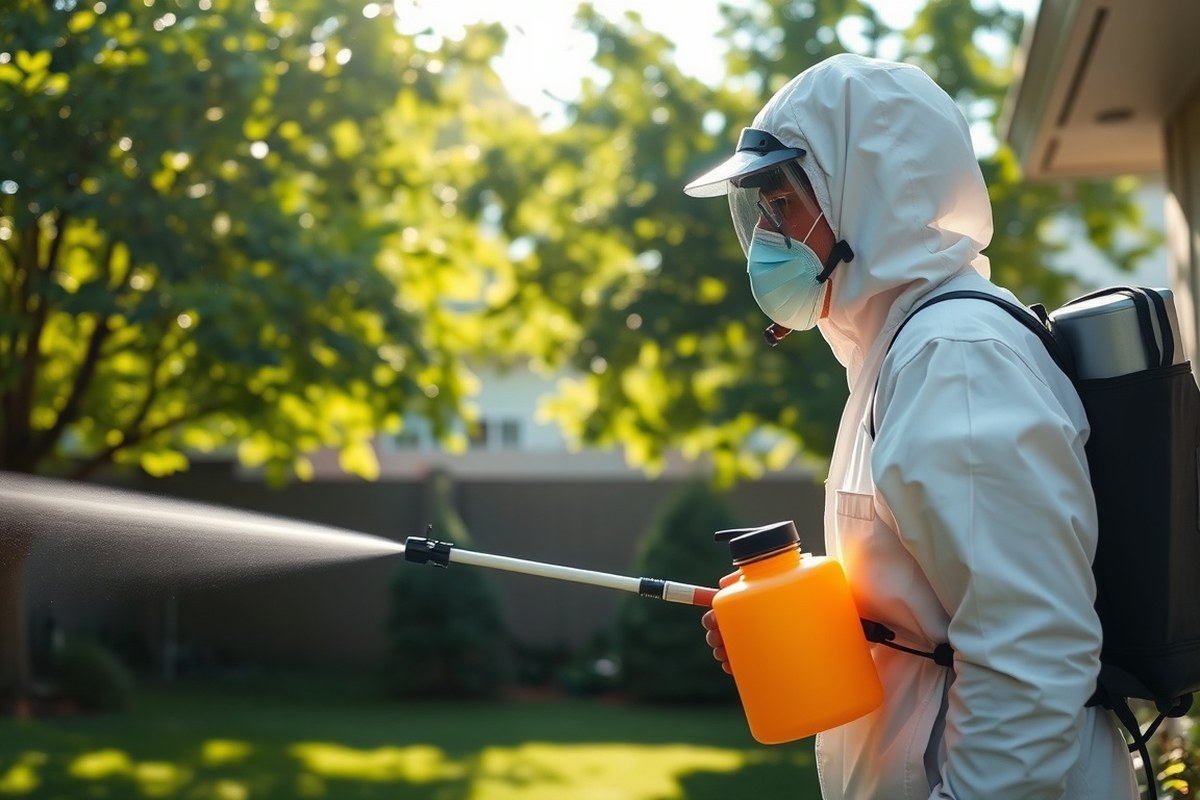
Most pest control companies do spray for mosquitoes as part of their service offerings, and it’s a common method used to manage adult mosquito populations in residential and commercial properties. This spraying typically targets the shaded areas where mosquitoes rest during the day, such as shrubs, trees, and other vegetation around your home. Technicians also focus on spots you frequent like patios, decks, or fire pits to create a protective barrier where you spend the most time outdoors. Mosquito spraying is widely recognized as an effective strategy to reduce biting adults quickly.
Spraying is often done throughout daylight hours rather than strictly at dawn or dusk, even though those times coincide with peak mosquito activity. Many companies spray in the morning before 10 AM to minimize impact on pollinators, applying insecticides only to non-blooming vegetation. Certified applicators follow regulations that restrict spraying on flowers and may notify neighborhoods when applying treatments in order to protect bees and other beneficial insects. Licensed professionals usually employ EPA-registered pyrethroid insecticides that are formulated to control mosquitoes while limiting risks to humans and pets.
The practice has grown in demand recently. About 63% of pest management companies reported more requests for mosquito control in 2022 compared to previous years, reflecting increased homeowner awareness and concerns about mosquito-borne illnesses. For companies, offering mosquito spraying services can help them distinguish themselves in a competitive market, especially when paired with complete control programs that include other methods. Gaining proper licensing and training is essential for companies to deliver this service safely and effectively.
Spraying is often the main method used by pest control companies because it provides quick knockdown of adult mosquitoes. That said, it works best when combined with other tactics such as larval control, habitat reduction, and homeowner cooperation to remove standing water sources. When done properly, good results include a noticeable drop in mosquito biting activity for several weeks after treatment. However, factors like heavy rain, poor application timing, or not covering critical resting sites can reduce effectiveness. Some companies may lack the experience or credentials needed, so checking for proper licensing and certifications is advisable before hiring mosquito control services.
What Insecticides Are Used and When Are They Applied for Mosquito Control?

Most pest control companies rely on EPA-registered insecticides when spraying for mosquitoes, ensuring treatments are both effective and safe when applied correctly. The primary chemicals used are pyrethrins and pyrethroids. Pyrethrins come from chrysanthemum flowers and naturally kill mosquitoes, while pyrethroids are synthetic versions that last longer and offer stronger control. These adult mosquito control products, also called adulticides, target mosquitoes specifically but can affect beneficial insects if applied broadly.
Timing is critical for the best results. Spray applications typically happen at dawn or dusk, exactly when mosquitoes are most active and before wind conditions can disperse the chemicals. Seasonal spraying usually peaks during warmer months when mosquito populations rise, including times when public health risks like West Nile virus or Eastern Equine Encephalitis (EEE) become a concern. Ground spraying is often concentrated around shaded, moist areas where adult mosquitoes rest, such as tall grasses, shrubbery, dense vegetation, and near standing water.
| Insecticide | Type | EPA Registration | Application Method | Common Timing | Application Focus Areas |
|---|---|---|---|---|---|
| Pyrethrins | Natural | EPA-registered | Ground spraying, ULV fogging | Dawn or dusk | Shrubs, shaded vegetation, water edges |
| Pyrethroids (synthetic) | Synthetic | EPA-registered | Ground spraying, ULV fogging, aerial spraying | Dawn or dusk | Shaded resting sites, tall grasses, water margins |
| Anvil 10+10 | Pyrethroid Blend | EPA-registered | Aerial and ground spraying | Dawn or dusk | Large residential areas, wetlands, open spaces |
Trained pest control technicians follow label instructions closely, not only to maximize mosquito knockdown but also to reduce risks to people, pets, and non-target wildlife. High-quality treatments involve covering known mosquito resting habitats and breeding sites. Truck-based spraying often targets localized neighborhoods or properties where mosquito-borne illnesses have been detected. Aerial treatments cover broader areas and use Anvil 10+10 due to its proven efficacy in both ground and air applications.
You should avoid outdoor activities during spraying times, especially at dawn and dusk, to minimize exposure to insecticides and to allow treatments to work effectively.
How Do Professional Treatments Control Mosquitoes and How Long Do They Last?
Professional mosquito spraying targets adult mosquitoes by applying specially formulated insecticides as ultra-low volume (ULV) sprays. These sprays disperse very fine droplets that quickly knock down flying mosquitoes. Companies often apply insecticides to shaded foliage and other resting sites where adult mosquitoes tend to gather during the day. This kind of barrier treatment reduces the outdoor mosquito population immediately and offers some residual control by leaving insecticide deposits on surfaces where mosquitoes land after spraying.
The effectiveness of these treatments depends on the type of insecticide used, weather conditions, and proper application technique. Typically, the residual effect from a single professional spray lasts from 7 to 14 days. Outdoor factors like rain and sunlight can reduce how long the insecticide remains active. Areas with heavy vegetation or moisture might require more frequent applications to maintain control. You can expect mosquito numbers on treated properties to drop significantly after a treatment, especially when carried out correctly on targeted resting sites.
Because mosquito populations rebound due to eggs hatching and new adults emerging, professional pest control companies usually schedule a series of treatments throughout the mosquito season. Most often, four treatments are spaced from late spring through early fall. This schedule helps to keep mosquito activity low during the months when their presence is most noticeable and potentially hazardous. In some higher-risk or densely vegetated areas, companies may increase the treatment frequency to every two to three weeks, based on monitoring data or customer needs.
Integrated mosquito management programs use surveillance data about local mosquito populations and potential disease presence to decide when and how often to spray. This approach balances reducing mosquito numbers effectively without unnecessary spraying. Treatments performed on a fixed schedule might not align perfectly with population spikes, but ongoing monitoring helps pest control professionals adjust timing. Following a professional’s recommended treatment plan and keeping your yard well-maintained can maximize the spraying’s effectiveness and duration.
What Are the Safety Considerations for People, Pets, and Pollinators?
Professional mosquito spraying is generally safe for people and pets when performed following strict safety protocols. These protocols help prevent harm to humans, pets, and important pollinators such as bees by carefully timing applications, using targeted insecticides, and advising on precautions before and after treatment.
Precautions Before Mosquito Spraying
Before any mosquito spraying, companies assess the property to identify sensitive areas such as gardens with blooming plants or locations where pets spend time. You’ll usually be asked to remove or cover pet food and water bowls, bring pets indoors, and close windows and doors. This helps reduce direct exposure to insecticides during application.
It’s important to inform the service provider if there are beehives, butterfly gardens, or fish ponds on your property so the treatment can be adjusted accordingly. Scheduling spraying for early morning or late evening when bees and other pollinators are less active greatly lowers risks to these beneficial insects.
- Remove or cover pet food and water dishes
- Bring pets indoors and keep children away
- Close windows and doors to prevent insecticide drift indoors
- Notify the company about pollinator habitats or aquatic areas
- Choose spraying times when pollinators are inactive, like early morning or dusk
- Avoid spraying blooming plants or garden beds
These steps take little time but significantly reduce potential risks to non-target species and household members.
Reducing Exposure to Beneficial Insects
Many mosquito insecticides can harm bees, butterflies, and other helpful insects if applied broadly or directly on flowering plants. Pest control professionals work to minimize this by using insecticides at the lowest effective rates and by targeting mosquito resting and breeding areas away from blooms.
Some companies recommend avoiding broad-spectrum insecticides because they can kill both mosquitoes and beneficial insect populations. Instead, they often select products that degrade quickly or have lower toxicity to pollinators. Timing treatments to avoid peak pollinator activity is another key strategy to protect these insects.
What to Expect After Treatment
Most mosquito insecticides pose low risks once they dry, which usually takes about 30 to 60 minutes. It is best to keep people and pets off treated areas during application and until surfaces have dried. You might notice dead mosquitoes shortly after spraying, which indicates the treatment is working.
Adhering to label instructions ensures the insecticide does not linger or pose unnecessary risks. Rain or watering soon after application can reduce effectiveness and potentially spread chemicals to water sources, so avoid these activities when advised. If you have outdoor pets or fish ponds, monitor them for unusual behavior and inform your pest control company if concerns arise.
What Are the Environmental Risks and Resistance Issues with Mosquito Spraying?
Mosquito spraying poses environmental risks, particularly to aquatic life and non-target wildlife. Many insecticides used, such as pyrethroids, are toxic to fish and beneficial insects like bees and butterflies. Spraying over wetlands, ponds, or other water bodies can harm aquatic organisms by contaminating their habitats. Recent incidents have shown that aerial applications of chemicals like permethrin can cause mass deaths among important pollinators such as monarch butterflies. These effects matter because they disrupt ecosystems, reduce biodiversity, and ultimately harm natural pest predators.
Chemical mosquito control can also lead to the development of resistance in mosquito populations. When the same insecticide is applied repeatedly and broadly, mosquitoes with genetic traits that help them survive the sprays thrive and reproduce. Over time, this results in populations less affected by treatments, making control efforts less effective and requiring higher doses or different chemicals. This resistance issue complicates public health efforts to manage mosquito-borne diseases and protect people’s outdoor spaces.
To mitigate resistance, professional pest control companies rotate insecticides from different chemical classes. This practice reduces the chance that mosquitoes will adapt to a single type of chemical. Also, routine monitoring of local mosquito populations for signs of resistance helps companies adjust their treatment plans before products lose effectiveness. These stewardship measures extend the useful life of available insecticides and keep mosquito management sustainable.
Another strategy to limit environmental harm and reduce reliance on chemicals is identifying mosquito breeding sites around your property. Since mosquitoes need stagnant water to reproduce, removing standing water in containers, unclogging gutters, or introducing natural predators in water features can curb larvae survival. This approach targets mosquitoes early in their lifecycle, decreasing the need for broad chemical sprays, which carry more environmental risks.
Ask your pest control company if they monitor for mosquito resistance and rotate their insecticides regularly to help maintain treatment effectiveness and protect the environment.
Regulations require pest control professionals to hold licenses and follow strict guidelines on chemical use, which helps manage the risks of spraying. Integrated pest management (IPM) emphasizes combining methods, like habitat removal and targeted spraying, to control mosquitoes responsibly. This holistic approach helps minimize ecological damage, reduce resistance development, and protect people, pets, and pollinators around your home.
What Alternatives and Complementary Mosquito Control Methods Exist Beyond Spraying?
Pest control companies often use methods beyond spraying to manage mosquitoes effectively. These alternatives include targeting mosquito larvae, reducing breeding habitats, and employing traps and biological controls. Integrated Pest Management (IPM) blends these approaches to minimize chemical use and improve long-term results.
Larviciding: Targeting Mosquito Eggs and Larvae
Larviciding involves applying treatments to water where mosquito eggs and larvae develop. This method focuses on stopping mosquitoes before they mature into adults, which reduces the overall population more sustainably. Professionals use larvicides that are specific to mosquito larvae and generally have low impact on other animals.
To perform larviciding, a technician surveys standing water sources such as ponds, ditches, gutters, and birdbaths. They apply larvicides either as granules, briquettes, or liquid formulations directly into these breeding areas. The timing and frequency depend on mosquito species and local environmental conditions, typically repeated every 7 to 14 days during peak breeding seasons. Larviciding has lower risks of resistance development because it disrupts the mosquito life cycle early.
Source Reduction and Habitat Management
Source reduction is a core part of IPM that eliminates or modifies mosquito habitats to prevent breeding. It requires identifying and removing standing water or altering landscapes to discourage mosquito development. This method reduces reliance on chemicals and empowers property owners to keep mosquitoes at bay continuously. Professionals guide property managers through these practical steps:
- Draining or filling low spots, ditches, and containers that hold water
- Maintaining clean gutters and unclogging drains regularly
- Removing trash, tires, and unused items that collect rainwater
- Installing proper drainage or grading to prevent water pooling
- Using landscaping techniques that increase sunlight and air circulation
- Adding mosquito-eating fish like Gambusia to ornamental ponds and ditches
- Engaging community members to maintain their properties and report breeding sites
Source reduction works best when started early, before mosquitoes reach peak levels. For large or marshy areas, physical controls such as digging ditches or shaping ponds can improve water flow and reduce mosquito habitats. Combining physical habitat changes with biological controls strengthens results and lowers treatment costs over time.
Trapping and Other Non-Chemical Methods
Traps provide a complementary method to reduce adult mosquito numbers without spraying. These devices attract mosquitoes using light, heat, carbon dioxide, or scent lures and capture them for disposal. Trapping is most effective in localized areas and can be integrated with other control strategies to lower adult mosquito populations gradually. Some pest control companies also apply non-chemical biological controls, including:
- Introducing natural mosquito predators like dragonflies or certain beetles
- Applying bacterial agents such as Bacillus thuringiensis israelensis (Bti) targeting larvae
- Using parasitic nematodes that infect mosquito larvae
- Conducting community education campaigns about reducing mosquito habitats and safe practices
Integrating trapping and biological methods with larviciding and source reduction creates a more sustainable mosquito control program. These IPM strategies prioritize long-term population decline, limit pesticide exposure, and engage property owners in ongoing prevention efforts.
How to Choose and Vet a Professional Mosquito Control Company
Choosing a professional mosquito control company means checking their credentials, asking detailed questions, and confirming their treatment approach fits your property and safety needs. Licensed operators with clear plans and transparent communication ensure effective results without unnecessary risks.
Licensing and Certification Requirements
Make sure the company holds a valid public health pest control license. This license shows they have proper training to handle pests threatening public health and must comply with safety regulations. Some companies may also have a structural pest control license if they perform mosquito treatments around buildings.
Check with your state or local department of agriculture or pesticide regulation to verify the company’s licenses. You can call organizations like the Illinois Department of Agriculture at 217-785-2427 or use their online verification tools. Choosing a licensed service provider reduces the chance of poor or unsafe pesticide application.
Questions to Ask Your Mosquito Control Provider
Before hiring, ask questions that uncover their expertise, safety practices, and treatment details. This helps you assess professionalism and what to expect from service.
- What pesticides do you use, and are they approved by the EPA for residential mosquito control?
- How often do you apply treatments during the mosquito season, and what is the expected duration of effectiveness?
- What safety measures do you follow to protect my family, pets, and beneficial insects like pollinators?
- Do you offer a guarantee or follow-up visits if mosquitoes return quickly?
- Are the technicians licensed and trained specifically in mosquito control?
- Can you provide references or reviews from other local customers?
- What is the cost per treatment, and are there package deals for multiple visits?
Ask these questions by phone or in person, and note their willingness to answer clearly. Avoid companies that refuse to explain their products or methods.
Verifying Treatment Plans and Guarantees
Ask the provider to give you a written plan detailing where and when they will spray, including any environmental safeguards. This lets you understand how they tailor treatment to your property while limiting chemical exposure to non-target areas.
Good plans include timing sprays to avoid pollinator active times, covering common mosquito breeding sites like shaded areas and standing water, and adjusting based on weather conditions. Confirm they use commercial-grade products at proper concentrations and avoid blanket spraying without assessment.
Request a clear explanation of their guarantee or follow-up policy. A trustworthy contractor offers to retreat if mosquitoes return within a certain window. Take note of any extra fees for this service and how to report issues. Documentation and open communication improve accountability and your satisfaction with the work.
How to Prepare for and Monitor the Effectiveness of Mosquito Spray Treatments
Before a mosquito spray treatment, clear your yard of toys, dishes, and pet bedding. This prevents direct insecticide contact with items that people and pets frequently use. Trim dense vegetation and tall grass where mosquitoes hide. Remove or empty standing water containers to reduce breeding sites. Cover fish ponds or delicate plants, especially if the company uses residual treatments that stay active for days.
During the application, stay indoors with windows and doors closed. Keep pets inside or away from sprayed areas until the product has dried, which usually takes about 30 minutes to an hour. Avoid washing outdoor surfaces for 24 to 48 hours to allow the treatment to settle effectively.
After spraying, monitor mosquito activity by noting if you get bitten less when spending time outside, especially in the evenings. Many companies provide a mosquito-control report detailing areas treated and breeding sites found. Use this to check if problem spots were addressed. You can also set simple traps or use mosquito repellent as a baseline to compare changes over a week or two.
- Remove or cover patio furniture and outdoor fabrics before spraying.
- Keep children and pets inside for at least one hour after treatment.
- Check for any standing water and empty it regularly.
- Note mosquito presence before and after treatment, especially in known problem spots.
- Follow any company instructions on when to resume lawn watering or outdoor activities.
- Report persistent mosquito problems to your pest control provider for follow-up.
Realistic results usually show a noticeable reduction in mosquito bites within one or two days, lasting for one to three weeks depending on the treatment used and weather conditions. Heavy rainfall or irrigation can reduce effectiveness by washing away treatments early. If mosquito activity persists in certain spots, those areas may need additional inspection or treatment.
Check the report from your pest control company and compare it with what you observe; if bites don’t decrease, ask for a follow-up inspection.
Step-by-Step Action Plan for Mosquito Control
Use this plan to decide if you should hire a pest control company for mosquito spraying or try other methods. Follow the steps to prepare, act, and check results effectively.
- Before You Start: Inspect your property for mosquito breeding sites like standing water in gutters, plant saucers, or drains. Removing these reduces mosquito numbers and lessens the need for spraying.
- Week 1: Research local pest control companies that offer mosquito spraying. Ask about the insecticides they use, treatment frequency, safety protocols, and costs. Choose a licensed provider who balances effectiveness with environmental and health safety.
- Before Treatment: Follow the company’s instructions to prepare your yard, such as covering pools and removing outdoor food. This limits human and pet exposure to insecticides and maximizes treatment impact.
- Day of Treatment: Ensure no one and no pets are outside during application. Verify the company uses approved insecticides targeted for mosquitoes and applies them during times when pollinators are less active (usually early morning or evening).
- Week 2: Monitor mosquito activity by noting bites or mosquito presence in treated areas. Reduced mosquitoes indicate the treatment is working. If numbers remain high, contact the company to discuss follow-up treatment options.
- Week 3 and Beyond: Complement spraying with alternative methods such as using fans, mosquito traps, or larvicides in standing water that can’t be removed. Regularly remove new water sources to prevent mosquito rebound.
- Monthly Reviews: Assess long-term effectiveness and any environmental or pet safety concerns. Adjust your control plan by rotating insecticides if resistance is suspected or focusing more on non-chemical methods.
Frequently Asked Questions
Do Pest Control Companies Spray for Mosquitoes?
Yes, pest control companies commonly spray for mosquitoes, targeting shaded foliage where mosquitoes rest during the day to reduce their populations around homes and yards. This service has grown in demand, with many companies now adding mosquito control to their offerings.
How Much Does It Cost to Have a Company Spray for Mosquitoes?
The cost to have a company spray for mosquitoes varies depending on the size of your property and treatment frequency, often ranging from $50 to $150 per visit. Getting multiple treatments throughout mosquito season is typical for ongoing control.
Is Pest Control Worth It for Mosquitoes?
Pest control can be worth it if mosquitoes are a frequent nuisance or health risk on your property, as professional treatments reduce adult mosquito populations effectively. However, results depend on proper application timing and combining sprays with other control methods.
What Do Pest Control Companies Spray for Mosquitoes?
Pest control companies generally spray EPA-registered products, mainly pyrethroid insecticides, on vegetation where mosquitoes hide, focusing on shrubs and trees rather than flowers to protect pollinators. Applications happen primarily in the early morning or late evening.
What Are the Downsides of Mosquito Spraying?
Downsides include potential impacts on beneficial insects if spray reaches blooms, environmental concerns, risk of developing resistance in mosquito populations, and possible health risks if instructions are not followed correctly. Careful timing and targeted application reduce these risks.
What Do Pest Control Companies Use for Mosquitoes?
Companies typically use certified pyrethroid insecticides approved by the EPA to target adult mosquitoes in resting areas outside your home. These treatments are designed to be effective when applied by licensed professionals who follow safety and environmental guidelines.
Wrapping Up
Yes, pest control companies do offer mosquito spraying as a common and effective method to reduce mosquito populations. To take a practical step today, contact a local professional to discuss your property’s specific mosquito challenges and schedule an assessment. This will help you understand which treatment options suit your needs and how to best protect your outdoor spaces from mosquitoes.