How to Get Rid of Armpit Stains: A Complete Guide with Proven Methods
Getting rid of yellow armpit stains involves using the right combination of ingredients and techniques based on the fabric type. Baking soda works well for whites, while vinegar and cool water best treat colored fabrics. Combining oxygen bleach and ammonia provides a tough but safe option on stubborn stains without damaging your clothes.
This guide is for anyone looking to restore their favorite shirts by removing sweat, deodorant, and hard water stains effectively. You’ll find step-by-step instructions, comparisons of stain removal ingredients, tips on tackling odor and buildup, and advice on preventing stains before they start.
Key Takeaways
- Use a paste of hydrogen peroxide and baking soda on white clothing and let it sit for 20-30 minutes before washing.
- Soak colored or dark garments in a solution of warm water and Tide Ultra Oxi Powder for effective sweat stain removal.
- Home remedies like vinegar-soaking work well for mild stains, while commercial removers are better for stubborn, odor-causing buildup.
- Choose anti-perspirants designed to prevent stains, such as NIVEA Black & White Invisible Clear, to reduce yellowing and white marks.
- Rub stain removers gently with a toothbrush and allow the mixture to sit 20-30 minutes before laundering for best results.
- Adjust stain removal techniques based on fabric blend, local water hardness, and climate to avoid damage and improve cleaning.
What Causes Yellow Armpit Stains and Why Are They so Stubborn?
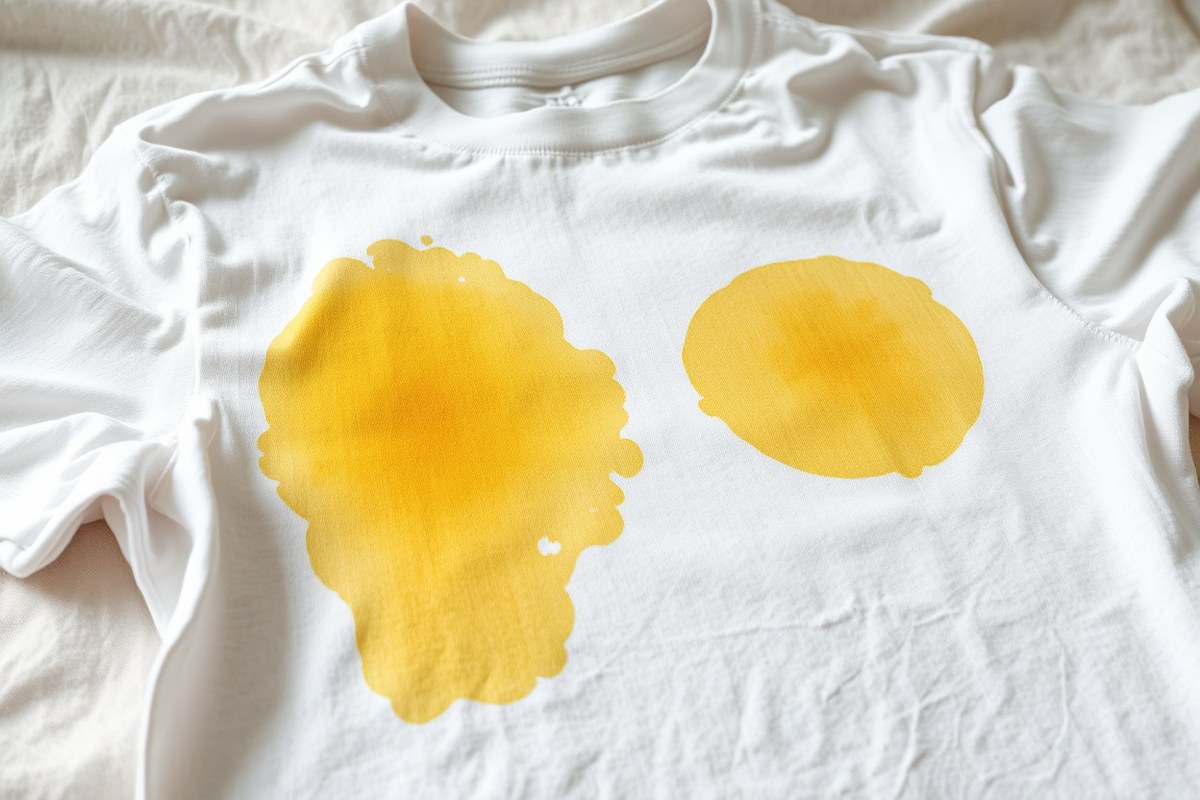
Yellow armpit stains form when your sweat reacts with ingredients in your deodorant, particularly aluminum compounds like aluminum zirconium. Sweat alone mostly contains water and salts, but when mixed with these aluminum-based antiperspirant chemicals, a chemical reaction occurs. This reaction causes proteins in sweat to bind with the metal molecules and stick to fabric fibers, producing the characteristic yellow discoloration. The stain becomes stubborn because this buildup embeds itself deeply into the fibers, especially in cotton and other natural fabrics often used for shirts.
Some stains darken or turn gray instead of yellow due to the combined effects of sweat, deodorant, and hard water minerals. Hard water contains calcium and magnesium, which can react with sweat residue or deodorant buildup, leading to dull gray or darkish stains over time. Also, white deodorant marks on dark fabrics can mask the yellow caused by sweat, creating a mixed appearance of gray or white streaks alongside the typical yellowing. This variation depends heavily on the fabric color, detergent type, and water quality used during washing.
The difference between removing sweat stains and deodorant stains lies in their chemical nature. Sweat stains are protein-based and need treatments that break down proteins without turning the stain more yellow, so avoid chlorine bleach. Deodorant stains often include mineral deposits from antiperspirant ingredients, which may require a combination of oxygen-based bleach and sometimes mild ammonia to dissolve mineral buildup. Washing your shirts with detergent promptly after wearing is important to prevent these compounds from setting into fibers and making removal harder. Soaking the fabric in cool or warm water before treatment helps loosen the buildup.
Proper stain removal relies on addressing both components: the organic protein residues from sweat and the inorganic aluminum compounds from deodorant. Washing immediately after use keeps stains from settling, reducing the need for harsher interventions. Using regular laundry detergent removes sweat, bacteria, and lighter deodorant residue effectively at first. For stubborn buildup, carefully applying an oxygen bleach solution mixed with ammonia can break down mineral deposits without damaging the fabric, but always test on a small area first. This approach costs little more than basic laundry supplies but can restore fabric appearance significantly.
Choosing the right water temperature during pretreatment also matters. Cool or warm water prevents proteins from cooking into the fabric, which hot water can cause, worsening stain setting. Darker fabrics often require extra care to avoid white deodorant streaks overshadowing any sweat stain removal. Deodorant buildup left untreated may accumulate, intensifying discoloration and odor over time. Addressing these early means less effort and better results, while ignoring them leads to permanent fabric damage and costly replacement.
Step-by-Step Checklist for Removing Armpit Stains by Fabric Type

Removing armpit stains requires using specific cleaning methods matched to your fabric’s color and type. White fabrics tolerate stronger treatments and hotter water, while colored and delicate fabrics need gentler care to avoid damage or fading. Proper soaking times and water temperatures maximize stain removal without hurting the garment.
Removing Stains from White Fabrics Safely
White shirts usually handle powerful stain removers and hot water, which help lift sweat and deodorant stains effectively. Using a paste made from baking soda and water or a product containing hydrogen peroxide can brighten the stained areas without discoloration. Hot water helps dissolve residues but should not exceed the fabric’s heat tolerance, typically around 140°F for cotton. Follow these steps to safely treat armpit stains on white cotton shirts:
- Mix 4 tablespoons of baking soda with 1 tablespoon of water to create a thick paste.
- Take a spoon or spatula to apply the paste uniformly across the stained area.
- Let the paste sit for 20 minutes to break down the buildup.
- Rinse the treated area with warm water.
- Wash the shirt using your detergent and the hottest water safe for the fabric (up to 140°F for cotton).
- Air dry the shirt, avoiding the dryer if any stain remains to prevent setting.
Tip: Hot water works best on white cotton but avoid it on fabrics labeled “cold wash only” to prevent shrinking.
Treating Colored Fabrics Without Fading
Colored fabrics need a gentler approach to avoid fading or weakening the fibers. White vinegar and baking soda can be effective without stripping color when used in proper proportions and cool water. Avoid bleach or lemon juice on colored clothes as they may cause discoloration. Here are steps tailored to colored shirts with armpit stains:
- Pre-soak the garment in a solution of 1 part white vinegar to 3 parts cool water for 30 minutes.
- Make a paste using equal parts baking soda and water.
- Apply the paste directly onto the stain and gently scrub with a soft brush or sponge.
- Let it sit for 15, 30 minutes for the baking soda to work.
- Rinse thoroughly with cool water.
- Wash with color-safe detergent in cool water to protect colors.
- Air dry or tumble dry on low heat if the care label allows.
Warning: Avoid hot water or harsh chemicals on colored fabrics to reduce the risk of fading and fabric damage.
Handling Delicate Fabrics Like Silk and Linen
Delicate fabrics such as silk and linen require careful, gentle treatment. Linen tolerates warm water but silk prefers cold water and mild detergents or specialized silk cleaners. Avoid scrubbing that can damage fibers; instead, use gentle blotting and soaking techniques. Use these steps for delicate fabrics with armpit stains:
- Prepare a mild cleaning solution using cold water and a few drops of gentle detergent or silk wash.
- Soak the stained area for up to 15 minutes without agitation.
- Gently blot the stain with a soft cloth, avoiding scrubbing motions.
- Rinse thoroughly with cold water to remove detergent residues.
- Press excess water out carefully without wringing.
- Lay flat on a clean towel to air dry away from direct sunlight.
Tip: Linen can handle warm water but silk must always be cleaned in cold water and air dried to maintain fabric integrity.
Ideal Soaking and Washing Timings
Timing matters for effective stain removal. Pre-soaking allows stain removers to penetrate fibers, making washing more effective. On average, 15 to 30 minutes of soaking works well, but overnight treatments can help with stubborn stains on white or colored fabrics.
For washing, use the hottest water safe for your fabric, usually indicated on care labels, to remove chemical residues. Too long in water or high temperatures on delicate fabrics can cause shrinkage or fading, so follow manufacturer instructions closely.
- Pre-soak whites and colored items for 15 to 30 minutes in the appropriate cleaning solution.
- For persistent stains, soak overnight in a solution with oxygen bleach safe for the fabric.
- Wash immediately after soaking using the right water temperature and detergent.
- Air dry and check stains before using a dryer, which can set stains permanently.
Warning: Avoid drying clothes with any remaining stains to prevent permanent setting, which makes removal far more difficult.
Comparing Stain Removal Ingredients: Effectiveness and Fabric Safety
| Product | Purpose | Safe For Whites? |
|---|---|---|
| Baking Soda | Lifts and deodorizes | ✔️ |
| Hydrogen Peroxide | Brightens fabric | ✔️ |
| White Vinegar | Breaks down buildup | ✔️ |
| Oxygen Bleach | Removes stains and whitens | Mostly, but check fabric label |
| Lemon Juice | Natural bleach and stain breakup | Best for whites and light colors |
Baking soda works well for lifting and deodorizing underarm stains without damaging fabric. You can make a paste by mixing baking soda with water and rubbing it onto the stain, then letting it sit for about 30 minutes before washing. For odor buildup, it’s gentle enough for most fabrics. Hydrogen peroxide brightens white clothes by breaking down stains and removing odors. Use a 3% solution and apply it directly to sweat stains on white fabric only, as it can bleach colored clothes. To boost effectiveness, mix 1 tablespoon hydrogen peroxide with 1/2 cup baking soda and a tablespoon of salt into a paste, scrub gently, then rinse. White vinegar breaks down deodorant and sweat buildup that causes yellowing. Dilute one part vinegar with two parts water and soak the stained area for 30 minutes to loosen particles. Vinegar is safe on all fabric colors and types but avoid over-soaking delicate fabrics to prevent weakening fibers. Oxygen bleach is a color-safe alternative to chlorine bleach. It works by releasing oxygen molecules that lift stains and whiten whites. It’s usually safe for cotton, polyester, and blends, but always test on a hidden area first. Use as directed on the package, typically soaking the clothing in warm water mixed with oxygen bleach for 1 to 4 hours depending on stain severity. Lemon juice contains natural citric acid with mild bleaching properties. It works best on white or light-colored fabrics and can be applied as a 1:1 lemon juice and warm water solution. After applying, expose the fabric to sunlight for natural whitening. Avoid lemon on dark or delicate fabrics to prevent unwanted color fading. Risks include fabric weakening or color fading from hydrogen peroxide and lemon juice on non-whites, and overuse of vinegar which can weaken fibers over time. Oxygen bleach is less harsh but not safe for silk or wool. For deodorant buildup without bleaching, vinegar and baking soda pastes are the safest options. Avoid chlorine bleach unless fabric care labels permit it.
When to Use Home Remedies vs. Commercial Stain Removers
You should decide between home remedies and commercial stain removers based on how old the stain is, the type of fabric, the stain’s severity, and whether previous treatments have failed. Using home remedies can be effective for fresh or moderate stains on durable fabrics, while commercial products often work better for older, set-in stains or delicate materials. Combining methods or escalating treatment helps when a single approach doesn’t fully remove tough armpit stains.
Assessing Stain Age and Freshness
Attempt to treat armpit stains as soon as you notice them to prevent sweat and deodorant molecules from embedding deeply into the fabric. Fresh stains can often be removed by soaking the garment or applying a homemade paste with ingredients like baking soda or vinegar, then washing as usual. For example, soaking in a bowl of Tide Clean Boost Fabric Rinse overnight, followed by a regular wash, can lift relatively recent stains. Older stains that have remained through multiple washes need stronger or combined treatments because the discoloration has bonded more firmly to the fibers.
Immediate treatment works best if you catch the sweat stains within hours to a day. When stains have set for several days or weeks, start with commercial stain removers designed for protein-based stains. These products contain enzymes suited to breaking down the compounds in sweat and deodorant residues, making them more effective on aged stains than most home remedies.
Matching Products to Fabric Material
Certain fabrics require gentler approaches while others tolerate strong chemicals. Cotton and polyester blends typically respond well to both home and commercial products. Delicate fabrics like silk or rayon, and dry-clean-only garments, need careful treatment to avoid damage. Always check the care label before choosing a method. For instance, a mild paste made from baking soda and water applied carefully might suit delicate fabrics, whereas commercial oxygen-based stain removers can be used safely on cotton shirts.
In cases with fabric blends, consider that materials such as elastane or spandex can be sensitive to bleaching agents present in some commercial treatments. When the fabric is delicate or labelled as “hand wash only,” stick to soaking with gentle detergents or commercial products made specifically for delicate textiles. Applying excessive heat or harsh chemicals risks weakening fibers or causing color fading.
Determining Stain Severity Levels
Stain severity determines whether mild household fixes or more aggressive commercial options are necessary. Light perspiration marks that look like faint discoloration often come out with simple soaking in warm water mixed with baking soda or a detergent formulated for protein stains, then a normal wash cycle. Moderate stains may need scrubbing with a stain removal paste and an overnight soak in a rinse solution such as Tide Clean Boost Fabric Rinse before washing.
Severe stains that have turned deeply yellow or brown and resist initial treatments usually require commercial stain removers. These products tend to contain enzymes and oxygen boosters that break up tough buildup better than home remedies. You might need to repeat treatments or combine soaking and scrubbing methods for full removal. Severe staining often costs more in product usage and time because it requires multiple steps.
Knowing When to Combine Treatments
Combining home and commercial stain removers can increase effectiveness, especially on stubborn or older armpit stains. Start by soaking the stained area in a homemade mixture like a 1:1 ratio of white vinegar and water for 30 minutes to loosen the stain. Then apply a commercial enzyme-based stain remover paste, following the product instructions closely, and let it sit for 20 to 30 minutes before washing. This layered approach can attack stains from multiple angles without risking fabric damage.
You can also alternate between treatments: treat the stains first with a natural soak to break down sweat salts, then use a commercial detergent with oxygen bleach in the wash. Avoid mixing products directly, such as combining bleach with vinegar, since this can produce harmful fumes. Instead, apply one method after the other, thoroughly rinsing in between if necessary.
Recognizing Signs to Escalate Care
When repeated home treatments fail to fully remove armpit stains after a few washes, it’s time to escalate to commercial stain removers. Persistent discoloration, odor that remains despite washing, or fabric yellowing are clear signs to use specialized products designed for protein-based stains. These commercial removers cost around $5 to $15 per container but often save garments from permanent damage.
Also escalate care if the fabric’s care instructions allow professional treatment but at-home methods do not work. Take the garment to a dry cleaner experienced with protein stains on delicate fabrics. Avoid using harsher chemicals or excessive scrubbing at home beyond recommended product guidelines, because this can weaken or discolor the material permanently.
Preventing Armpit Stains: Best Deodorants and Lifestyle Habits
Preventing armpit stains after cleaning requires attention to your choice of deodorant, washing routine, and environmental factors like water quality. Choosing the right deodorant plays a major role. Aluminum-based antiperspirants can react with sweat, forming yellow stains on white fabrics and white marks on dark colors. Switching to aluminum-free deodorants reduces this risk. Products like the NIVEA Black & White Invisible Clear 72h Anti-Perspirant are designed to minimize yellow stains and white marks while providing long-lasting protection.
Washing habits also affect the likelihood of stains reappearing. Wash your clothes as soon as possible after use because the longer sweat and deodorant stay on fabric, the harder stains become to remove. If immediate washing isn’t possible, pretreat affected areas with a protein-based stain remover. Avoid drying stained clothes in the dryer before the stain is fully gone, as heat can set the discoloration permanently.
Environmental factors, such as hard water, complicate stain prevention and removal. Hard water contains minerals like calcium and magnesium that reduce detergent effectiveness and can cause buildup. This buildup may trap sweat and deodorant residues, making stains more noticeable and difficult to remove. Using a water softener or adding a detergent booster can improve cleaning results. When washing, use warm water between 90°F to 110°F to help dissolve oils and deodorant residues without damaging fabric.
Skin sensitivity is another factor to consider. Some stain removers and deodorants contain harsh chemicals that can irritate sensitive skin. Opt for non-toxic cleaning agents like baking soda mixed with water to form a paste for pretreating stains. For deodorants, look for ones labeled hypoallergenic or formulated for sensitive skin, which often exclude irritants and strong fragrances.
- Use aluminum-free deodorants to reduce the chance of yellow stains.
- Pretreat stains promptly with a gentle, protein-targeted stain remover.
- Avoid drying stained clothes in the dryer until stains are completely removed.
- Choose breathable fabrics like cotton to reduce sweat buildup under arms.
- Wash clothes in warm water (90°F to 110°F) to improve cleaning effectiveness.
- Consider adding a water softener if you have hard water issues.
- Pick deodorants and cleaning products designed for sensitive skin to prevent irritation.
Do not put clothes with fresh armpit stains in the dryer; heat permanently sets stains and makes them impossible to remove.
Regularly rotating shirts and allowing sweat to dry naturally on skin before dressing can limit moisture buildup that leads to stains. Wearing breathable fabrics keeps your skin cooler, reducing sweat accumulation. These habits complement your use of the right deodorants and washing routines to prevent armpit stains and keep garments looking fresh for longer.
Safely Removing Odor and Stubborn Deodorant Buildup
Removing armpit stains effectively means targeting both visible discoloration and the odor or film left by deodorant buildup. Treating these together prevents fabric damage and keeps your clothes fresh. Use gentle methods tailored to your fabric type, combining soaking, scrubbing, and odor-neutralizing agents without bleaching.
Identifying Deodorant Buildup vs. Stains
Deodorant buildup appears as a white or grayish residue on clothing, often stiff or rough to the touch, differing from the yellowish stains caused by sweat and body oils. This buildup results from aluminum compounds and other minerals in many deodorants that adhere to fibers.
Recognizing whether you’re dealing with buildup or a sweat stain affects your approach. Buildup resists simple washing and can dull fabric colors if treated too aggressively, while true stains require stain-lifting agents. Testing a small fabric area with water can help: buildup often flakes or softens, while stains stay intact.
Effective Soaks and Scrubbing Techniques
Soaking clothes in a solution that breaks down oils and minerals loosens deodorant buildup and stains. Use lukewarm water (around 90°F or 32°C) to avoid fabric damage. Avoid harsh bleaches on colored or delicate materials, opting instead for stain removers with enzymes or gentle agents. Follow this step-by-step soaking and scrubbing process for best results:
- Turn the garment inside out to access the armpit area directly.
- Mix a soak solution using 1 quart of lukewarm water and 2 tablespoons of a specialized stain remover or gentle detergent.
- Submerge only the stained armpit area and soak for 30 minutes, or overnight if buildup is severe.
- After soaking, gently scrub the armpit fabric with a soft-bristled brush or cloth to break down residues.
- Rinse the garment thoroughly with cool water.
- Apply a small amount of enzyme-based stain remover or liquid detergent to the armpit area and let sit for 5 to 10 minutes.
- Wash the garment as usual in cool or warm water, checking care labels first.
- Air dry or use a low-heat dryer cycle; avoid high heat until stains are fully removed.
Repeat the process if stains or odor persist before drying, as heat can set the residues permanently.
Using Odor-Neutralizing Ingredients Safely
Neutralizing odor requires targeting sweat-causing bacteria without harming fabric dyes or fibers. Ingredients like white vinegar, baking soda, or specialized laundry additives remove odor effectively. White vinegar’s mild acidity breaks down mineral buildup and neutralizes smells without bleaching.
To treat odor alongside stains safely, add 1 cup of white vinegar to the rinse cycle or prepare a presoak with ½ cup vinegar in a quart of water. For baking soda, sprinkle ¼ cup directly on damp armpit areas before washing to absorb odors. Avoid mixing vinegar and baking soda simultaneously as their reaction reduces effectiveness.
Avoiding Common Mistakes That Make Armpit Stains Worse
Scrubbing armpit stains too hard or too often can weaken fabric fibers, causing thinning or small holes. Instead, gently apply a stain remover or paste and use a soft brush like an old toothbrush only as needed. Let the remover soak for 10 to 30 minutes before rinsing, which helps break down buildup without scrubbing aggressively.
Machine drying clothing with armpit stains still present can make removal much harder or impossible. The high heat, often above 120°F, causes chemical bonds between the stain and fabric to strengthen, effectively setting the stain permanently. Air dry your clothes on a line or flat surface until stains are fully removed, then use the dryer if needed. This may take multiple cleaning attempts if the stain is deeply set. Common errors that make armpit stains worse include:
- Applying bleach or multiple stain removers together, which can damage fabric and cause discoloration
- Ignoring stains and placing clothes directly in the dryer
- Scrubbing too hard or using abrasive tools
- Washing clothes infrequently, allowing sweat and deodorant buildup to embed stains further
- Using hot water for delicate or protein-based stains, which can cook the stain in
- Drying clothes in direct sunlight on certain fabrics that may fade or weaken (e.g., silk)
- Not following product directions for stain removers or detergents
You can fix or prevent many of these problems by carefully inspecting clothes for stains after washing, choosing appropriate stain removal products for the fabric type, and always air drying until you confirm the stain is gone. Washing clothes promptly after use with a good detergent also reduces buildup that causes stains. For stubborn stains with material stiffness, a soft scrub brush helps remove residue gently. Lastly, trimming or shaving underarm hair can limit moisture retention and buildup, reducing stain formation over time.
Adjusting Stain Removal by Climate, Water Type, and Fabric Blend
Seasonal and regional differences can change how you treat armpit stains. Hotter months or humid climates cause more sweating, which increases stain buildup. In these conditions, pre-soaking shirts in cool water combined with a stain remover is helpful. For example, soak cotton or polyester garments for 30 minutes to loosen sweat and deodorant residue before washing. When the climate is dry and cool, stains may appear less severe, but buildup can still occur. Regular washing cycles with detergent focused on enzymes or oxygen-based bleach will work well without soaking. Avoid very hot water as it can set the stain, especially in summer when sweat residue is fresh.
Water hardness affects how well you can remove armpit stains. Hard water contains minerals like calcium and magnesium that react with sweat’s proteins and oils, worsening stain attachment. These minerals also reduce detergent effectiveness, requiring stronger cleaning methods. Adding a water-softening agent or using liquid detergent formulated for hard water improves results. In areas with hard water, boost stain removal by mixing 2 tablespoons of baking soda or washing soda with your regular detergent. Pre-treat stains with a paste made from baking soda and water applied directly to the armpit area, letting it sit for up to 30 minutes.
Synthetic fabrics such as polyester and nylon trap sweat and deodorant more than cotton, making stains harder to remove. Because these fibers do not absorb water easily, it’s essential to actively lift the stain rather than rely on rinsing. Use a stain remover designed for synthetic fabrics, applying it liberally and allowing 15 to 20 minutes for penetration. Avoid bleach on these materials since it can weaken fibers or cause discoloration. For polyester blends, pre-treat stains with a mixture of liquid detergent and a small amount of white vinegar to help break down residue, then wash with warm water set between 90°F and 110°F to avoid fabric damage.
Adding an enzyme-based detergent for armpit stains after seasonal exposure helps break down protein-based components of sweat. In humid conditions, selecting a detergent with oxygen bleach improves whitening without harsh chemicals. For persistent stains on synthetic blends, applying a paste of oxygen bleach powder and water to armpits before washing can increase success. Avoid ironing or drying stained clothing in heat until the stain is fully removed, since heat can set residues permanently. Instead, air dry and inspect the fabric before using higher temperatures. These regional and fabric considerations make the difference between fading stains and leaving lasting marks.
Test any stain remover or solution on a hidden fabric area before applying to avoid colour loss or damage, especially in synthetic blends.
Step-by-Step Action Plan for Removing and Preventing Armpit Stains
Follow this plan to tackle armpit stains on different fabrics, remove odors, and reduce future buildup effectively using household or commercial methods.
- Before You Start: Identify the fabric type and stain severity. Check care labels to choose safe stain removers. Knowing this helps prevent damage and select the right treatment.
- Day 1: Pretreat the stain using a suitable solution, use a mild enzymatic detergent for cotton or a gentle stain remover for delicates. Let it sit for 15 minutes. The stain should start to lighten without harming the fabric.
- Day 2: Wash the garment in the warmest water safe for the fabric with a detergent formulated to break down protein and deodorant buildup. Inspect after washing; the stain should be noticeably reduced or gone.
- Day 3: For remaining stubborn stains, apply a diluted hydrogen peroxide solution for white or colorfast fabrics and rinse thoroughly. Avoid on sensitive materials. Stains should fade significantly while fabric maintains integrity.
- Weekly Habit Starting Now: Use a deodorant labeled as stain-preventing and avoid antiperspirants with aluminum compounds. This reduces fresh buildup and links to yellowing.
- Before Each Wash: Soak stained areas briefly in cold water or a mix of water and baking soda. This inhibits setting of proteins and deodorant residues. Stains become easier to treat over time.
- Monthly Review: Check garments for odor and discoloration. Use a targeted commercial odor remover or add white vinegar to the rinse cycle if odor persists. Fabrics should smell fresh and have no visible residue.
- Ongoing: Adjust your methods based on local water hardness and climate, use water softeners or more frequent pretreatment in hard water areas. Proper adjustment helps maintain fabric and stain control over time.
Frequently Asked Questions
Can Armpit Stains Be Completely Removed from All Fabric Types?
Most armpit stains can be removed, but removal depends on fabric type and stain age. Delicate fabrics require gentler methods and may need professional care.
How Often Should I Treat Armpit Stains Before Washing?
Treat stains as soon as possible for best results. Immediate pre-treatment prevents setting and improves removal success.
Can I Use the Same Stain Remover for Deodorant Buildup and Sweat Stains?
Different components in deodorant and sweat stains may need distinct treatments. A product effective on one might not fully remove the other.
Does Water Temperature Affect Armpit Stain Removal?
Cold water helps prevent stain setting on colored fabrics, while warm water is better for white clothing after pre-treatment. Check care labels first.
Are Natural Remedies Like Lemon Juice Safe for All Clothing?
Lemon juice works well for white fabrics but can bleach colored clothes or damage delicate fibers, so test on a small area first.
How Does Hard Water Influence Armpit Stain Formation and Removal?
Hard water minerals can worsen buildup and stain setting, making removal harder. Using water softeners or additives can improve cleaning results.
Before You Go
Getting rid of armpit stains takes the right approach tailored to your fabric and stain severity. Start by treating a small area first to ensure your chosen method won’t damage the fabric. Today, pick one stained garment and try a gentle stain remover or home remedy, then launder it as recommended to see how well the stain lifts before moving on to harsher treatments or different fabrics.