
How to Get Pest Control Leads: 10 Proven Strategies That Deliver Results
How to get pest control leads begins with focusing on channels that deliver qualified prospects, including local SEO, targeted online ads, and referral networks. You’ll want to measure costs per lead carefully, as prices vary by market and season, and nurture leads consistently until they convert. Knowing which offers attract both residential and commercial clients helps you prioritize efforts efficiently.
This overview suits pest control business owners and marketing managers aiming to boost lead generation with specific, practical steps. It covers proven strategies to track lead quality, use seasonal demand shifts, and use digital tools like Google Ads and SEO to capture the right audience. The goal is to guide you through realistic options and tradeoffs so you can focus your marketing budget where it counts.
Key Takeaways
- Local SEO targeting specific pest control services and neighborhoods effectively attracts quality leads by ranking higher in relevant search results.
- Pay-per-click ads on Google and Facebook generate faster pest control leads but require a budget of $20 to $80 per lead depending on location.
- Offering free inspections or pest identification guides as lead magnets increases prospect engagement and conversion rates significantly.
- Consistently following up with leads through email or calls nurtures interest and boosts chances of booking appointments.
- Seasonal demand peaks in warmer months and varies regionally, so adjusting marketing efforts accordingly improves lead flow and budget efficiency.
- Tracking lead source, cost, and conversion rates allows pest control businesses to refine strategies and focus on the most profitable channels.
1. What Are the Best Channels to Get Pest Control Leads?
You can get pest control leads from a mix of online and offline channels, each with strengths depending on your budget, location, and target audience. Online sources like SEO and Google Ads reach customers actively searching for services, while offline methods like referrals and direct mail build trust in local markets. Choosing the right combination depends on your business model and lead quality goals.
Online Channels: SEO, Google Ads, Facebook Ads, Local Listings
SEO attracts leads by improving your website’s visibility on search engines for queries like “pest control near me.” It requires optimizing your site content, creating location pages, and getting backlinks. SEO can take 3 to 6 months to show results but delivers steady, lower-cost leads once established.
Google Ads brings immediate traffic through pay-per-click campaigns targeted at pest control keywords. Costs vary by location; in urban areas you might pay $20 to $50 per lead due to competition. Managing your budget and ad copy daily is necessary to maintain profitability.
Facebook Ads let you target users by demographics, interests, and behavior, useful for generating awareness and service offers, especially for residential services. You can experiment with lead forms directly on Facebook; expect cost per lead between $10 and $25 depending on offer and targeting.
Local listings like Google My Business, Yelp, and Angie’s List help you appear in map packs and review results. Keeping these profiles updated with accurate info, photos, and positive reviews builds credibility. Most clicks here are free but require ongoing management.
- SEO: Long-term, organic, lower cost per lead but slower results.
- Google Ads: Fast lead generation, controllable budget, higher cost per lead.
- Facebook Ads: Good for residential targeting and brand awareness, moderate cost.
- Local Listings: Free visibility and strong trust factor, needs regular updates.
- Each online channel calls for tracking and tuning campaigns for lead quality.
Offline Channels: Referrals, Direct Mail, Networking, Signage
Referrals are among the most reliable offline sources. Encouraging satisfied customers to recommend your service reduces lead cost to almost zero and brings higher conversion rates. A simple way to increase referrals is asking while on-site or following up with a thank-you email that includes referral incentives like $25 off their next service.
Direct mail campaigns deliver physical flyers or postcards with offers such as free inspections or seasonal discounts. You need a targeted mailing list based on neighborhoods with pest issues. A typical campaign costs $0.50 to $2 per piece sent, including design and postage. Tracking response rates (usually 1-3%) helps you refine offers.
Networking with property managers, realtors, and local business groups develops steady referrals and commercial leads. Attend meetings regularly and offer value through presentations or joint promotions. This is more time-intensive but effective for commercial pest control leads.
Signage on company vehicles, yard signs at serviced homes, and banners increase local brand recognition. This passive channel supports all others by keeping your name visible in service areas. Initial costs range from $300 to $1,500 depending on signage quality and scope.
- Referrals: Lowest cost, high trust, ask for them directly at service completion.
- Direct Mail: Targeted, measurable, with clear calls to action, costs $0.50, $2 per piece.
- Networking: Builds commercial leads, needs consistent effort and relationship-building.
- Signage: Supports local presence, one-time investment, no direct lead tracking.
How to Choose Channels Based on Your Business Type
If your pest control business focuses on residential customers, prioritize local SEO, Google Ads for geo-targeted campaigns, and Facebook Ads to reach homeowners by interest. Combine these with referrals and door hangers in neighborhoods you serve. Residential leads respond well to promotions for recurring services and seasonal pest problems.
For commercial pest control, networking, referrals from property management, and LinkedIn outreach often yield better results. Commercial clients look for reliability and certifications, so invest in offline relationship-building and update your online business listings with professional details. Google Ads can still work but tailor ads for commercial terms and decision-makers.
Start by testing one or two online channels alongside referrals or mail campaigns, then track the cost per lead and conversions. Shift spend to the channels providing leads that convert into paying customers with acceptable acquisition costs. The right balance depends on your geography, competition, and budget.
| Lead Source | Cost per Lead | Lead Quality | Conversion Rate |
|---|---|---|---|
| SEO | Low ($5, $15 after ramp-up) | Good, inbound intent | 5%, 10% |
| Google Ads | Moderate to High ($20, $50) | High, targeted | 7%, 12% |
| Facebook Ads | Medium ($10, $25) | Moderate, interest-based | 3%, 8% |
| Local Listings | Free to Manage | High trust, often commercial & residential | 8%, 15% |
| Referrals | Very Low | Very High | 20%+ |
| Direct Mail | Low to Medium ($0.50, $2 per piece) | Variable | 1%, 3% |
| Networking | Low to Moderate (time costs) | High, commercial leads | 10%+ |
2. How Much Does It Cost to Acquire a Quality Pest Control Lead?
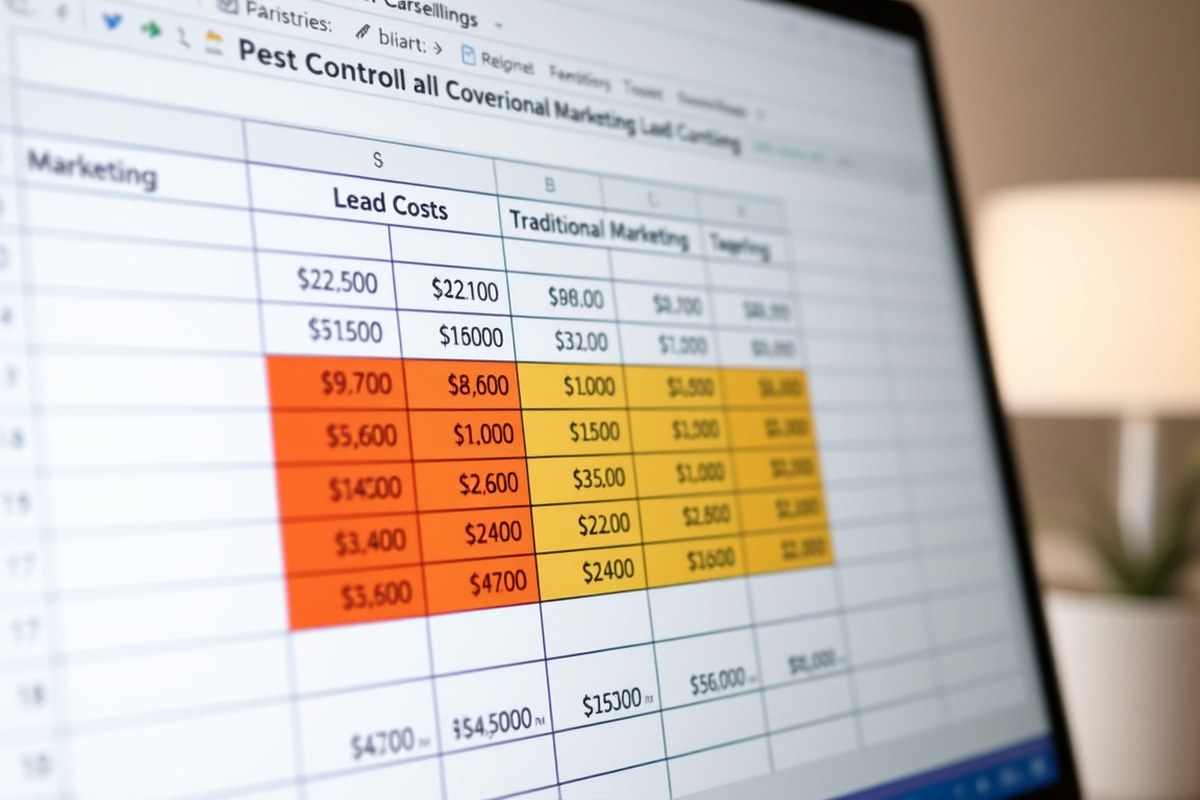
Acquiring a quality pest control lead typically costs between $30 and $80 depending on the marketing channel used. Setting a realistic budget and understanding the return on investment (ROI) from each platform helps you decide where to focus your spend to attract profitable business.
Typical Cost per Lead Benchmarks by Channel
Pest control lead costs vary widely based on the source, targeting, and competition in your area. Pay-per-click ads usually cost more than social media leads but may deliver higher intent prospects. Local directories and home service marketplaces often charge a flat fee per lead that can be surprisingly high.
| Channel | Average Cost Per Lead (CPL) | Lead Quality |
|---|---|---|
| Google Ads (Search) | $40 – $75 | High intent; prospects actively searching |
| Facebook Ads | $30 – $55 | Lower intent; requires more follow-up |
| Home Service Marketplaces (e.g., HomeAdvisor) | $50 – $90 | Mixed quality; competitive bidding |
| Local SEO Organic Leads | $0.00 (no direct cost but time/effort) | High quality; takes time to build |
| Direct Mail Campaigns | $20 – $45 | Varied quality; geographic targeting possible |
Leads from Google Ads are more costly because prospects often have immediate needs, such as termite or rodent control. Facebook leads require more nurturing and qualification, so they tend to be cheaper but convert more slowly. Marketplaces charge higher CPL due to the automated lead distribution model.
Calculating ROI: Google Ads vs Facebook Ads Case Study
Calculating ROI requires comparing the total revenue generated from leads against your ad spend. For example, suppose Google Ads delivers 100 leads at a $50 CPL, costing $5,000. If your average customer from this source spends $700 and closes at a 25% rate, total revenue equals 25 x $700 = $17,500. After subtracting ad costs, your gross return is $12,500.
Now, consider Facebook Ads delivering 150 leads at a $40 CPL, costing $6,000. Facebook leads close at around 15% due to lower intent. So 150 x 15% = 22.5 customers at $700 each equals $15,750 revenue. Deducting the $6,000 ad spend leaves a $9,750 return.
Both platforms show positive ROI but Google Ads offers higher margin due to better close rates. Use this kind of simple math to compare and adjust spend monthly according to actual performance rather than assumptions.
Track lead source and conversion carefully to avoid wasting budget on less-profitable channels.
How to Set a Practical Lead Generation Budget
Start by estimating how many new customers you want and multiply by your average CPL benchmark. For example, targeting 50 new customers per month with a $50 average CPL means a $2,500 monthly budget for paid leads. Build a cushion for testing different ads and keywords.
Align your budget with your sales capacity. Spending on thousands of leads that your staff can’t handle promptly lowers conversion and wastes money. Set a cap to avoid overspending initially. Increase gradually after tracking lead quality, conversion rate, and average customer value for two to three months.
Use data from past campaigns or local benchmarks as a baseline. Adjust budgets based on seasonal demand spikes or changes in competition. Monthly re-evaluation helps you maintain efficiency.
3. How to Use SEO to Attract Local Pest Control Leads
SEO attracts local pest control leads by making your business visible when potential customers search for pest services nearby. Targeting relevant keywords and optimizing local listings help you show up in front of your competitors. Following proven local SEO steps, including Google My Business optimization and content focused on your service areas, delivers qualified leads that convert.
Optimizing Google My Business Profile
Google My Business (GMB) is the foundation of local SEO for pest control. A fully optimized GMB profile improves your chances of appearing in the map pack and local search results, where many customers start their search.
Include accurate business details such as name, address, phone number (NAP), and service hours. Add high-quality photos showing your team, vehicles, and completed pest control jobs to build trust. Use the description field to include relevant keywords naturally, focusing on the types of pests you handle and your service locations.
Keep your profile active by posting updates regularly about promotions, seasonal pest alerts, or new services. Respond promptly to questions and reviews on GMB to improve engagement and local ranking signals.
Keyword Research for Pest Control Services
Identifying keywords that your local customers use is essential for targeting the right traffic. Focus on a mix of general service terms, pest-specific phrases, and localized queries. Keywords need to reflect how people search for pest control in your exact service area.
Target phrases like “pest control near me,” “exterminator in [city],” and “[pest type] treatment [city].” Use tools like Google Keyword Planner, Moz, or Ahrefs to find search volume and competition levels. Long-tail keywords such as “eco-friendly termite control in Springfield” often have lower competition and attract qualified leads. Maintain a keyword targeting checklist that includes:
- Service-based keywords (e.g., “bed bug extermination”)
- Location-specific keywords (e.g., “[city] pest services”)
- Problem-specific keywords (e.g., “rodent removal”)
- Seasonal keywords when relevant (e.g., “mosquito control summer”)
- Competitor keywords for comparison and opportunity insights
Creating Localized Website Content and Landing Pages
Search engines prioritize sites with relevant, location-based content. Creating specialized pages for each service city or neighborhood allows you to appear in more targeted searches. Include the city or neighborhood name in headings, titles, meta descriptions, and naturally within the content.
Develop pages that speak directly to common pest problems in each area. For example, a page titled “Rodent Control Services in Austin” should describe local challenges, methods you use, and why customers nearby choose your company. Add testimonials and case studies from clients in that area to build credibility.
Include clear calls to action on each page, such as “Schedule Your Free Pest Inspection in [City] Today” with a visible phone number and contact form. Avoid duplicated content by ensuring each page contains unique information and location-specific details.
Collecting and Using Reviews for SEO
Online reviews significantly impact local search rankings and customer trust. Actively requesting reviews after service completion increases your profile of fresh, relevant feedback. Google considers the quantity, quality, and recency of reviews as part of its ranking signal.
Develop a process to ask customers for reviews via email or text message shortly after service. Include direct links to your Google My Business page to make it easy. Respond to all reviews politely, whether positive or negative, to show engagement and commitment to customer satisfaction.
Showcase reviews on your website using schema markup to enable rich snippets in search results. This makes your listing more noticeable and credible to local searchers.
Tracking SEO Performance with Tools
Measuring SEO progress helps you identify what works and where to improve. Use Google Analytics to track organic traffic and determine which pages bring the most local visitors. Google Search Console shows your ranking keywords, click-through rates, and any technical issues affecting your presence.
Local SEO tools like BrightLocal or Whitespark provide insights on your map rankings, citation consistency, and competitor performance. Set up monthly reporting to monitor trends in Google My Business views, calls, and website visits from local searches.
Regular audits reveal broken links, slow page loads, or duplicate content that can hurt rankings. Fix these promptly to maintain search visibility. Tracking also helps adjust your keyword strategy and content based on seasonal demand or changes in customer behavior.
4. Which Online Ads Work Best for Pest Control Lead Generation?
Google Ads and Facebook Ads are the primary online platforms that deliver the best return for pest control lead generation. Google Ads captures users actively searching for pest control, while Facebook allows targeting by location, interests, and demographics. Paid ads usually take around 1 to 3 weeks to stabilize results, during which optimizing targeting and creative materials is important.
Google Ads for High-Intent Search Traffic
Google Ads performs best for pest control because it connects your business with customers who already need services. Running search campaigns focused on keywords like “pest control near me” or “exterminator service” targets these high-intent users. It’s important to use exact match and phrase match keywords to avoid wasting budget on irrelevant searches.
Set geographic targeting to your service area, such as city or ZIP code boundaries, to ensure your ads only show to local prospects. Use ad extensions like call buttons and location info to make it easy for potential customers to contact you directly. Since bids in competitive markets can vary widely, monitor your cost-per-click and adjust daily budgets accordingly. Expect campaigns to require about two weeks of data to begin performing consistently.
Facebook Ads for Demographic and Interest Targeting
Facebook Ads let you target based on detailed demographics like age, income level, homeownership status, and interests related to pest problems or home improvement. This platform works well for brand awareness and engaging users who might not be actively searching but match your ideal customer profile. You can run lead generation campaigns with integrated forms to capture prospects without them leaving Facebook.
Use location targeting carefully by including and excluding zip codes or neighborhoods where your service is available. Testing different audience segments and lead form lengths is key to improving your cost per lead. Unlike Google Ads, Facebook results often take up to three weeks to reach steady conversion rates because you’re building interest first rather than capturing intent directly.
Display and Remarketing Ads Strategies
Display ads on Google’s network or Facebook can help keep your brand in front of past website visitors or people who clicked your previous ads but didn’t convert. Remarketing ads remind prospects of your service and can improve overall conversion rates by 20% or more. Set frequency caps to avoid oversaturating viewers and driving up ad fatigue.
Use clear creative and calls to action in remarketing banners or video ads, emphasizing offers such as free inspections or seasonal discounts. Segment your audience by how recently they engaged and tailor messages accordingly. Costs for display and remarketing ads generally run lower than search ads but should be viewed as a supplement rather than a stand-alone lead source.
Optimizing Ad Creatives and Offers
Ad copy should focus on specific pest problems your service solves, such as termite treatment, rodent control, or bed bug extermination. Highlight guarantees or certifications to build trust. Use images or short video clips showing your technicians in action or the pests themselves to attract attention.
Incorporate offers like a free estimate or a 10% discount for first-time customers with clear call-to-action buttons to drive conversions. Avoid vague promises; instead, provide details such as “Schedule now and save $50 on your first treatment if booked within 7 days.” Test different versions of headlines, images, and offers to learn what resonates best with your audience.
Monitoring and Adjusting for Better Conversion
Track key metrics like cost per lead, click-through rate, and conversion rate closely from the start. Use platforms’ built-in analytics to understand which ads and targeting settings produce the most qualified leads. Lower-performing campaigns should be paused or refined quickly to avoid unnecessary spend.
Split testing different audiences, ad formats, and offers regularly helps improve results over time. Adjust bids based on the devices and times of day that generate the highest contacts. Also, sync your ads with your CRM where possible to follow lead quality beyond the initial click, so you can focus your budget on strategies producing actual bookings.
5. What Lead Magnets and Offers Convert Pest Control Prospects?
Lead magnets that deliver clear value, like free inspections, timely discounts, or helpful guides, motivate prospects to share their contact information. Tailored offers addressing either residential or commercial clients boost conversion by matching their specific pest control concerns and purchasing habits. Focus on low-risk, tangible benefits and easy actions to increase lead capture.
Free Inspection or Consultation Offers
Offering a free pest inspection or consultation is one of the most effective lead magnets for both residential and commercial audiences. It removes the uncertainty and upfront cost barrier, encouraging prospects to connect without feeling pressured to buy immediately. For residential clients, emphasize the thoroughness of a home inspection to identify potential risks and explain the inspection process in clear terms.
Commercial clients often require more detailed assessments of their property and compliance checks with pest-related regulations. Tailor the offer by specifying what types of commercial properties you serve, such as restaurants or warehouses. A free consultation can also be positioned as a way to create a customized pest control plan, which adds professional value beyond a simple inspection.
To promote this offer, use a clear call-to-action on your site and ads, such as: “Schedule your free, no-obligation pest inspection today.” Implement a simple online scheduling tool or provide a direct phone number. Ensure your staff is prepared to follow up quickly after a prospect signs up to convert the lead.
Discount Coupons and Seasonal Promotions
Discount offers drive immediate action from leads by lowering the initial cost. Residential customers respond well to percentage-based discounts like 15% off an initial treatment or fixed-dollar coupons ($50 off services over $200). Timing coupons around peak pest seasons, spring for ants, summer for mosquitoes, boosts relevance and effectiveness.
Commercial customers value volume discounts or multi-treatment contracts. For instance, offering 10% off contracts exceeding six months or bundled pest inspections plus preventive treatments can sway decision-makers. Be explicit about any limitations, such as geographic areas, time frames, and which pests or services the discount applies to. Examples of discount offers you can test include:
- 10% off first pest treatment
- $30 off termite inspection services
- Seasonal mosquito control special, buy one get one half off
- Free treatment with annual service agreement for commercial properties
- Refer a neighbor and both get $25 credit
Tracking which discounts perform best by channel and client type helps refine your offers and avoid eroding profit margins.
Limit discount availability to new customers or specific pest types to protect ongoing revenue and maintain perceived value.
Downloadable Guides and Pest Prevention Tips
Offering educational content as a lead magnet works well to build trust before a direct sales pitch. For residential prospects, create short guides explaining how to spot signs of common pests, like bed bugs or termites, and how weather affects pest activity. These guides should be easy to download after a visitor provides an email or phone number.
Commercial clients prefer technical content like compliance checklists, pest risk assessments, or protocols for pest management in food service environments. This positions your company as knowledgeable and can start meaningful conversations with facility managers or business owners.
A typical lead capture setup involves a landing page explaining the guide’s benefits, a brief form, and automated email delivery of the resource. This setup costs little beyond initial content creation. Useful topics include:
- Pest identification charts for homeowners
- Seasonal pest preparation checklists
- Building maintenance tips to reduce pest entry points
- Guidelines for commercial pest control compliance
- How to monitor and report pest activity
Updating the guides annually keeps the content relevant and encourages repeat visits or referrals.
Referral Rewards and Loyalty Incentives
Encouraging current customers to provide leads is highly cost-effective. Referral rewards such as discounts on future services, gift cards, or account credits can motivate homeowners to recommend you to neighbors. Define clear terms like “Receive $25 credit for each referral that completes service” to avoid confusion.
Commercial clients may value service upgrades or priority scheduling as referral incentives more than cash rewards. Consider loyalty programs where repeat customers accumulate points toward free inspections or additional treatments, which help retain existing clients and generate leads from their network.
Bearing in mind, referral requests work best when followed up personally, ideally by your service technicians who have direct contact with clients. Provide referral cards or digital links that customers can share easily.
- Offer $25 account credit per successful referral
- Provide referral materials during service visits
- Implement a points system redeemable for free inspections or services
- Thank referrers promptly with a personal note or reward
- Keep referral promotion simple and transparent
Track referral source data to identify your best ambassadors and adjust rewards accordingly.
6. How to Nurture Pest Control Leads Until They Convert
Effective nurturing of pest control leads requires a structured approach using calls, emails, and sometimes texts that keep prospects engaged without overwhelming them. Following up at regular intervals with tailored messaging increases the chance that a lead will book a service. Using clear scripts and email templates aligned with each touchpoint ensures consistency and professionalism.
Setting Up Lead Tracking and CRM Tools
Tracking all lead interactions begins with a reliable CRM system tailored to pest control. A CRM helps organize data, schedule follow-ups, and monitor lead status changes, minimizing lost leads and duplicated efforts. Choose software that integrates easily with your phone system and email platform to automate reminders.
Input every lead immediately, including their contact info, inquiry source, and notes from conversations. Record each contact attempt and update lead disposition after every call or message. This data shows which follow-ups work and which leads require a different approach.
Phone Call Scripts for Initial Contact and Follow-Up
Phone calls remain the most direct way to engage inbound pest control leads. Use a professional yet conversational script focused on listening to the prospect’s needs while guiding them toward booking. Avoid hard selling on the first call. Instead, build rapport and identify urgency. Here’s a script for initial contact:
“Hello, this is [Your Name] from [Company]. I saw you reached out about pest control services. Can I get your address and a little detail about the issue so I can provide the best options for you?”
After gathering details, say:
“Based on what you told me, I think we can help. I’d like to offer you a free inspection on [offer two dates/times]. Would one of those work for you? I can secure that appointment right now.”
For follow-up calls if the lead doesn’t immediately book, use this script:
“Hi [Name], this is [Your Name] from [Company]. I wanted to check in and see if you have any questions about the pest control options we discussed. We want to make sure you get the right service at the best time.”
Keep follow-up calls brief and value-focused. When a lead is not ready, ask permission to check back later and schedule that callback.
Email Nurture Sequence Best Practices
Email sequences serve to maintain contact and share helpful information until the lead is ready to convert. Start with a thank-you email immediately after lead capture, confirming you received their request and will follow up by phone or in person.
Space your emails over 2 to 3 weeks, blending educational content about pest control with service reminders. Avoid overly promotional language early on, focus on building trust. Example sequence:
- Day 1: Thank you email with company introduction and contact details.
- Day 3: Educational email explaining common pests in their area and prevention tips.
- Day 7: Service overview email explaining your treatment methods and guarantees.
- Day 14: Reminder email offering a limited-time discount or free inspection to motivate booking.
- Day 21: Final check-in email asking if they want to schedule or get more info.
Use clear calls to action in each email, such as “Schedule your free inspection” linking to an online calendar or phone number. Personalize emails with their name and pest type if known. Monitor open and click rates, and adjust timing or content to improve engagement.
When and How to Use Text Messaging
Text messaging works well for quick follow-ups and appointment reminders because of its immediacy and high open rates. Use texts to confirm scheduled visits and gently remind leads to reply or book if they have not responded to emails or calls. Example text after a call or email:
“Hi [Name], this is [Your Name] with [Company]. Just following up, would you like to schedule your free pest inspection this week? Reply yes or call us at [phone number].”
Keep texts brief, courteous, and do not send multiple texts in one day to avoid annoyance. Use texting only after consent or an initial interaction to stay compliant with regulations.
Qualifying Leads to Focus Sales Efforts
Qualifying leads early saves time by focusing your sales team on those with the highest chance to convert. During the first call or email exchange, ask targeted questions about the pest problem, budget, timing, and decision process. Use these steps to qualify leads:
- Ask what pest issue they are experiencing and how long it has been going on.
- Determine if they have tried other treatments and the results.
- Confirm their location is within your service area.
- Inquire about their budget or willingness to invest in pest control.
- Identify the person’s role in deciding and the timeline for action.
Leads not meeting key qualification criteria should be noted and can receive a lighter nurture sequence or be passed to lower-cost marketing channels. This allows salespeople to spend time on ready and serious customers, improving conversion rates and efficiency.
7. How Do Seasonal and Regional Factors Affect Pest Control Lead Demand?
Seasonal changes and regional climate strongly influence the demand for pest control leads. Managing marketing efforts according to these factors helps maintain steady lead flow and reduces slow periods. You need to know the peak seasons in your target areas and adjust your budgets and promotions accordingly.
Peak Pest Control Seasons by Region
Pest activity varies widely based on climate zones, affecting when people seek pest control services. In northern states with cold winters, pest problems often spike in late spring through summer as insects become active and rodents seek shelter. Southern and coastal areas generally see pests year-round with peaks in warmer months but some species are problematic in cooler months too.
For example, termites in the Southeast grow more active from April to October, while rodents in the Northeast increase calls during fall as they try to enter homes. Tailor your lead generation timing to these patterns by researching the main pests in your service regions. That knowledge helps you schedule campaigns when prospects are most likely to request service.
Adjusting Marketing Budgets for Seasonal Demand
Shifting your marketing budget to match seasonal demand keeps spend efficient and reduces waste from off-peak periods. Increase ad spend on paid campaigns during high-demand months and scale back during quieter times. Consider shifting budget toward branding and nurturing in slow seasons so you maintain presence without overspending.
You can also diversify channel focus seasonally. For example, search ads may work best when pest urgency is high, but social media and email marketing can nurture leads outside peak season to stay top-of-mind. Using historical lead data or industry averages helps anticipate demand variations.
- Plan increased digital ad budgets 30-50% higher in peak pest months
- Reduce spend 20-40% in slow seasons but maintain some presence
- Shift budget focus to retargeting and email marketing when demand drops
- Test promotions timed to seasonal cycle for maximum engagement
- Adjust bids and keywords to target regionally relevant pests by season
This budget flexibility supports consistent lead flow and maximizes return on ad spend throughout the year.
Promotions to Drive Off-Season Leads
Running targeted promotions can stimulate interest during slower periods when demand cooling down. Offers should focus on preventive treatments that appeal to customers before pest problems escalate. Discounts around winter prep, termite inspections in early spring, or rodent exclusion services in fall often perform well.
Specifically, promote packages like “Pre-Season Pest Prevention” or “Winter Pest Inspection” to encourage booking services ahead of peak activity. Use email campaigns to past customers with reminders about seasonal risks. Make discount amounts modest, around 10-15%, to maintain margins and avoid devaluing services.
Tracking Regional Lead Patterns
Collect data on lead timing and pest types by ZIP code or service area to refine marketing efforts continuously. Use CRM software or call tracking systems to tag leads by region and month. Analyzing this data helps you spot emerging trends, such as new pest concerns or shifts in lead volume.
For example, if you notice an uptick in mosquito-related inquiries earlier than usual one year, adjust campaigns to start sooner. Tracking also helps avoid over-investing in underperforming regions during shoulder seasons. Regular reporting informs when to pivot your messaging or offer new seasonal services.
8. How to Track, Measure, and Improve Lead Quality and Conversion
Defining Lead Quality for Pest Control
Lead quality in pest control depends on how likely a lead is to become a paying customer. High-quality leads typically match your target customer profile, such as homeowners or businesses in service areas, who have an immediate pest problem and the budget to pay for treatment. Assessing lead quality means looking beyond just the number of leads and focusing on their readiness and fit.
You measure lead quality using criteria like contact information accuracy, type of pest issue, property type, urgency, and budget. For example, a lead reporting an active infestation of termites in a residential property likely has higher value than a lead just browsing for seasonal mosquito treatments without a timeline. Setting clear scoring rules based on these attributes helps you prioritize leads that sales should follow up first, improving conversion chances.
Key Metrics: CPL, Conversion Rate, Customer Value
Tracking cost per lead (CPL), lead-to-customer conversion rate, and customer lifetime value (CLV) allows you to see how efficient your campaigns are. CPL tells you how much you pay to acquire a lead, which varies by channel and targeting. Conversion rate shows what percentage of those leads become paying customers, indicating lead quality and sales effectiveness. CLV measures total revenue over a customer’s relationship, guiding how much you can spend on lead acquisition profitably.
Good results depend on your specific market and service offering. A typical CPL in pest control ranges from $15 to $60, depending on local competition and lead source. Conversion rates around 10-20% are common when lead quality and sales processes align well. Understanding these figures lets you identify campaigns that cost more but deliver fewer conversions, signaling a problem. Tracking actual revenue per lead helps you decide if cheaper sources bring lower-value customers.
Using CRM and Analytics Tools to Track Leads
A customer relationship management (CRM) system is essential for tracking leads from first contact to sale. You can assign lead scores based on your quality criteria automatically or manually and record interactions, follow-ups, and closing outcomes. Tools like Salesforce, HubSpot, or industry-specific platforms tailored to pest control often include lead tracking, task reminders, and reporting on pipeline progress.
Analytics tools such as Google Analytics or Facebook Ads Manager provide data on lead sources, website behavior, and campaign performance. You want to match leads you capture to the campaigns and online ads generating them, using tracking phone numbers, UTM parameters, or landing page forms. Set up dashboards that track CPL, conversion rate, and average deal size per channel. This data helps evaluate which marketing efforts drive the best return and where leads drop off in the funnel.
Running A/B Tests to Improve Campaigns
A/B testing involves running two different versions of your ads, landing pages, or forms with slight variations to see which performs better at generating quality leads. For pest control, you might test different calls to action, images of pests versus treated homes, or lead magnet offers like free inspections versus discount coupons. Change only one element at a time to clearly identify which drives higher lead quality or conversion.
Track results by comparing CPL and conversion rates for each version and analyze which generates leads with higher lead scores. Regular testing helps optimize marketing spend by showing what messaging and creatives resonate best with your target customers. Avoid the mistake of measuring only click volume or lead quantity, since higher numbers don’t always translate into better sales if those leads are unqualified.
Regular Reporting and Decision Making
Schedule weekly or monthly reviews of lead quality and conversion data with your marketing and sales teams. Use reports to identify trends like rising acquisition costs, lower conversion rates, or seasonal dips. Dig into why certain channels perform worse over time by reviewing lead profiles and sales feedback.
Based on data, reallocate budget away from low-performing campaigns and experiment with new tactics on a small scale before committing more spend. Adjust lead scoring criteria as you learn more about which leads convert best. Document outcomes and make data-driven decisions the foundation of your lead generation strategy, rather than relying on assumptions or gut feelings.
Track lead quality closely, not just lead quantity. Poor lead quality can kill conversion rates even if your funnel looks full.
9. How Referrals, Reviews, and Reputation Impact Pest Control Lead Growth
Referrals, reviews, and reputation directly affect how quickly pest control leads come in, as they create trust more efficiently than advertising alone. Customers tend to depend on recommendations from friends or credible reviews before selecting a pest control service. Managing these factors well demands active effort: request referrals, encourage happy customers to share reviews, and address negative feedback quickly and professionally to safeguard your reputation and maintain a steady lead flow.
Building a Referral Program That Works
Referral programs generate dependable pest control leads when they offer clear incentives without making the process complicated. Set a specific reward for referrals, such as a $25 discount on the next service or a gift card for each new client brought in. The incentive needs to motivate without exceeding your budget. Mention the referral program near the end of the service visit, when customers are most satisfied. Use a concise script like: “If you’re happy with our work, would you mind telling a friend? We offer $25 off your next service for every friend you refer who books with us.”
Keep detailed records of referrals and thank both the referrer and the new customer to maintain good relationships. Some businesses use emails with referral links to simplify digital sharing. Referrals lower your customer acquisition costs by cutting paid advertising needs and typically convert at higher rates. Relying exclusively on referrals might limit lead growth, so combine this strategy with other marketing methods.
Encouraging and Managing Positive Reviews
Online reviews heavily influence customers looking for pest control because trust and professionalism matter. Request reviews soon after service completion, ideally within 24 to 48 hours, when the experience is fresh. A straightforward request might say: “Thanks for letting us resolve your pest problem. Would you mind leaving us a quick review on Google or Facebook? It really helps us and supports our efforts.”
Make the review process simple by providing direct links in follow-up emails or texts and clear, step-by-step instructions. Focus on platforms like Google, Yelp, and Angie’s List, where local prospects often search. Ensure your business profiles are fully up-to-date to streamline review submissions. Positive reviews improve local search rankings and bring more organic leads. Avoid paying for fake reviews, as that risks harming your reputation and breaking platform rules.
Strategies for Responding to Negative Feedback
Negative reviews may deter potential customers by raising doubts, especially since pest control often deals with urgent needs. Respond quickly and calmly, acknowledging the customer’s experience without admitting fault. Offer to handle the issue privately. For example: “We’re sorry to hear you weren’t completely satisfied with our service. Please contact us at (phone number) so we can address your concerns directly.”
Avoid ignoring negative reviews or engaging in public disputes, as that can worsen the situation and damage trust further. Showing that you respond respectfully to complaints demonstrates your commitment to quality, reassuring potential customers. Review removal requests are possible if feedback is false or violates platform policies, but these should only be a last resort. Tracking repeat complaints helps identify ongoing service problems before they affect more clients.
Using Reputation to Differentiate Your Business
A strong online reputation and positive word-of-mouth set your pest control service apart in a crowded market by proving dependability and quality. Feature reviews and testimonials on your website, social media, and promotional materials. Genuine customer experiences add credibility beyond basic marketing claims.
Managing your reputation means regularly checking review sites and social media mentions through manual monitoring or tools like Google Alerts and reputation software. Promptly acknowledging positive feedback and addressing issues keeps your image positive. Customers typically prefer companies with consistent reputations because pest control requires confidence that their problem will be effectively solved.
Incorporating Reviews into Marketing Materials
Highlighting customer testimonials in brochures, emails, and ads uses social proof to reinforce your service’s strengths. Choose brief quotes focusing on reliability, results, or professionalism, and include the customer’s first name and location for authenticity. Adding star ratings near calls to action boosts trust before prospects initiate contact.
Send automated thank-you emails after service that also ask permission to use customer comments in marketing. This way, positive feedback reaches more potential clients, including those who don’t check online reviews often. Displaying testimonials prominently requires little ongoing effort but steadily builds confidence, increasing the chance that viewers convert into leads.
10. Should You Target Residential, Commercial, or Both in Lead Generation?
You should choose your target market, residential, commercial, or both, based on your business capacity, expertise, and local market conditions. Tailoring your lead generation strategies to each segment increases your chances of attracting qualified prospects and spending your marketing budget efficiently.
Pros and Cons of Residential vs Commercial Leads
Residential leads typically provide higher volume but lower individual contract values. Homeowners often need regular pest control services for ants, rodents, or termites, which can result in ongoing contracts but at lower prices than commercial accounts. However, residential customers tend to be less loyal and more price sensitive, which can increase acquisition costs over time.
Commercial leads usually refer to businesses, warehouses, or property managers that require larger scale or specialized pest control. These contracts offer higher revenue and longer duration since commercial properties often demand thorough, scheduled treatments with legal compliance requirements. However, commercial sales cycles take more time due to decision-maker layers, and the upfront cost of acquiring leads tends to be higher.
Choosing between residential and commercial should be based on your team’s strengths and resources. Residential leads can fit businesses with strong consumer marketing and quick service turnaround. Commercial work fits firms with trained specialists and sales staff able to handle complex negotiations and contract management.
Market Size and Demand Differences
Residential pest control services appeal to a broader audience since almost every household at some point encounters pest problems. This market size can translate into steady demand year-round, especially in suburban and urban areas with moderate to heavy pest pressure. Commercial markets are narrower but usually less price sensitive and more predictable with contracts spanning multiple months or years.
Seasonality affects both, but residential demand often spikes during spring and summer, when insect activity increases. Commercial clients may schedule treatments around their operational cycles, such as before peak business hours or quarterly. Assess your local market by researching nearby competitors and commercial developments. A city with many restaurants or warehouses may present untapped commercial opportunities, while a dense residential area favors consumer outreach.
Customizing Offers and Messaging by Segment
Your marketing should speak directly to each segment’s concerns and priorities. Residential messages might highlight safety for children and pets, fast service, and upfront pricing. Offers of free inspections or discounts on initial treatment can attract first-time homeowners. Use platforms like Facebook, Nextdoor, and local Google Ads targeting homeowners by zip code.
For commercial clients, focus on your compliance expertise, customized service plans, and detailed reporting. Emphasize how you minimize business disruptions and meet health codes. LinkedIn outreach, industry association memberships, and targeted email campaigns work better in this space. Proposals should be professional, with clear scopes of work and service guarantees.
Adjust your website content and landing pages by segment. Separate residential and commercial service descriptions and testimonials help visitors find what fits them best. Avoid a one-size-fits-all approach, as it dilutes your credibility and makes lead conversion harder.
Regional Considerations for Targeting
Regional pest issues and market dynamics influence whether residential or commercial should be your main target. For example, southern states may see higher termite activity, favoring residential pest control focused on termite prevention. Urban centers with many restaurants, hotels, or large office buildings often require more commercial pest services.
Climate also affects pest populations seasonally and regionally. In northern states, pest control leads may slow during winter for residential customers, while some commercial facilities still require ongoing services year-round, such as warehouses storing perishable goods. Review local regulations that impact commercial pest control contracts, such as health department standards, since compliance can be a competitive advantage.
Balancing Resources Across Customer Types
Allocating your marketing budget and sales efforts requires careful balancing. If you split resources too thinly between residential and commercial leads, you risk weakening both channels. It’s better to start focused on the segment that aligns with your business’s core capabilities and gradually expand as you see success.
Track lead quality and cost per acquisition separately for each segment. Set clear goals, like maintaining residential lead costs below a specific threshold or increasing commercial contract sizes by targeting property management firms. Adjust your campaigns monthly based on conversion rates. Avoid investing heavily in commercial leads without a sales team trained to close those deals, as the longer sales cycle can tie up cash flow.
Over time, you can mix customer types to stabilize revenue, since residential income fluctuates seasonally and commercial contracts may end unexpectedly. Make sure your operational teams can handle the service demands of both segments without compromising quality or customer satisfaction.
Your First 30 Days: A Quick-Start Plan to Get Pest Control Leads
Start by setting up channels and offers that fit your budget and market. Track your results closely to focus on the highest-quality leads and improve your conversion.
- Day 1, 3: Choose your main lead channels based on your budget and region, local SEO plus Google Ads usually offer broad reach, while Facebook Ads can target specific neighborhoods. Confirm effectiveness by checking if you get at least one new lead within three days from each channel you activate.
- Week 1: Launch a local SEO campaign by optimizing your Google My Business profile, adding service pages with city names, and securing 5+ online reviews. Measure impact by monitoring a steady increase in local search impressions and calls via Google My Business Insights.
- Week 2: Set up Google Search Ads targeting pest control keywords specific to your region and season (for example, termite treatment in spring). Keep your cost per lead under $30 to stay profitable. Adjust bids or keywords if cost exceeds this after a week.
- Week 3: Create a lead magnet offer like a free inspection or a 10% discount for first-time residential customers. Use clear calls to action on your site and ads. Gauge success by conversion rate, aim for at least 5% of visitors requesting the offer.
- Week 4: Develop a lead nurturing workflow with automated email or text follow-ups reminding prospects of your offer and benefits. Track your conversion rate from lead to booked service; a 10% conversion after nurturing indicates a working system.
- Week 4 and ongoing: Collect reviews actively and encourage referrals through a simple reward program such as $25 off the next service. Watch for a steady increase in referral leads and review volume, which should improve your reputation and lead quality.
- After 30 days: Analyze lead source quality using your CRM or tracking tools. Drop channels with very high cost per lead or poor conversions. Scale up those delivering leads below your target cost and convert well to maximize your budget efficiency.
Frequently Asked Questions
What Is the Best Way to Qualify Pest Control Leads Before Follow-Up?
Qualify leads by asking about pest type, property size, and urgency. This filters out low-value contacts and focuses your time on prospects ready for service. Use online forms or quick phone scripts to gather this info effectively.
How Do I Create an Effective Landing Page for Pest Control Services?
Design landing pages with clear calls to action, pest-specific messaging, and customer testimonials. Highlight local service areas to improve relevance. A fast-loading page with easy contact forms increases conversions from paid or SEO traffic.
Can Partnerships with Local Businesses Generate More Pest Control Leads?
Yes, partnerships with real estate agents, property managers, and landscaping companies can bring steady referrals. They often encounter clients needing pest control and can offer your service as a trusted option. Establish clear referral terms and offer joint promotions.
What Role Do Customer Reviews Play in Acquiring Pest Control Leads Offline?
Customer reviews build trust with prospects encountered offline through door knocking or events. Displaying recent positive reviews on flyers or business cards helps connect your reputation to those leads and encourages contact.
How Can I Use Email Marketing to Turn Pest Control Inquiries into Customers?
Use email drip campaigns that provide pest facts, follow-up reminders, and exclusive offers. Segmented lists ensure relevant messages, increasing chances leads become paying customers. Keep emails concise and actionable for best response rates.
What Mistakes Reduce the Effectiveness of Pest Control Lead Generation?
Overspending on untargeted ads and ignoring lead follow-up are common mistakes. Make sure to track where leads come from and respond quickly. Failing to tailor messaging to local pest issues can also lower lead quality.
Key Points to Remember
Focusing your efforts on tracking lead quality and nurturing prospects will bring the best results over time because it lets you identify which channels and offers truly pay off. Start today by setting up a simple spreadsheet or using a CRM like HubSpot to monitor where each lead comes from and their conversion stage. This will show you which marketing investments deserve more budget and where to improve your follow-up process to turn inquiries into customers.