How to Get Rid of Clothes Moths: A Complete Guide with Proven Steps
To get rid of clothes moths, start by removing all garments from your closet and thoroughly cleaning every surface. Wash or dry-clean infested items and use temperatures above 122 °F to kill larvae and eggs. Sticky moth traps help catch adult moths, while natural repellents and, if needed, approved insecticides provide further control to protect your fabrics.
This advice is for anyone dealing with moth damage to wool, silk, or other natural fiber clothes, including vintage and heirloom pieces. You’ll find practical steps to identify, treat, and prevent moth infestations, plus tips on seasonal storage and troubleshooting common problems to keep your wardrobe safe year-round.
Key Takeaways
- Deep clean and vacuum closets, wash clothes at 140°F or steam to kill moths, larvae, and eggs effectively.
- Identify infestations early by checking dark corners and natural fiber garments for webbing or holes.
- Use pheromone traps in well-ventilated areas to attract male moths and disrupt their breeding cycle within 25 feet.
- Store seasonal clothes in moth-proof bags or air them outside for 24, 48 hours before storing to prevent infestations.
- Moth larvae can live up to 24 months; continue monitoring for at least three months after treatment for full eradication.
- Avoid common mistakes like treating only visible moths or ignoring carpets and storage areas where eggs may hide.
What Are Clothes Moths and How Do They Damage Clothes?
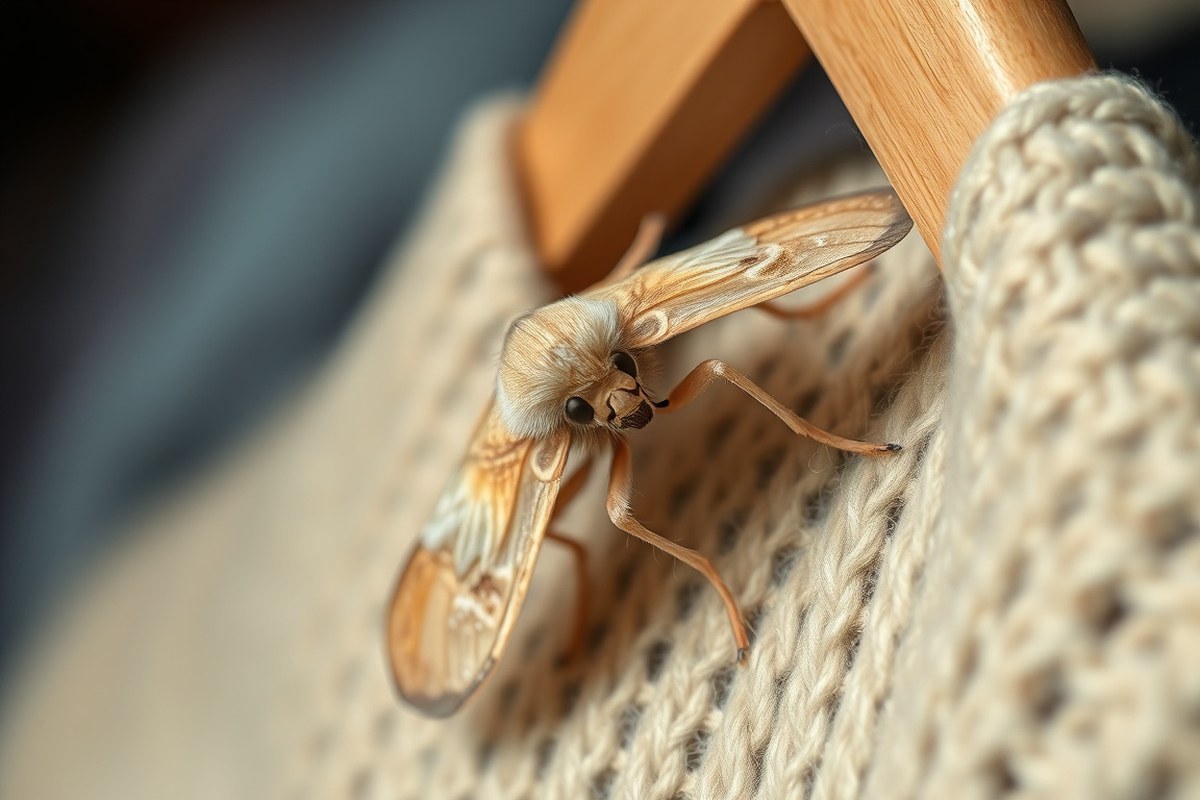
Clothes moths are small, winged insects known primarily for the damage their larvae cause to natural fibers in your home. Unlike pantry moths, which infest and feed on stored food products, clothes moths target textiles. Their larvae prefer natural fibers because these materials provide essential proteins they need to grow, particularly keratin found in animal-based fibers like wool, silk, fur, and feathers. Synthetic fabrics like polyester and nylon do not attract them as these lack the keratin proteins.
The most common species, the Common Webbing Clothes Moth, lays eggs in dark, undisturbed places like closets, drawers, and storage bins. Larvae emerge from these eggs and begin feeding directly on fabrics. They tend to seek out items that have body oils, sweat, food residue, or hair on them, all of which help sustain their growth. This is why fabrics stored without thorough cleaning or airing are particularly vulnerable. Blended fabrics made with natural fibers combined with synthetics can still suffer damage since the larvae feed on the natural portion.
Fabrics at the highest risk include wool, cashmere, silk, mohair, furs, and leather goods. Carpets and upholstered furniture made from these materials can also be affected. The larvae’s feeding results in holes, thinning areas, and a general loss of fabric strength and appearance. Damage can go unnoticed until it becomes extensive, especially because clothes moths avoid light and prefer quiet, undisturbed environments. Understanding this helps you focus on checking and protecting garments stored away for long periods.
To minimize damage, focus on thorough cleaning before storage. Washing or dry cleaning at 60°C or higher helps kill any eggs or larvae present. Steaming fabrics can also be effective. Regular vacuuming and cleaning of closets and storage areas remove larvae and eggs hidden in corners or under shelves. Using moth traps designed specifically for clothes moths can monitor adult populations and interrupt their life cycle by capturing male moths. This targeted approach differentiates from pantry moth traps, which attract different species and do not work for textiles.
The life cycle of clothes moth larvae can vary from one month to two years, depending on conditions such as humidity and temperature. Maintaining clean, light, and well-ventilated storage areas discourages moth activity and limits their ability to reproduce. Persistent infestations may require treatments like moth killer sprays approved for home use on textiles and carpets. However, prevention through proper care and monitoring remains the most cost-effective and efficient method to protect your natural fiber clothing and textiles from moth damage.
How to Identify a Clothes Moth Infestation Early and Where to Look

Early detection of a clothes moth infestation relies on spotting subtle signs in your fabrics and surroundings. Look closely for damaged clothing, larvae webbing, and adult moths in typical hiding spots before the problem grows. Confirming the presence early helps reduce the extent of damage and simplifies treatment.
Common Physical Signs on Fabrics
Small holes irregularly scattered across wool, silk, or other natural fibers often indicate clothes moth damage. These insects prefer areas stained with sweat or food residue, such as collar edges, cuffs, and seams, because these spots provide nutrients for larvae. Check carefully for patches where fabric seems thin or worn out, especially on garments stored for prolonged periods without disturbance.
Another key sign is the presence of silk webbing left by larvae as they move and feed. This webbing looks like shiny, thin patches on the fabric surface. Compared to damage from other pests, clothes moth holes rarely have clean, round edges and are often accompanied by this sticky residue. Clothes moth damage tends to worsen gradually, unlike sudden tears from rodents or accidental snags.
Typical Moth Larvae Characteristics
Clothes moth larvae are about 1/4 inch long and pale with a caterpillar-like shape. They produce tiny silk webbing, which resembles dried snot or a slimy film on fabrics. Since the eggs (0.5 to 1.5 millimeters) are nearly invisible without magnification, look for these larval signs instead. Larvae feed by digesting keratin, the protein found in animal fibers, so synthetic fabrics generally remain unaffected.
Watch for small brownish pellets or frass (larval droppings) near the webbing. These dark specks, combined with holes and webbing, confirm larval presence. Larvae hide well, so carefully inspect folds, seams, and hidden inside collars.
Frequent Areas Moths Prefer
Clothes moths thrive in undisturbed, dark places with natural fibers. Closets, especially those with tightly packed clothes, provide ideal environments. They favor garments stored for months without being worn, where fabric gathers dust, sweat, or food residue. Check inside drawers, storage boxes, and under carpet edges where wool rugs are present.
- Closet corners and crevices
- Inside pockets, collars, cuffs, and seams
- Folded clothes and rarely worn seasonal items
- Underneath wool or silk carpet edges
- Storage boxes lined with natural materials
- Dark, undisturbed shelves in wardrobes
- Areas with high humidity but limited airflow
These spots offer warmth, darkness, and food sources critical for larvae survival. Frequent handling or cleaning discourages moth presence.
Methods to Detect Moth Activity
Since adult moths often avoid light and prefer dark corners, spotting them early requires careful inspection. Look for fluttering small beige or white-gray adults about 1/4 inch long resting on walls or ceilings near infested closets. Unlike casemaking moths, webbing moth adults have narrow wings and a sleek appearance.
Regularly inspect garments, paying attention to new holes or fresh silk webbing, which signal developing larvae populations. Feeling fabric for hidden patches of webbing can help too. Washing clothes in hot water over 120°F will kill larvae and eggs, limiting spread.
Regularly vacuum closets and storage areas to remove eggs and larvae from hidden corners that moths favor.
Tools for Early Infestation Confirmation
Pheromone clothes moth traps offer a non-invasive way to catch adult male moths, providing early warning signs of infestation. MaxGuard Clothes Moth Traps, for example, are designed to attract webbing clothes moths and help monitor their activity. Place these traps in dark corners or near suspected infested closets to assess infestation intensity.
Depending on trap catch numbers, you can estimate the severity, catching a few moths over weeks may indicate a small problem, while dozens suggest active infestation requiring immediate attention. Combined with regular physical inspections for larvae and damage, these traps are effective tools for early detection and ongoing monitoring.
Step-by-Step Treatment Methods for Removing Clothes Moths
Getting rid of clothes moths requires carefully treating affected garments and thoroughly cleaning storage spaces. You’ll sort your clothes by fabric and infestation severity, use proper washing, freezing, or heat methods to kill eggs and larvae, then clean closets deeply to remove any remaining pests. Each step stops moths from returning to your fabrics and closet environment.
Sorting Clothes by Fabric and Infestation Level
Start by pulling all clothes out of your closet and sorting them into groups. Separate items made from natural fibers like wool, silk, and cotton, which moths prefer, from synthetic fabrics less likely to be damaged. Then separate items into heavily infested, lightly infested, and unaffected categories based on visible damage, larvae, or moth presence.
Heavily infested garments should be treated first with freezing or heat methods. Light infestations might be handled with a simple wash or dry cleaning. Unaffected items still need to be inspected and protected because moth eggs can be invisible. Sort clothes like this:
- Remove all clothes from the closet and lay flat for inspection.
- Group natural fibers separately for prioritized treatment.
- Mark or bag heavily infested items to treat first.
- Set aside lightly infested and unaffected clothes to wash or protect later.
Proper Washing, Freezing, and Heat Treatments Explained
Cleaning fabric is the most critical step to get rid of moth larvae and eggs. Washing clothes in hot water, dry cleaning, freezing, or heat treatment can kill larvae and eggs if done correctly. Avoid sun exposure alone because it won’t reliably kill larvae or eggs.
Hot water at temperatures above 120°F (49°C) kills moth larvae and eggs in wash cycles, but many delicate fabrics can’t tolerate such heat. Dry cleaning uses high heat and solvents to efficiently eliminate eggs and larvae without damaging delicate clothing like silk or wool. For freezing, place clothes inside sealed plastic bags to prevent moisture damage, then freeze at 0°F (-18°C) or lower for at least 72 hours to ensure all larvae and eggs are dead.
Heat treatments performed by professionals raise fabric temperature above 122°F (50°C) for sustained periods, which kills moths through protein damage. Avoid trying oven heating yourself since it risks burning or shrinking clothes.
Cleaning Closets and Storage Areas Thoroughly
Once clothes are treated, clean the closet fully to remove any eggs or larvae hidden in cracks and corners. Vacuum every surface, including floors, corners, shelves, and crevices, using a HEPA filter vacuum for best results. Dispose of vacuum bags or clean canisters immediately to avoid reinfestation.
Wipe down walls, closet floors, and shelves with soapy water or a 50/50 vinegar and water solution. This removes residual eggs and discourages moths from returning. After cleaning, place dedicated clothes moth traps to catch adult males and monitor infestation. Optionally, use a natural spray made for indoor use on hard surfaces, but avoid spraying fabrics directly without professional advice.
Using Moth Traps, Natural Repellents, and Chemical Treatments Safely
Using moth traps, natural repellents, and chemical treatments together offers practical ways to control clothes moths while protecting your garments. Pheromone-based clothes moth traps catch adult males to slow breeding, whereas cedar and some natural oils act mainly as deterrents rather than killers. Chemical sprays can be effective but should be applied cautiously on or near clothing to avoid damage or health risks.
Types of Moth Traps and How They Work
Effective moth traps for clothing use female pheromones to lure adult male moths onto sticky strips. Trapped males reduce mating success, helping to break the cycle of infestation. These traps target species like the webbing moth (Tineola bisselliella) and the case-making moth (Tinea pellionella), which commonly damage wool, silk, and natural fiber garments.
Pantry moth traps do not work for clothes moths since they rely on distinct pheromones. Placing pantry moth traps in wardrobes won’t lure fabric moths or control their populations. For protecting clothing, select traps made especially for fabric moths, like Killigan’s Clothing Moth Traps, MaxGuard Clothes Moth Traps, or Safer Brand Clothes Moth Alert Traps.
Replace traps approximately every 6 to 8 weeks or when the sticky surface fills up. Hanging these traps in closets and storage areas and keeping them active year-round helps reduce moth populations over time.
Pros and Cons of Natural Repellents Like Cedar
Cedar contains volatile oils that naturally repel clothes moths and can even kill some larvae. Many people use cedar blocks, chests, or hangers to protect wool, cashmere, and silk. Refreshing cedar’s scent every few months by lightly sanding the surface or applying cedar oil helps maintain its effectiveness.
Natural repellents such as lavender, cloves, vinegar, and black pepper may smell pleasant but often fail to stop or kill clothing moths reliably. According to experts managing infestations, moths can ignore or tolerate these scents, with several reports of moth activity persisting despite cedar closets.
Natural repellents are best viewed as deterrents that support other control measures instead of standalone solutions. Using a natural oil diffuser or placing cedar alongside pheromone traps can create a less attractive environment for moths.
| Method | Purpose | Effectiveness | Notes |
|---|---|---|---|
| Pheromone Clothes Moth Traps | Catch adult males to reduce breeding | High, targeted to clothing moth species | Replace every 6-8 weeks; not interchangeable with pantry traps |
| Pantry Moth Traps | Attract pantry moth species | Low for clothes moths | Use only for pantry moths; ineffective in wardrobes |
| Cedar Blocks or Chests | Repel moths with volatile oils | Moderate; acts mainly as deterrent | Refresh scent by sanding or cedar oil spray periodically |
| Plant-Based Natural Repellents (lavender, cloves) | Repel moths via odor | Low to moderate; not proven to stop infestations | Better as complementary deterrents than primary control |
Choosing and Using Chemical Treatments Safely
Chemical sprays labeled for clothes moth control can kill adult moths, larvae, and eggs. Choose products formulated specifically for textiles and follow the label directions carefully to avoid harming your garments or creating health risks. Applying sprays in well-ventilated areas reduces inhalation exposure.
Apply chemical treatments after vacuuming and cleaning to remove eggs and larvae. Spot test the spray on a hidden area of fabric to check for colourfastness before treating valuable or delicate clothing. Allow treated items and storage areas to dry completely before returning clothes to the closet.
Do not use broad-spectrum insecticides not intended for indoor or fabric use. Some specialized pest control services offer safer, professional-grade options for rapid moth elimination. Reserve chemical treatments for severe infestations or when natural methods and traps fail to control the problem.
Best Practices for Seasonal Storage to Prevent Future Moth Infestations
Proper seasonal storage is key to keeping clothes moths away and protecting your garments during off-seasons. Start by always washing or dry cleaning clothes before storage, especially wool, silk, and other natural fibers that moth larvae feed on. Dirt, sweat, and food stains provide moths with nutrients, so clean garments reduce their appeal. Turn items inside out when storing to prevent any missed residues from attracting moths.
Choosing the right container matters. Airtight plastic bins or vacuum-sealed bags are the best options because they block moths from entering and cut off oxygen. Cloth garment bags, even those labeled mothproof, do not seal tightly and allow moths to get inside. For valuable or delicate items, use heavy-duty plastic containers with secure lids, which typically range from $10 to $30 per bin, depending on size. Label bins clearly so you don’t need to open them frequently.
Closets and storage areas should be dry, cool, and well-ventilated. Moths thrive in warm, humid conditions. Keep temperatures below 70°F if possible and use a dehumidifier in damp basements or attics. Regularly vacuum drawers, shelves, and corners to remove dust and any moth eggs or larvae that might be hidden. Avoid wool or silk upholstery in storage rooms, since these provide breeding grounds. Cleaning storage spaces at least twice a year helps prevent reinfestation.
Hang garments on padded hangers rather than wire ones to avoid damage in storage and tailor usage of moth repellents carefully. Natural repellents like cedar blocks or lavender sachets can deter moths but only work as part of a broader strategy, not as standalone solutions. Replace these items every few months as their scent fades. For stronger protection, consider mothballs containing naphthalene or paradichlorobenzene, but follow label instructions precisely and avoid use around children or pets.
Recently worn clothes left inside closets invite moth infestation. Hanging worn clothes outside or in fresh air 24 to 48 hours before putting them away reduces eggs or larvae hitching a ride. This simple step costs nothing and makes a big difference. Should you notice any moths, treat the entire storage area promptly to prevent eggs from hatching and restarting the cycle. Treatment includes thorough cleaning and, when necessary, targeted insecticidal sprays approved for clothes moths.
Store garments in airtight containers and avoid opening them frequently to keep moths from finding food and laying eggs inside.
How Long Does It Take to Eradicate Clothes Moths and Monitor Progress?
Eradicating clothes moths from your home typically takes about 6 to 8 weeks, depending on the severity of the infestation and how thorough your treatments are. Clothes moth larvae can stay hidden in fabrics and dark corners, so this timeline covers the life cycle from egg to adult moth, ensuring you catch and stop new moths from emerging. To fully clear moths, you must treat your clothing, clean your closet, and monitor the area for fresh activity continuously over this period.
After treating your clothes, ideally by dry cleaning or washing on high heat, you should clean your closet thoroughly. Remove all dust and debris, vacuum shelves and corners, and discard any items that are heavily infested or damaged beyond repair. Cleaning the closet removes eggs and larvae that haven’t yet been visible. Follow up by placing clothes moth traps inside your closet to catch any adult moths still present or newly hatched. These traps use pheromones to attract males, helping reduce breeding and letting you monitor moth activity.
Use a checklist to track your progress each week. Note whether your traps capture any moths and if you see any new signs of damage or larvae. Replace moth traps every 4 to 6 weeks, or as recommended by the product instructions, since the pheromones they use lose effectiveness over time. This replacement schedule aligns with the moth lifecycle, giving you ongoing detection without gaps. Continued captures after 8 weeks may mean the infestation isn’t fully controlled yet, which signals you to repeat cleaning or consider professional help.
Good results look like no moths captured in traps and no new holes or cocoons in your clothing after two full moth life cycles, roughly 8 weeks. Monitoring after this period is important because untreated larvae can still hatch. If moth activity persists beyond this, inspect for missed clothing or hard-to-clean areas like stuffed furniture or carpet edges. In those cases, professional fumigation might be necessary, especially in severe infestations where damage threatens valuable garments.
In short, expect about two months to eradicate clothes moths, track progress by noting trap catches weekly, and replace traps every 4 to 6 weeks. This routine helps you confirm when your home and wardrobe are moth-free and provides early warning to stop reinfestation before damage spreads.
Common Treatment Mistakes, Troubleshooting, and When to Call a Professional
One of the most common mistakes when treating clothes moth infestations is skipping steps or using incomplete methods. For example, relying solely on steaming clothes will not fully kill moth larvae or eggs. Steaming may reduce the number of live larvae but does not eliminate them. Without cleaning all infested areas, vacuuming, laundering, and treating storage spaces, the problem can quickly return. Another error is not disposing of or treating all affected materials, which allows moths to keep reproducing.
Persistent infestations often mean moths have spread beyond visible damage or are hiding in hard-to-reach places like baseboards, carpet edges, or inside furniture. Continuing to see moth damage or finding full moth traps after multiple treatments signals you should escalate your approach. Try a combination of thorough vacuuming, laundering clothes on hot cycles, using pheromone traps, and non-chemical measures like freezing small garments at 0°F (-18°C) for 72 hours to kill eggs and larvae.
- Use a vacuum with a strong suction and empty it immediately into an outdoor trash bin.
- Launder or dry-clean all infested textiles to kill larvae and eggs.
- Treat storage areas and closets with appropriate insecticides or repellents following label instructions.
- Freeze smaller items for at least 3 days at 0°F (-18°C) to eliminate eggs and larvae.
- Replace pheromone traps every 4 to 6 weeks during an active infestation for monitoring.
- Inspect less visible areas such as carpets, cushions, and furniture crevices.
- Regularly check and treat heirlooms or expensive textiles with professional help if needed.
If you follow the full recommended control steps but still see active moths or ongoing damage, it’s time to consider professional pest control. Professionals can apply treatments like fumigation or targeted chemical applications not available for consumer use. This is especially important for widespread infestations or valuable textiles like rugs and family heirlooms, where improper treatment risks damage or incomplete control.
Calling an exterminator generally involves evaluating the size and activity of the infestation, then applying suitable professional-grade methods. Depending on your location and severity, professional treatment can cost a few hundred dollars or more. The investment helps ensure the infestation is fully resolved, which DIY approaches sometimes cannot guarantee. Licensed professionals also give safety advice and handle chemicals according to local regulations, reducing risks to your family and belongings.
How Seasonal and Regional Factors Affect Clothes Moth Infestations
Clothes moth infestations vary significantly based on regional climate and seasonal changes because these insects thrive in warm, humid conditions. In regions with high humidity, clothes moths develop faster and lay eggs more frequently, leading to more rapid population growth. Conversely, dry climates tend to suppress moth activity as the larvae require moisture to survive. Inside your home, areas with consistent warmth above 70°F and humidity levels above 50% create ideal environments for moth eggs to hatch and larvae to feed on natural fibers like wool and silk.
Seasonal temperature shifts affect moth lifecycles too. During colder months, moth activity often slows as cool temperatures under 60°F can extend the larval stage or even halt development. Homes with central heating can unintentionally maintain warmer temperatures year-round, encouraging moth survival in winter when outdoor conditions would normally be unfavorable. This year-round warm environment allows multiple generations in a single year, increasing the risk of severe infestations.
To reduce moth risk, closely control indoor temperature and humidity. Using a dehumidifier to keep humidity below 50% in closets and storage areas is beneficial. Lower humidity dries out the environment, making it less hospitable for larvae. Aim to maintain temperatures below 70°F in storage spaces or unheated rooms if possible. In colder months, periodically airing out closets to lower warmth can disrupt moth development. Regular vacuuming and tidying prevent dust build-up where moths can hide and breed, which is especially important in seasonal storage transitions.
For homes in humid or warm areas, sealing cracks and gaps near storage spaces limits moth migration. When storing seasonal or off-season clothes, use airtight containers or vacuum-sealed bags to isolate susceptible fabrics. Heat treatment is an effective physical method to kill moth eggs, larvae, and adults: raising the temperature of affected clothing or storage spaces to at least 140°F for 30 minutes can kill all life stages inside. Portable clothes steamers or placing clothes in a hot dryer cycle for 30 minutes also delivers this heat threshold. Cold treatments, such as freezing infested textiles at 0°F for several days, can be an alternative in low-humidity, cold climates.
Be mindful that fluctuating temperatures combined with high humidity can actually worsen infestations by accelerating moth life cycles. Monitoring your home’s microclimate with a basic digital hygrometer and thermometer helps you keep these conditions in check. Adjust heating and ventilation strategically to disrupt optimal climates without making your living space uncomfortable. In extreme or persistent cases, professional pest control might be necessary to address hidden breeding sites.
Keep humidity under 50% in closets by using silica gel packs or a dehumidifier to slow moth development and protect your garments.
Step-by-Step Action Plan to Get Rid of Clothes Moths
Follow this plan to quickly identify, treat, and prevent clothes moth infestations in your home. Each step helps you protect your textiles and monitor progress effectively.
- Day 1: Inspect and Identify, Check closets, drawers, and storage areas for adult moths, larvae, or webbing. Focus on natural fiber garments like wool and silk. Successful identification means you find evidence of moth activity or damage.
- Day 2: Clean and Isolate, Remove all affected clothing and vacuum surrounding areas thoroughly. Wash or dry-clean infested textiles immediately. You know this step worked when no new larvae or moths are visible on cleaned items.
- Week 1: Treat and Protect, Use appropriate moth traps to catch adult moths and apply natural repellents or chemical treatments as directed on labels. Confirm effectiveness with fewer moths caught in traps and no new damage to clothing.
- Week 2: Monitor Closely, Continue using traps and check stored clothing weekly for signs of reinfestation. A decrease in trapped moths and no fresh damage indicates progress.
- Month 1: Improve Storage Practices, Store clean, dry clothes in sealed containers with natural repellents like cedar or lavender. Avoid cardboard boxes as they can harbor moths. This step works when stored textiles remain moth-free over several weeks.
- Month 2: Evaluate and Troubleshoot, If moths persist, reassess cleaning and treatment steps, and consider consulting a pest control professional. Successful control means no new larval damage after treatments and monitoring.
- Ongoing: Seasonal Maintenance, Inspect stored garments before and after cold or warm seasons, repeating cleaning and protective measures as needed. Regular checks help maintain a moth-free environment year-round.
Frequently Asked Questions
How Do You Stop Clothes Moths from Spreading to Other Clothes?
Remove infested items immediately and clean your closet thoroughly. Use traps to catch adult moths and wash or dry-clean vulnerable clothes to prevent spread.
Can Freezing Clothes Kill Clothes Moths and Their Larvae?
Yes, placing clothes in a sealed bag in the freezer for 72 hours kills moths and larvae by damaging their tissues. This is a safe alternative to heat treatment for delicate fabrics.
Are Clothes Moth Traps Safe for Pets and Children?
Most sticky pheromone traps pose minimal risk as they don’t contain harmful chemicals. Place traps out of reach to avoid accidental contact with pets or children.
Is It Necessary to Throw Away Infested Clothes to Get Rid of Clothes Moths?
Not always, thorough cleaning, freezing, or heat treatment often saves clothes. Disposal is a last resort for severely damaged or heavily infested items.
Will Vacuuming Alone Remove Clothes Moth Eggs and Larvae?
Vacuuming helps remove eggs and larvae from carpets and corners but doesn’t kill them all. Combine vacuuming with cleaning and treatments for better control.
Can Natural Repellents Like Lavender or Cedar Prevent Clothes Moths Permanently?
Natural repellents may discourage moths temporarily but won’t eliminate infestations. Use them alongside cleaning, traps, and monitored storage for best results.
The Bottom Line
Getting rid of clothes moths requires consistent effort and careful attention to your garments and storage areas. Start by thoroughly inspecting your closets and laundering or freezing vulnerable items to stop the larvae from spreading. Taking this first step today can help you protect your clothes and keep moths from coming back. If you notice signs of moths despite your efforts, consider setting up traps or consulting a professional for targeted treatment.