

Pest Whose Name Is a Homophone: Complete Guide with Examples and Tips
A pest whose name is a homophone sounds like another word or name but has a different spelling and meaning. This overlap can cause confusion in communication, especially for pest control workers, educators, and language enthusiasts who need precise identification. You’ll learn how common pest names share sounds with other terms, how to avoid misunderstandings, and practical tips to distinguish these names both in speech and writing.
Examples, etymology, and regional variations reveal how these homophones emerged and why they matter. Clear explanations help you prevent errors when discussing pests like “mite” and “might” or “flea” and “flee.” This knowledge can also support teaching, branding, or wordplay involving pest names that sound alike but differ in spelling or meaning.
Key Takeaways
- A homophone is a word sounding like another but differing in meaning and spelling, causing confusion with pest names in speech or text.
- Common pest homophones include “flea” and “flee,” or “mite” and “might,” which require context for correct identification.
- Clarify pest names by using precise spelling and descriptive context to avoid misunderstandings in written and verbal communication.
- Regional dialects and language variations affect how pest homophones sound and are used, influencing potential misinterpretations.
- The origins of pest names often trace back to Latin or Old English, explaining similarities with other words in the language.
- Using pest homophones creatively can support educational tools, brand names, and wordplay by engaging audiences with familiar sounds.
What Is a Homophone and How Does It Relate to Pest Names?

A homophone is a word that sounds the same as another word but differs in meaning, spelling, or both. These pairs or groups of words share pronunciation but create potential for confusion due to their distinct meanings. For example, “mite” and “might” are homophones; “mite” refers to a tiny pest, while “might” expresses possibility or strength.
When a pest’s name is a homophone, it means the word naming the pest sounds identical to another word that usually has an unrelated meaning or spelling. This situation can cause misunderstandings in conversation and writing, especially when people rely on listening rather than reading. The pest name “mite” shares its pronunciation with “might,” so if someone says “There’s a mite problem,” listeners may need context to confirm they mean the small arachnid pest rather than the possibility of a problem.
Homophones exist in English largely because the language has borrowed words from many sources and evolved over centuries, causing sounds to merge even as spellings remain different or change inconsistently. English pronunciation varies by region, but words like “mite” (the pest) and “might” (the modal verb) ended up sounding the same. Pest names often come from Old English, Latin, or Greek, each contributing to similar-sounding terms that differ in spelling or meaning. This phonetic overlap is a byproduct of the complex history and diverse sources of English vocabulary rather than an intentional design.
To recognize a pest name homophone, first identify the spoken word and then compare it to similar-sounding words that might confuse its meaning. For example, the word “weevil” (a type of beetle pest) sounds different than common English words but can be mistaken in certain accents for “weavel” or “weevil.” In practice, checking the spelling immediately clarifies which word is meant. This approach works when both oral and written communication are involved.
Miscommunication arises when speakers rely heavily on pronunciation without awareness of equally sounding words. Confirmation by spelled names or additional context helps avoid mistakes. For instance, if a pest inspector says “The lice have to be treated,” spelling out or showing the word “lice” ensures clarity. This step takes seconds but saves confusion, especially when dealing with pest control or scientific reporting.
Understanding homophones in pest names matters most when accuracy in identification, treatment, or education is required. The effort involves listening carefully, asking for spelling if unclear, and providing written confirmation if possible. These simple actions prevent mixing a live pest like “tick” with unrelated words like “tic,” which sound the same but require very different responses. Being aware of the homophone issue reduces errors and helps everyone involved make informed decisions.
Common Pests with Homophone Names and Their Counterparts
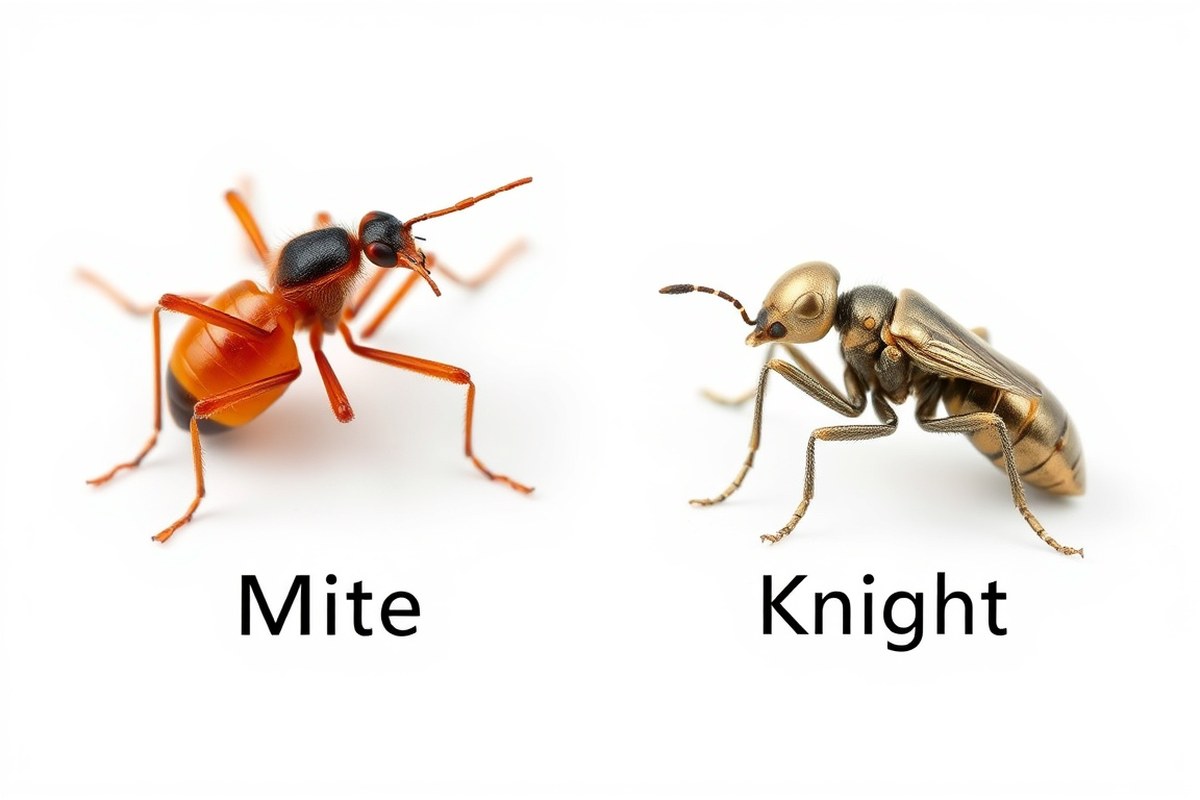
Several common pests have names that sound exactly like other words, leading to confusion in conversation and writing. Understanding these homophones helps you identify the pest correctly and avoid miscommunication, especially in pest control or education settings.
Mite and Might: Sound Equals Meaning?
The word “mite” refers to tiny arachnids, often pests in homes, gardens, or on animals, while “might” is a modal verb expressing possibility or power. Both words sound the same but have different spellings and meanings. Recognizing that “mite” names a small pest helps you avoid writing errors that could mislead readers or clients. Because “mite” involves very small creatures, sometimes only visible with magnification, it’s easy to confuse it in speech with “might.” Clarity comes from context, but in written communication, always use the correct form to convey your intent clearly.
Flea and Flee: Pest and Action Words
The word “flea” denotes a small, wingless insect that bites mammals, common in household infestations and on pets. “Flee” means to run away quickly. Both words are homophones but belong to different parts of speech, noun and verb, respectively.
Understanding that “flea” is an insect helps with correct diagnosis of bites and effective pest control treatment. Confusing “flea” with “flee” in verbal exchange might cause momentary misunderstanding but is often resolved by context cues.
Moth vs. Mote: Appearance and Usage
“Moth” designates a nocturnal insect often attracted to light and some species that damage clothing or stored products. “Mote” means a tiny speck of dust or a small particle floating in the air. Despite sounding alike, these have distinct meanings and spellings.
Distinguishing these words is particularly important in writing about pest problems, because a “moth” infestation requires concrete action, while “mote” refers to harmless dust that doesn’t harm materials or health. Pronunciation emphasizes the difference with a softer “th” sound for moth.
Gnat and Its Pronunciation Nuance
“Gnat” is a small flying insect, often mistaken for mosquitoes but generally less aggressive. Unlike the previous examples, “gnat” has no direct homophone, but its silent “g” may cause confusion in spelling and pronunciation.
The silent “g” means “gnat” sounds like “nat,” which is phonetically similar to short forms or names but not a standard homophone with contrasting meaning. Knowing this helps in clear communication, particularly for students and educators teaching spelling or entomology. Here is a comparison table listing these common pest homophones alongside their definitions and pronunciation to clarify the differences and assist you in accurate usage:
| Pest Name | Homophone | Definition (Pest) | Definition (Homophone) | Pronunciation |
|---|---|---|---|---|
| Mite | Might | Tiny arachnid pest | Modal verb denoting possibility or power | /maɪt/ (both) |
| Flea | Flee | Small, jumping parasite on mammals | To run away quickly | /fliː/ (both) |
| Moth | Mote | Nocturnal flying insect, sometimes damaging fabric | Tiny speck or particle of dust | /mɒθ/ (moth), /moʊt/ (mote) |
| Gnat | None exact | Small flying insect, usually not a homophone | N/A | /næt/ |
Use this table when writing or teaching about pests to ensure your audience understands the exact meaning, especially when similar-sounding words might cause doubt. Pronunciation notes guide you when speaking to prevent slip-ups that can confuse listeners unfamiliar with pest names.
Speak clearly and emphasize context clues around homophones to minimize communication errors when discussing pest names aloud.
How Homophone Pest Names Cause Confusions and How to Avoid Them
Confusion from pest homophones often disrupts clear communication, leading to mistakes in identifying or addressing infestations. Misunderstandings arise in speech and writing because similar-sounding names refer to different pests, causing practical issues like incorrect treatment or reporting. Clarifying meaning depends on applying context clues, visual evidence, and careful explanation tailored to each situation.
Misinterpretation in Spoken Communication
Homophones create real problems in oral exchanges, especially when technical terms or regional accents get involved. For example, “flea” and “flee” sound identical, which may cause confusion when reporting a flea infestation or describing pest control measures. People might misunderstand a warning or advice, leading to ineffective responses or missed action deadlines.
You can reduce errors in spoken communication by clearly pronouncing the pest name and adding context right away. For instance, instead of just saying “I’ve got fleas,” specify “flea pests on my dog” to avoid any misinterpretation as “flee.” When speaking to non-experts or noisy environments, spell the word or use scientific names.
Errors in Written Identification
In writing, homophones cause problems because they appear identical in sound but differ in spelling, which can change the meaning drastically. Common mistakes include confusing “mite” (a tiny pest) with “might” (possibility), or “gnat” with “nat” (a rare name or abbreviation). These errors can mislead readers when sharing pest control tips, asking for help, or documenting infestations.
Proofreading for context and using pest-specific terminology matters most. Avoid relying solely on spellcheck tools, which don’t flag homophone mistakes. When describing a pest, include details like size, habitat, or affected plants alongside the name. This extra information helps readers confirm the correct pest visually or behaviorally.
- Double-check homophones with a trusted pest dictionary or database
- Use photos or diagrams to accompany written pest descriptions
- Request feedback from a pest professional to verify writings aimed at a wider audience
- Employ consistent spelling to reduce reader uncertainty
- Explain technical terms or scientific names parenthetically when first mentioning a pest
- Keep records of pest encounters to cross-reference names and clarify past confusion
- Include location and date for infestations to help track pest patterns accurately
These steps take extra time but pay off with better communication and fewer misdiagnoses.
Context Clues to Resolve Confusion
Context clues often clear up homophone-related confusion. When you hear or read a pest’s name, ask how it fits with surrounding information, such as what’s affected, symptoms shown, or pest behavior expected. For example, if someone mentions “an ant invasion” near food, it likely refers to insects, not “aunt,” the family member homophone. To apply this in conversation or writing, follow these steps:
- Identify the setting: indoor, outdoor, garden, or pet area
- Note visible signs: bite marks, droppings, damage type
- Consider timing: season or weather influences pest activity
- Compare pest size and shape descriptions to known species
- Request clarification if confusion persists, asking for specifics or examples
Using these clues cuts down guesswork and ensures all parties understand exactly which pest is involved.
Using Visual or Behavioral Evidence
Showing physical proof greatly reduces confusion caused by homophone pest names. A photo or video confirms the identity beyond similar sounds or spellings. Pest management services often ask for images before treatment to avoid mistakes like treating for fleas instead of flies, whose names can sound alike in some accents.
Behavioral evidence also helps: fleas cause intense itching on pets, while flies mostly bother humans with buzzing. Noticing whether pests swarm around light or burrow into wood can distinguish between homophones like “gnat” and “nat,” if the latter were a less common pest term.
The time and effort involved in gathering visual or behavioral evidence vary. Taking clear pictures might require a smartphone with good macro capability or a magnifier. Observing behaviors may need patience during dawn or dusk when some pests are more active. These investments reduce wrong diagnoses and wasted treatment expenses, improving pest control success.
How to Distinguish Pest Names from Their Homophones in Speech and Writing
To distinguish pest names from their homophones in speech and writing, rely on pronunciation clues, contextual cues, and visual or behavioral traits typical of the pest. Cross-check these signals with formatting or explanatory hints in writing. This approach helps reduce miscommunication by clearly identifying whether the reference is to the pest or its homophone.
Pronunciation and Stress Differences
Pronunciation is the first line of defense in telling apart a pest and its homophone. In some cases, subtle differences in vowel sounds, consonant emphasis, or syllable stress can indicate which word is meant. For example, the word “mite” that refers to the pest and “might” as a modal verb differ primarily in the vowel sound. Paying attention to these phonetic details can provide immediate clues during a conversation.
Listening closely to the tone and rhythm also helps, especially with regional accents. Sometimes the pest name might have a slightly clipped or sharper pronunciation compared to its homophone, which might be spoken more fluidly in everyday speech.
Contextual and Situational Indicators
Context plays a critical role in interpretation. The topic of conversation or the written material can often confirm whether the speaker or writer means a pest or its homophone. For example, a discussion involving gardening, agriculture, or pest control increases the likelihood that “mite” refers to the tiny arachnid rather than the word “might.”
Asking clarifying questions is a reliable strategy when context alone does not settle the ambiguity. For example, following up with “Are you referring to an insect or a possibility?” can quickly reveal the intended meaning. Decision rules to confirm context include:
- Check the subject matter for pest-related themes like damage, infestation, or biology.
- Look for associated terminology such as “infestation,” “treatment,” or “species.”
- Consider the setting: a scientific paper, pest control brochure, or informal conversation.
- Note if the surrounding text references plants, animals, or environments where pests occur.
- Observe whether the statement expresses possibility, permission, or another non-pest meaning.
Applying these rules lets you decide if the pest or the other meaning fits best given the surrounding information.
Behavioral and Visual Identification in Speech
Behavioral and visual clues during speech further clarify homophones that sound alike. Describing a pest’s appearance, movement, or behavior signals the pest sense of the word. For instance, if someone says, “it’s a tiny, eight-legged creature that feeds on plants,” the descriptive behavior makes the pest meaning clear even if the pronunciation closely resembles its homophone.
When possible, visual gestures or showing a photo or specimen can confirm the intended word. These methods work especially well in educational or professional pest management contexts, preventing misunderstandings in documentation or instruction.
Written Formatting and Clarifications
Written text offers distinct aids to distinguish pest names from homophones. Italics, scientific names in parentheses, or explanatory footnotes signpost that the word refers to a pest. Using the pest’s Latin or scientific name alongside the common name introduces precision and reduces confusion in technical writing. Clear formatting decisions help readers swiftly identify the intended meaning. Here are practical steps for written contexts:
- Use italics or bolding for the pest name when first introduced.
- Include the scientific name after the common name, e.g., “mite (Acari).”
- Add brief definitions or side-notes explaining the pest’s nature.
- Refrain from using homophones without clarification in headings or captions.
- Check for typographical errors that might cause confusion, such as “mite” written as “might.”
- Employ hyphenation or other punctuation to separate compound expressions.
Using these techniques reduces the chance that readers misinterpret the pest’s name as its homophone, especially in instructional or scientific materials.
Etymology and Origins of Pest Names That Are Homophones
Some pest names are homophones due to their linguistic evolution alongside common English words. These similarities often come from shared roots in Old English or Latin, where the same sounds were assigned different spellings and meanings over time. Knowing the origins helps clarify why certain pests have names sounding like everyday words like “mite” and “might.”
Origins of ‘Mite’ and ‘Might’
The word “mite” traces back to Old English “mīt,” referring specifically to small insects or tiny creatures, which aligns with the modern pest meaning. Meanwhile, “might” comes from Old English “miht,” denoting power or strength. The difference in spelling appeared as the language evolved, but both retained a similar pronunciation. This overlap occurred because Old English used similar phonetic sounds for very different concepts.
Understanding this divergence is important when you encounter the homophones in speech or text, especially since “mite” refers to a physical organism while “might” communicates possibility or strength. They developed distinctly but phonetically overlapped due to English’s flexible spelling rules from Middle English onward.
History Behind ‘Flea’ and ‘Flee’
“Flea” comes from the Old English “flēa,” meaning the bloodsucking insect common in human dwellings. This word has remained fairly consistent through the centuries, describing the tiny pest known for biting. The verb “flee,” meaning to run away quickly, derives from Old English “flēon,” a different root but with a much closer phonetic match in modern English.
Both words sound alike because English underwent significant vowel shifts during the Middle English period, which affected pronunciation but not meaning or spelling in the same ways. This is why “flea” and “flee” share pronunciation but not semantic or etymological roots, one refers to an insect, the other to an action.
Etymology of ‘Moth’ and ‘Mote’
“Moth” originates from Old English “moððe,” referring to the insect known for damaging fabrics. This name evolved primarily through Germanic language influences, retaining its association with the pest through centuries. On the other hand, “mote” comes from Old English “mot,” meaning a tiny speck of dust or particle, which has no link to insects but sounds nearly identical.
Both “moth” and “mote” illustrate how English words describing very small things, one an insect, the other a speck, can end up as homophones. The close pronunciation results from vowel shifts and loss of certain consonant sounds over time, reinforcing confusion in spoken language between the pest and a speck of dust.
Regional Influences on Pest Names
Different English-speaking regions impact how pest names and their homophones develop. Dialects in the UK, US, and Australia have various vowel pronunciations, sometimes making homophones clearer or more ambiguous depending on local accents. For example, southern US accents may soften consonants, blurring the distinction between “mite” and “might” more than standard American English.
Historical migration patterns also affected pest naming conventions. Settlers brought their language variants and local insect names, which could cause different homophones to emerge or fade in certain regions. Understanding this regional variation is key when communicating about pests across state lines or international borders.
Pay attention to regional pronunciation when identifying pests verbally to avoid confusion caused by homophones. Clarify with spelling if necessary.
Regional and Linguistic Variations of Pest Name Homophones
Homophones of pest names vary significantly across English dialects and other languages, affecting how people recognize and communicate about specific pests. Differences in pronunciation, vocabulary, and phonetic overlaps create distinct homophone pairs depending on the linguistic context.
Dialectal Differences in Pronunciation
Pronunciation differences between English dialects often change which pest names become homophones. For instance, vowel sounds and consonant articulation vary between accents from regions like the US, UK, and Australia. These variations affect how closely two words sound alike, determining if they qualify as homophones locally. You should listen carefully to regional pronunciations rather than relying on spelling alone to understand possible homophones in speech.
Specific vowel changes can either create or eliminate homophony between pest names and other words. For example, the word “mite” (a type of pest) is commonly pronounced with a diphthong [aɪ] in American English. In some British accents, this vowel might be slightly shortened or altered but remains close to the American form, preserving homophones like “might.” In Australian English, vowel shifts might alter these pairings slightly, though many core pest homophones remain intact. Being aware of your regional accent helps clarify which pest names you might confuse with other terms.
Examples from British, American, and Australian English
The English language examples illustrate how homophone pest names differ by region. In American English, “flea” and “flee” sound identical, but in some British accents, the diphthong could sound marginally different, affecting perception. Another example is the pest “gnat,” which might sound like “nat” in American accents but less so in British English where the ‘g’ is almost silent but subtly influences the vowel sound.
Australian English sometimes merges vowel sounds that differ in the US or UK, creating unique homophones. For example, the pest name “weevil” might be spoken with a vowel closer to “wivel,” which is not typical elsewhere. Such differences mean educational or pest control materials must consider local pronunciations to avoid misunderstandings. If you communicate pest information across these dialects, it’s helpful to verify local pronunciations or provide written clarifications to prevent confusion.
Pest Name Homophones in Other Languages
Languages other than English also have homophones involving pest names, although these depend on the language’s phonological system and vocabulary. For instance, in Spanish, the word “piojo” means lice, but homophones depend on regional accents and other vocabulary with similar sounds. Since pest control often requires accurate pest identification, professionals should be aware of homophones in the local language to avoid errors.
Some languages with tonal differences, like Mandarin Chinese, have several words that sound the same but differ by tone, which can produce homophones for pest names that English speakers wouldn’t expect. In these cases, mispronunciation can drastically change the meaning from a pest to something unrelated, making clear tonal articulation essential. Multilingual materials often include pronunciation guides or phonetic spellings to manage these homophones effectively.
Impacts of Variations on Communication
Variations in homophones across dialects and languages can cause communication issues in education, pest control, and documentation. Mishearing or mispronouncing a pest name might lead to improper pest identification, incorrect treatment, or confusion about pest behavior. For example, mixing up “mite” and “might” in spoken advice could mislead someone unfamiliar with the context.
To reduce errors, professionals and educators should adapt pest-related communication to the audience’s dialect or language. This may involve using visual aids, written terms alongside speech, or confirming understanding through repetition. You can also include both local and standard pest names in manuals or labeling to cover regional linguistic differences. Ignoring these variations risks wasting time, money, and resources on incorrect pest management responses.
Using Pest Name Homophones in Education, Branding, and Wordplay
Pest name homophones find practical use in education, branding, and language games by creating memorable associations and engaging wordplay. Educators employ homophone-based mnemonics to aid recall, pest control companies sometimes adopt homophone-centered branding to stand out, and puzzle designers use these pairs to challenge vocabulary and spelling skills.
Educational Mnemonics Using Homophones
Teachers and trainers use homophones of pest names to help students retain information about particular insects or animals. For example, the homophones “mite” and “might” lend themselves well to mnemonics: you could say, “A mite might cause trouble,” linking the small pest to the idea of potential harm. This phrase is concise, easy to remember, and ties the pest’s name to its impact.
Creating mnemonics with homophones involves pairing the pest’s name with a common English homophone and embedding it in a sentence that reflects the pest’s characteristics or behavior. This method helps learners associate the pest with its effects while strengthening vocabulary and pronunciation skills.
- Use simple, relatable sentences that highlight pest traits through homophones.
- Repeat the mnemonic aloud to practice pronunciation and recall.
- Incorporate images or flashcards featuring both the pest and the homophone word.
- Create quizzes that ask students to match pest names with their homophones.
- Adjust complexity to the learners’ age and language proficiency level.
Using this approach effectively requires clarity to avoid confusion over spelling differences. Reinforcing the distinct meanings through context, such as showing a picture of a mite alongside the word “might”, helps solidify understanding.
Branding and Marketing with Pest Homophones
Pest control companies sometimes use homophones in their brand names or slogans to create catchy, memorable marketing. For instance, a company targeting mice might brand with a homophone-based name like “Mice Nice Pest Control,” which plays on sound similarity while suggesting effective service. Such branding stands out because it is playful but still relevant.
To build effective branding with pest homophones, select homophones that are easy to recognize and relate to the pest’s nature. The company name or tagline should be short and clear. Balancing creativity with professionalism is important to avoid confusing clients or appearing untrustworthy.
- Choose homophones that reflect pest behavior or control benefits, like “mite”/“might” or “flea”/“flee.”
- Test the name with focus groups to ensure clarity and positive reception.
- Incorporate the homophone in marketing materials such as logos, signs, or ads.
- Ensure domain name availability and ease of online search results.
- Use the homophone concept in taglines and jingles to boost recall.
Using homophones in branding can increase client recall and create a friendly brand image; however, avoiding ambiguity in communication is critical. Poorly chosen homophones may confuse customers or weaken the professional tone.
Games, Puzzles, and Trivia Uses
Games and puzzles often use pest name homophones to challenge players’ language and entomology knowledge simultaneously. Crossword puzzles, word searches, or riddles might ask participants to distinguish between homophones like “ant” and “aunt,” or “bee” and “be.” This approach exercises both vocabulary skills and factual understanding of pests.
Designing puzzles with pest homophones involves creating clues that hint at either the pest or the homophone meaning. For example, a riddle might say, “I buzz around flowers, but I am also a verb meaning ‘exist’.” This clue leads to the word “bee” and tests both entomology and general language trivia.
- Create crossword clues that mix pest definitions with homophone meanings.
- Design word search puzzles including pest names and their homophones.
- Develop trivia questions pairing images of the pest with homophone-based hints.
- Use digital quiz tools to allow timed challenges with pest homophones.
- Incorporate these puzzles in classroom activities or public education materials.
Games focusing on pest homophones encourage players to think about language and biology critically. If clues are too vague or rely solely on the homophone without context, players may become frustrated, so balancing challenge and clarity is key.
Improving Language Skills Through Pest Names
Using pest name homophones in language lessons supports spelling, pronunciation, and vocabulary building. Learners compare words like “roach” (the insect) with “roach” (to cheat in billiards), discussing context differences despite identical spelling. Other homophones, such as “flea” and “flee,” illustrate the importance of subtle sound differences and spelling for meaning.
Teachers can structure exercises where students write sentences or short paragraphs using both the pest name and its homophone. This activity trains them to recognize homophone pairs in speech and writing, a useful skill in communication and critical reading.
- Provide word lists pairing pest names with homophones and their definitions.
- Assign writing prompts requiring use of both homophones correctly.
- Practice oral drills focusing on pronunciation distinctions.
- Use listening exercises to identify which homophone is spoken.
- Encourage peer editing to spot homophone misuse in writing.
This method requires patience and ongoing practice, since homophones can cause repeated errors. Combining pest facts with language lessons gives learners practical motivation and context to master these tricky words.
Practical Advice to Prevent Miscommunication over Homophone Pest Names
Miscommunication over pest name homophones can lead to incorrect pest control measures, wasted resources, and frustration. You must verify spoken names, use clear communication, and optimize searches to ensure correct identification and response. A few specific tools, strategies, and checklists can help manage this issue efficiently.
Clarification Techniques in Conversation
Confirming the exact pest being referenced starts with straightforward clarification questions. Ask the speaker to spell out the pest name or provide additional context such as location, life stage, or damage symptoms. These details reduce chances of mistaking a pest with a homophone for another.
Decision rules can guide you: if a pest name sounds like a common homophone, request written confirmation or ask for a description of the organism. Repeating the name back and confirming its spelling also avoids confusion, especially in phone calls or remote consultations where visual cues are missing.
Always double-check homophone pest names by asking for spelling or descriptive details before taking action.
Keeping a communication checklist helps maintain consistency:
- Request spelling or exact scientific name
- Ask for habitat or behavior details
- Confirm where and how the pest was found
- Repeat back the name for verification
- Use common names cautiously and verify with visuals
This process takes only moments and greatly reduces errors, particularly in fast-paced or customer-facing settings.
Using Visual Aids and Specimens
Visual confirmation is the most reliable way to avoid confusion with homophone pest names. Sharing images, videos, or physical specimens helps pinpoint the exact pest involved. Digital photos captured with a smartphone can clarify differences in spelling and pronunciation that might otherwise go unnoticed.
In educational or professional settings, maintain a reference library of images showing commonly confused homophone pest pairs. Field guides or mobile apps featuring clear photos and identification tips make this easier. Whenever possible, collect samples for expert identification, especially if digital resources don’t suffice.
Using visuals cuts down on misinterpretation cost and effort later in the pest management process. It also provides documentation that professionals or customers can refer back to if confusion arises again.
Optimizing Digital Searches for Accurate Results
Searching for pest information online often yields mixed results when homophone names are involved. Using quotation marks around the pest name ensures the search engine looks for the exact phrase. Adding specific keywords like “insect,” “damage,” or the pest’s habitat limits unrelated results.
Using scientific names together with common homophones improves accuracy. For example, searching “aphid insect” versus just “a-fid” sounds can exclude irrelevant hits. Advanced search operators like site:edu or site:gov restrict results to reliable sources, improving quality and relevance.
Check alternate spellings and regional variants too. Some homophones differ by locality, so include those variants to broaden or narrow your search appropriately. This extra effort reduces time wasted on inaccurate or unrelated information.
Best Practices for Pest Professionals
Pest control technicians and entomologists need standardized protocols to prevent communication errors caused by homophones. This includes training on recognizing common homophone pairs and using decision trees for verification. A typical protocol might instruct the technician to request images or samples and confirm the scientific name before recommending treatment.
Documenting client interactions with clear notes that include both the spoken and written pest names guards against later confusion. Professionals should encourage clients to provide physical evidence whenever possible. This practice reduces mistakes that could affect treatment success and regulatory compliance.
Technology also supports best practices: using software that can link common names to scientific names with warning prompts when homophones occur can prevent errors. Updating client records with verified names and clear descriptions helps maintain quality control across pest management programs.
Step-by-Step Action Plan for Understanding Pest Names That Are Homophones
Follow these steps to identify common pests with homophone names, understand why these homophones exist, and avoid confusion in speech and writing. This plan equips you to use pest name homophones accurately and appreciate their linguistic background.
- Day 1: Review a list of common pests with homophone names, such as “mite” and “might,” or “roach” and “roach” (the insect vs. A verb). Knowing specific examples sets a solid foundation and prevents mixing them up in conversation or writing.
- Day 2: Study the etymology of these pest names using a reliable dictionary or entomology resource to understand why different pests share homophones with unrelated words. This clarifies the origins and reduces confusion about their meanings.
- Day 3: Practice distinguishing these pest homophones in both spoken and written forms by reading sentences aloud and writing short paragraphs using correct context. Notice how stress, tone, and spelling clarify meaning to avoid miscommunication.
- Week 1: Identify regional or linguistic variations affecting pest name homophones in your area, such as differences in pronunciation or alternate names for the same pest. Use this local knowledge to communicate more precisely with neighbors or experts.
- Week 2: Apply what you learned by explaining these pests and their homophones to someone else, like a student or friend. Using homophones in educational or casual contexts helps reinforce your understanding and reveals any unclear points.
- Week 3: Integrate tools like pest identification guides that highlight homophone pairs and their correct usage. Confirm your choices by cross-referencing pest images and descriptions to avoid mislabeling in reports or branding.
- Ongoing: Before sharing pest-related information aloud or in writing, double-check if any homophones are involved and whether context or spelling clearly distinguishes them. This habit will steadily reduce errors and misunderstandings over time.
Frequently Asked Questions
What Is a Common Example of a Pest with a Homophone?
One common example is the “flea” and “flee.” The flea is a small insect that bites animals, while flee means to run away quickly, which can confuse listeners unfamiliar with pest terms.
Can Homophones in Pest Names Cause Problems in Pest Control Services?
Yes, homophones can lead to miscommunication when ordering treatments or reporting infestations. Clarify by spelling or providing additional context about the pest’s appearance or behavior to avoid mistakes.
Are There Pest-Related Homophones Used in Different English-Speaking Countries?
Some pest homophones vary by region because of local dialects and naming conventions. For example, “mite” and “might” sound the same but refer to different concepts, with mites being tiny pests worldwide.
How Can Educators Use Pest Homophones Effectively in Teaching?
Pest homophones can illustrate language complexity and pest biology simultaneously, making lessons memorable. Using visuals with both meanings helps students grasp the different contexts clearly.
Do Pest Prevention Products Ever Have Names That Are Homophones?
Occasionally, product names mimic pest homophones for branding or humor, such as a “Bee” repellent called “Be Free.” This can create confusion unless marketing clarifies the product’s purpose.
What Is the Impact of Homophones on Pest Identification Apps or Software?
Homophones can cause errors in voice recognition systems for pest ID apps, especially if pronunciation or background noise is unclear. Typing the pest name or using images can reduce mistakes.
Wrapping Up
Understanding pest names that share homophones helps you avoid costly mistakes in identification and treatment. Start by double-checking whether the pest name in conversation or writing matches the insect or animal actually causing a problem, such as distinguishing a “flea” from a “flee.” This detail matters for ordering the correct pest control service or learning precise biology, especially since local dialects might alter pronunciations and meanings. You can practice this today by creating simple flashcards pairing homophone pest names with pictures and key traits to build your recognition and prevent miscommunication in future discussions or reports.


