Which Side Is Buda and Which Side Is Pest: A Complete Guide to Budapest’s Two Sides
Buda lies on the west bank of the Danube River, while Pest occupies the east side. Knowing which side is Buda and which side is Pest helps you understand Budapest’s layout, especially for planning visits or handle the city. This distinction reflects more than geography; it shapes the city’s character, landmarks, and daily life.
This information suits travelers, students, and anyone curious about Budapest’s division. You’ll find clear explanations of the historical background behind Buda and Pest’s unification, how the two sides differ in landscape and culture, and practical advice on getting between them using the city’s bridges and transportation. Recognizing Buda and Pest on maps or from aerial views will also become straightforward.
Key Takeaways
- Buda lies on the west bank of the Danube River, characterized by hills and historical castles, while Pest spreads flat on the east bank as the city’s commercial heart.
- Recognize Buda by landmarks like Buda Castle and Gellért Hill; Pest features Parliament Building and bustling shopping streets.
- Buda and Pest merged officially in 1873, combining Buda’s medieval charm with Pest’s rapid industrial growth into present-day Budapest.
- Buda’s landscape includes steep slopes and green spaces, contrasting Pest’s flat terrain filled with extensive urban development and cultural venues.
- The Chain Bridge and Liberty Bridge provide main transport links, facilitating easy travel between Buda and Pest by car, foot, or public transit.
- Buda offers a quieter, scenic atmosphere suitable for sightseeing and relaxation; Pest buzzes with nightlife, museums, and dining options.
Which Side of Budapest Is Buda and Which Side Is Pest?
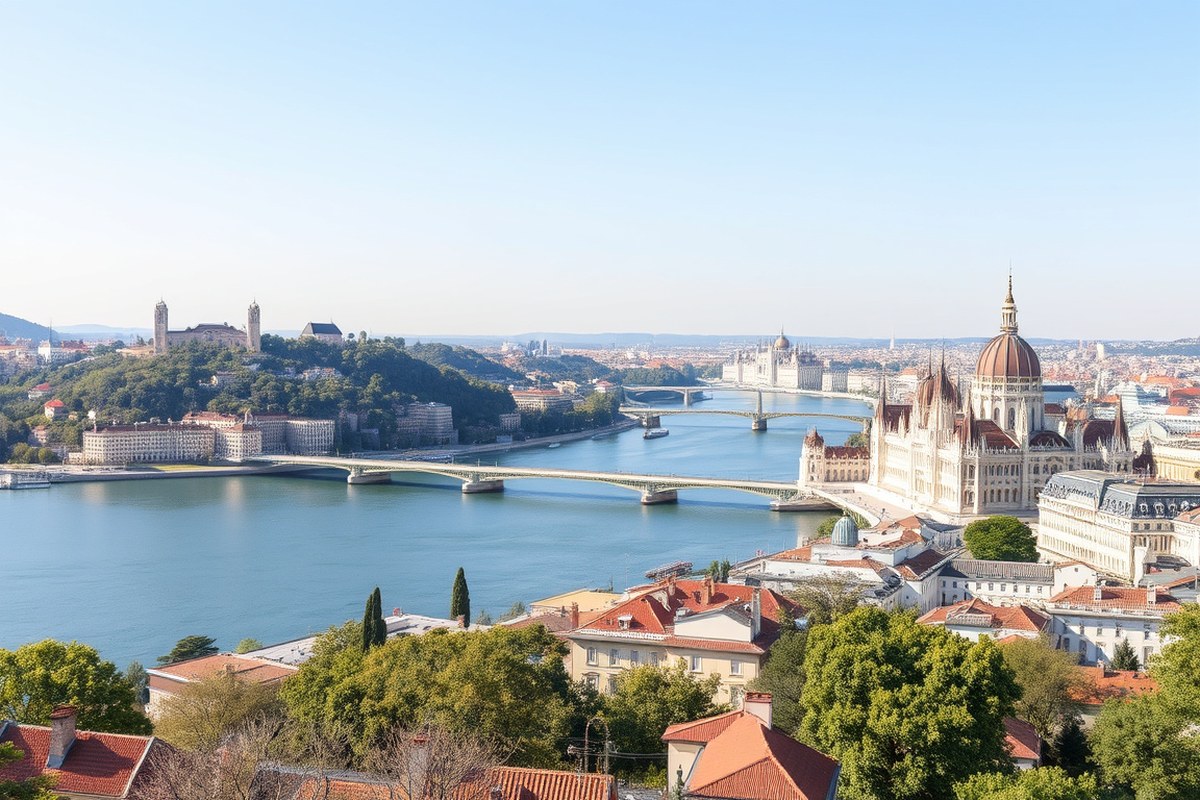
Budapest is divided into two main parts by the Danube River: Buda on the west bank and Pest on the east bank. You can instantly tell which side you are on by standing near the river and looking at the flow direction of the Danube. Since the river flows generally from north to south, the area on the right side of the river’s flow when facing downstream is Pest, while Buda lies on the left side.
Another clear indicator is the terrain. Buda is known for its hilly landscape with green spaces and historic castles on higher ground. Seeing rolling hills, steep streets, or the Buda Castle complex means you are on the west side. Pest, by contrast, is mostly flat and urban, featuring large boulevards, commercial areas, and densely packed buildings.
Landmarks also help identify your location quickly. The Hungarian Parliament Building, for example, is a Pest landmark visible along the river’s east bank. Buda features the Fisherman’s Bastion and Matthias Church, perched on Castle Hill. Being near these landmarks places you on the Buda side. Knowing these distinctions not only helps with orientation but also ensures you can choose transportation or accommodation more effectively depending on your itinerary.
Using a checklist approach: stand by the Danube, identify the river’s flow downstream (north to south), note which bank you’re on, right (east) is Pest, left (west) is Buda. Look for terrain type: flat and urban means Pest, hilly with castles means Buda. Spot iconic buildings like Parliament for Pest or Buda Castle for Buda. This method works whether you are walking, on public transport, or viewing maps and aerial images.
Confusion often arises near the central bridges spanning the Danube. In those areas, paying attention to street signs or transit stops named after the side (such as “Budaörsi út” or “Pest Center”) can also clarify your location. Tourist maps often mark these two areas distinctly, highlighting their separate identities. This distinction matters for planning visits and understanding local culture, as each side offers different attractions and atmospheres.
How Buda and Pest Are Positioned Relative to the Danube River

Buda is located on the west side of the Danube River, characterized by its hilly terrain, which includes the famous Castle Hill and other improve areas. Pest lies on the east side of the Danube and is mostly flat, making it easier for dense urban development and wide streets. The Danube River acts as a clear natural border separating these two distinct geographical areas within Budapest.
To determine which side you are on in Budapest, use the Danube River as your reference point. When facing downstream (toward the south), Buda will always be on your right, marked by rolling hills and lower building density, while Pest will be on your left, recognized by its flat landscape and more continuous urban sprawl. This simple directional rule works because the river flows from north to south through the city.
The difference in elevation is the most noticeable natural feature. Buda’s west bank rises sharply in places, creating natural viewpoints and a variety of green spaces. Pest’s east bank is predominantly level and hosts major commercial, administrative, and cultural centers. This geography explains why Buda developed historically as a more residential and fortress area, while Pest became the city’s economic and political hub.
On a city map, look for the Danube cutting vertically through the center. You can instantly tell Buda and Pest apart by spotting the hillier terrain on the west side versus the flat grid layout on the east. Many maps include elevation shading or green zones that highlight this difference more clearly. In satellite images, Buda appears darker with tree cover on hills, while Pest shows regular streets and large parks.
Use a map app with terrain view to check elevation and river flow; this will confirm the Buda (west, hilly) and Pest (east, flat) distinction before navigating. Avoid assuming sides based on street signs alone since names can overlap near the riverbanks.
The physical separation by the Danube means bridges are essential to connect Buda and Pest. Some of the city’s most famous bridges, like the Chain Bridge, span this divide, allowing easy crossing between the hillier west side and flatter east side. This division also impacts urban planning, transport routes, and travel times.
Key Landmarks and Attractions in Buda and Pest
Buda and Pest each have distinct landmarks that showcase their different characters. Buda is known for its historic sites with a hilltop setting, while Pest features urban icons with vibrant city life. You can plan visits based on these contrasts to capture the full experience of Budapest.
| Landmark | Location | Description |
|---|---|---|
| Buda Castle | Buda | A former royal palace complex on Castle Hill, offering panoramic views of the city and Danube River. The castle houses museums and the National Gallery. Visiting typically involves walking up or taking the funicular, and entrance to the grounds is free, while museum tickets cost around $10, 15. |
| Fisherman’s Bastion | Buda | A terrace with seven towers designed in neo-Romanesque style, providing a prime viewpoint of Pest and the Parliament. It’s free to enter the main area; a small fee applies to climb the towers, usually under $5. |
| Matthias Church | Buda | A 14th-century church with intricate roof tiles and Gothic architecture. Its interior has frescoes and statues, making it a key historical site. Entrance costs around $8, and audio guides help understand its rich past. |
| Parliament Building | Pest | A large, ornate Neo-Gothic structure along the Danube’s east bank. It serves as Hungary’s legislative seat. Guided tours are available for about $15, require advance booking, and reveal detailed craftsmanship and political history. |
| St. Stephen’s Basilica | Pest | The city’s largest church, featuring a dome you can climb for city views. It hosts concerts and religious services. Dome access costs around $5; the interior is free but donations are welcome. |
| Heroes’ Square | Pest | A major public square with statues commemorating Hungarian leaders and the Millennium Monument. It’s open and free to explore, often used for cultural events and showcases Hungarian history outdoors. |
| Andrássy Avenue | Pest | A grand boulevard lined with historic buildings, luxury shops, cafes, and the State Opera House. Walking the avenue is free; theaters and museums along it have varying entry fees, typically $10, 20. |
The landmarks on Buda offer a concentrated dose of medieval and royal history mostly clustered on and around Castle Hill. You gain a sense of the city’s defensive past and historic aristocracy here. In contrast, Pest delivers a broader slice of urban culture with its parliament, monumental squares, and elegant avenues reflecting modern and 19th-century city development. Planning to visit Buda’s sights early or late in the day helps avoid crowds and heat on Castle Hill stairs. Meanwhile, Pest’s sites are mostly urban and accessible by metro or tram, better explored through walking tours or public transport passes.
Historical Background of Buda and Pest’s Unification
Buda and Pest began as two distinct settlements on opposite sides of the Danube River before uniting in 1873 to form Budapest. Buda was a medieval fortress town with royal significance, while Pest grew into a bustling commercial and administrative center. The unification aimed to combine their strengths and manage the region’s growth more effectively.
Buda’s Medieval Origins
Buda’s history dates back to Roman times, but its status as a significant settlement began in the Middle Ages. It served as a royal seat for Hungarian kings due to its improve, defensible terrain. You’ll notice its historic castle district and winding streets reflect this medieval past, with architecture designed for protection and governance. Over centuries, Buda developed around the castle, maintaining a quieter, more residential character compared to the more commercial Pest.
The town played a key political and military role, especially during the Ottoman occupation from the 16th to 17th centuries, which shaped its urban development and demographics. After liberation from Ottoman rule, Buda slowly rebuilt with Baroque and classical influences, still emphasizing administration and upper-class residences rather than heavy commerce.
Growth of Pest as a Commercial Hub
Pest began as a flat, marshy area opposite Buda, originally a smaller settlement with less strategic importance. It expanded rapidly in the 18th and early 19th centuries, becoming the commercial heart of the region. Its flat terrain made it easier to develop infrastructure, markets, and transportation links, encouraging trade and industry to flourish.
The city’s role as a trading center attracted a growing population, including merchants, craftsmen, and later industrial workers. Pest housed numerous shops, banks, and public buildings, establishing itself as a dynamic, economically driven urban area. By the 19th century, it had a more modern street layout with wide boulevards and was more open to new architectural and technological trends.
The 1873 Unification and Its Impact
The decision to merge Buda, Pest, and the smaller Óbuda into a single administrative entity in 1873 aimed to streamline governance and fuel growth. Rapid industrialization and population increase in the mid-19th century made it clear that separate administrations hindered coordinated urban planning and infrastructure development on both sides of the Danube.
The unification allowed city planners to connect the two sides through new bridges and expand public services efficiently. It also fostered a stronger municipal identity, which helped Budapest grow into the political, economic, and cultural capital of Hungary. You can still see the outcome today in the blend of historic and modern elements across both formerly distinct cities.
Costs included the challenge of integrating different legal systems and social groups, but the long-term result was a more balanced urban area that managed growth better than each city could alone. The unification represents a practical response to urban pressures common in European cities during the 19th century.
Geographical and Landscape Differences Between Buda and Pest
Buda is the hillier side of Budapest, with rolling terrain that includes the Buda Hills reaching elevations up to around 1,000 feet. This landscape features forests, caves, and improve viewpoints, making it distinct from Pest’s flat plains. Pest lies on a broad, level floodplain along the east bank of the Danube River, characterized by wide streets and open spaces. The difference in topography affects the kinds of activities each side facilitates. Hiking, panoramic sightseeing, and natural exploration suit Buda, while Pest’s flat layout supports urban walking tours, extensive cycling, and large public gatherings.
Understanding these contrasting geographical traits helps when planning sightseeing routes or physical activities in Budapest. The hills in Buda can be steep and uneven, so prepare sturdy footwear and moderate your pace especially if venturing outside the well-paved paths. Pest’s flatness means it’s easier to cover more ground quickly, useful if you want to visit multiple historic sites in one day. Terrain also impacts transport; buses and funiculars serve Buda’s elevations, while Pest relies more on trams and subways.
| Feature | Buda | Pest |
|---|---|---|
| Terrain type | Hilly with elevations up to ~1,000 ft | Flat floodplain along the Danube |
| Vegetation and natural areas | Forests, parks, caves | Urban parks, riverbanks |
| Typical activities | Hiking, scenic viewpoints, nature walks | Walking tours, cycling, large festivals |
| Transportation challenges | Steep streets requiring buses, funiculars | Flat roads suited for trams, subways, bikes |
| Architecture adaptation | Buildings adapted to slopes, terraced | Grid street layouts, uniform elevations |
Beyond the physical differences, the hills of Buda create microclimates with slightly cooler temperatures and more shade, which can be a relief in summer. At the same time, Pest’s flatness allows for orderly urban planning, making navigation simpler. Knowing these factors helps you choose where to stay or which daily itinerary fits your fitness level and interests.
Tip: Wear comfortable, sturdy shoes if you plan to explore Buda’s hills, as sidewalks can be uneven and some paths rocky, while lighter footwear works in Pest’s flat city grid.
Transport Connections and Bridges Linking Buda and Pest
Several bridges span the Danube in Budapest, linking Buda on the west bank with Pest on the east. Walking across these bridges usually takes 10 to 20 minutes, depending on the bridge and your pace. Public transport routes are integrated across the river, allowing smooth travel between the two sides using buses, trams, and the metro.
Chain Bridge: The Iconic Connection
The Chain Bridge is the most famous and central bridge connecting Buda and Pest. It carries both vehicles and pedestrians, offering clear views of the river and the city. Walking across the Chain Bridge typically takes about 10 to 15 minutes, depending on crowds and walking speed.
This bridge is a key crossing for local commuters and tourists alike. It has sidewalks on both sides, making it safe and convenient for walking. Most public buses that go across do so via adjacent routes because heavy buses do not operate on the Chain Bridge itself.
Use the Chain Bridge to move between the Buda Castle area and Pest’s downtown. Its location and iconic status often mean it can get busy, especially during weekends and holidays.
Margaret Bridge and Liberty Bridge
Margaret Bridge is the second major crossing north of the Chain Bridge. It provides a direct link to Margaret Island, a popular recreational spot. The bridge has sidewalks and supports trams, buses, and cars, giving you multiple ways to cross.
Walking across Margaret Bridge takes about 15 to 20 minutes. Its shape is unique, with a curve near the island. Be aware that the bridge may feel longer due to that bend, but it offers good views of the river.
Liberty Bridge lies south of the Chain Bridge and is shorter in length. It connects the Great Market Hall area on the Pest side with the Gellért Hill area on the Buda side. Walking time across Liberty Bridge is roughly 10 minutes.
- Margaret Bridge has tram lines 4 and 6 crossing it.
- Liberty Bridge serves tram routes 47 and 49.
- Both bridges have sidewalks for pedestrians and safe bike routes.
- Traffic can slow down the crossing on weekends, so consider off-peak hours for walking.
Both bridges support public transport and walking well, making them good alternatives to the Chain Bridge depending on your starting point.
Public Transport Routes Crossing Between Buda and Pest
Budapest’s public transport system integrates its two halves through several key routes across the Danube. Trams, buses, and the metro regularly cross the river, offering options for fast and affordable commutes.
Tram lines 4 and 6 run on both sides and cross on Margaret Bridge. These lines travel frequently throughout the day and are reliable for getting between central Buda and Pest. Bus routes also use the bridges but may vary depending on the time of day or construction.
The Metro Line 2 connects Buda and Pest through the Széchenyi Chain Bridge area with stations on both sides. This line is especially useful for moving quickly without dealing with traffic. A single metro ticket costs about 350 HUF, and you can use the same ticket to transfer to buses or trams within the system for 80 minutes.
- Trams 4 and 6 cross on Margaret Bridge, running every 5-10 minutes during peak hours.
- Trams 47 and 49 cross on Liberty Bridge mainly serving southern parts of the city.
- Metro Line 2 connects Deák Ferenc tér (Pest) and Batthyány tér (Buda).
- Bus routes like 16 and 16A cross the Chain Bridge, with schedules varying by day.
Using public transport to cross between Buda and Pest saves time versus walking, especially in heat or winter. Buy tickets at stations or from machines and validate them on board to avoid fines.
Atmosphere, Urban Life and Cultural Differences Between the Sides
Buda and Pest offer distinctly different cultural atmospheres that reflect their history and geography. Buda is quieter and more residential, appealing to those seeking peaceful surroundings and greenery. Pest is the livelier, busier side with a more urban vibe and active nightlife, especially valued by visitors wanting to explore city energy and entertainment.
Buda’s Peaceful Residential Feel
Residents and visitors experience Buda as calm and scenic, thanks to its hills and parks. The area features older homes, family houses, and upscale apartments more often than high-rise buildings. This contributes to a suburban atmosphere where locals enjoy outdoor activities and have access to natural spaces like the Buda Hills and Margaret Island’s quieter areas.
Neighborhoods such as Tabán and Rózsadomb attract those who prefer a slower pace away from the hustle of downtown. Streets tend to be less crowded, and local cafés and shops cater to daily needs rather than high-volume tourism. You’ll find slower business hours and fewer large commercial centers, which keeps the area feeling residential and community-oriented.
Pest’s Bustling Urban Energy
The Pest side is the city’s commercial heart, with wide boulevards, busy squares, and densely packed buildings. Shops, offices, government institutions, and cultural institutions fill this side. For example, Andrássy Avenue and the downtown district buzz with people from morning until late at night, showing a clear contrast to Buda’s relaxed vibe.
This side hosts most tourists because it is the center of restaurants, bars, theatres, and shopping malls. The nightlife scene revolves around unique ruin pubs and late-night venues concentrated in neighborhoods like the Jewish Quarter. This energy comes with more traffic, noise, and crowds, which can feel overwhelming if you prefer quiet surroundings.
Local Cultural Events by Side
Buda often holds outdoor events connected to nature or local tradition, such as classical concerts at the Castle District or wine tastings in hillside cellars. These events attract residents and visitors interested in history, culture, and a more measured social experience. The area’s festivals also usually focus on heritage and local crafts, reflecting Buda’s quieter character.
Pest hosts larger-scale cultural festivals and public celebrations in open squares like Vörösmarty and Heroes’ Square. You’ll find international music festivals, art fairs, and street performances that draw crowds and offer a diverse entertainment scene. These events tend to begin in the afternoon and extend late into the evening, fitting Pest’s more fast-paced lifestyle.
Tips for Tourists: Where to Stay and Things to Do in Buda or Pest
Choosing between Buda and Pest for your stay depends on your preferences for scenery, activities, and budget. Buda offers quiet, historic charm and natural surroundings, while Pest is lively with nightlife and shopping. Your plan for sightseeing and how you prefer to spend evenings should guide your choice.
Choosing Buda for Nature and History
Buda is the hilly, quieter part of Budapest, known for its green spaces and historic sites. Staying here suits travelers who want easy access to Castle Hill, with its medieval streets, the Fisherman’s Bastion, and panoramic views of Pest across the Danube. You will find more parks and trails, such as those in the Buda Hills, ideal for walking or light hiking.
Hotels and guesthouses in Buda tend to focus on a calm atmosphere rather than nightlife. This makes it a good fit if you want to unwind after sightseeing or prefer staying in a less crowded area. Expect to use public transport or taxis more often because Buda’s attractions are a bit spread out, and restaurants might close earlier than in Pest. Tips for enjoying Buda:
- Book hotels near Castle Hill or the Rózsadomb district for historic charm and nature access.
- Explore the Gellért Hill area for hiking and panoramic city views.
- Reserve a morning to visit the thermal baths located in Buda, like Gellért Baths.
- Use buses or trams to connect to the city center, allowing time for transit.
- Expect quieter evenings with limited late-night dining options.
Choosing Pest for Nightlife and Shopping
Pest spreads out on flat terrain and hosts the city’s commercial heart. Staying here suits visitors who want to explore museums, cafes, restaurants, bars, and popular shops within walking distance. The central districts such as District V (Belváros-Lipótváros) or District VII (Erzsébetváros, the Jewish Quarter) offer dense urban life and easier access to landmarks like the Parliament or St. Stephen’s Basilica.
Nightlife in Pest is lively, with a variety of bars and clubs open until late. You’ll find some of the best dining from street food to fine dining here. Pest’s flat layout makes walking to multiple spots feasible. Public transport like the Metro lines operates frequently, easing movement across the city. Your stay in Pest should include:
- Choosing accommodation near the Danube or along Andrássy Avenue for quick reach to attractions and transport.
- Visiting the Great Market Hall for local food and souvenirs.
- Enjoying evening outings in the Ruin Pubs of District VII.
- Exploring museums such as the Hungarian National Museum and the House of Terror.
- Booking restaurants in advance for peak hours, especially on weekends.
Budget Considerations for Each Side
Pest generally offers more budget hotel options and a wider range of affordable eateries, especially in areas like District VIII and IX, where prices can be 15% to 30% lower than in the city center of Buda. Street food and informal dining also lean toward Pest. Tourist-oriented pricier spots are common on both sides but are more concentrated in Pest.
Buda’s accommodation often targets the mid to upper price range because of its residential and tourist prestige. Family-run guesthouses or small hotels near natural landmarks might cost more per night but offer peaceful stays. Dining on this side may be slightly more expensive due to less competition and fewer casual outlets.
Check online reviews and booking sites early to compare prices, since rates and availability can vary significantly by season and weekend vs. Weekday stays.
For sightseeing, many major attractions in Buda and Pest have entry fees around $7 to $15. Planning your itinerary to buy combination tickets or city passes can reduce costs and save time. Consider how much walking or public transit you want to do daily, as transport tickets in Budapest cost about $1.50 per ride or $6 for a 24-hour pass. These expenses can add up depending on where you stay relative to your planned activities.
How to Recognize Buda and Pest When Looking at Maps or from the Air
You can tell Buda and Pest apart on maps and aerial views by focusing on the course of the Danube River, Buda’s hilly terrain with green spaces, and Pest’s flat, grid-like street pattern. These features provide clear visual clues that locals and visitors use to identify the division between the two sides instantly.
Identifying the Danube’s Curve
Start by locating the Danube River, which flows roughly north to south through Budapest and splits the city into Buda on the west bank and Pest on the east bank. The river’s distinctive S-shaped curve is a reliable landmark when looking at maps or aerial images. The bend nearest the Parliament building marks the heart of Pest, while the opposite bank curves around the Buda hills.
This natural divide matters because it forms the primary geographical boundary between the two parts. Even without zooming in on street details, recognizing the river’s shape helps you quickly orient yourself.
Spotting Buda’s Hills and Green Spaces
Buda is known for its improve and uneven landscape, with several hills that stand out on aerial photos or terrain-type maps. You’ll notice darker patches of trees and parks spread across the western side of the Danube. This contrast between green areas and built-up parts is a key clue.
Places like Gellért Hill and the Castle Hill area create noticeable shadows and contours in drone shots, making Buda easy to pick out. In contrast, Pest’s side looks flatter and more continuous. This difference remains visible even on satellite images taken from high altitude.
Recognizing Pest’s Grid Street Layout
Pest’s urban fabric is much more regular than Buda’s. It features a grid-like street pattern with broad avenues, straight, evenly spaced streets, and large squares. This orderly layout contrasts strongly with the winding, irregular roads running through Buda’s hills. On detailed maps, Pest’s geometry appears as rectangular blocks, especially around central districts like Erzsébetváros and Józsefváros.
This grid structure makes it easy to identify Pest on maps with street-level detail or aerial shots taken from medium altitudes. While the features might blur at very high zoom levels or with poor image quality, the overall grid pattern remains visible and stands as a defining characteristic.
- Locate the Danube River running north to south on your map or aerial image.
- Observe the river’s curves: Buda lies on the west bank, Pest on the east.
- Look for improve, green-covered terrain on the west side, marking Buda’s hills.
- Check the east side for a flat surface with a rectangular, grid street layout indicating Pest.
- Identify key landmarks if visible: the Buda Castle hill on the west, the Parliament building on the east.
- Use satellite or terrain layers on digital maps to improve green space and elevation features.
- Compare street patterns: irregular and winding for Buda, straight and grid-like for Pest.
- Confirm your recognition by matching these features to known map labels or city guides if available.
Step-by-Step Action Plan for Identifying and Exploring Buda and Pest
Start by pinpointing which side of Budapest is Buda and which is Pest relative to the Danube River. Use this guide to recognize their key differences and navigate confidently through the city.
- Before your trip: Look at a detailed map of Budapest showing the Danube River flowing north to south. Confirm that Buda lies on the west bank (left side facing downstream) and Pest on the east bank. This orientation helps you differentiate the sides instantly.
- Day 1: Observe the city skyline or view Budapest from a high vantage point such as Gellért Hill. Identify Buda by its hilly landscape with landmarks like Buda Castle and Pest by its flat, bustling urban area including Parliament. Recognizing these terrain differences confirms your understanding of the city layout.
- Day 2: Visit one of the Danube bridges such as Chain Bridge or Liberty Bridge. Walk or take public transport across to experience the transition between Buda’s quieter, more residential character and Pest’s vibrant city life. Feeling this change solidifies comprehension of cultural and urban contrasts.
- Week 1: Tour key landmarks on both sides: Buda Castle and the Fisherman’s Bastion on Buda, and Heroes’ Square and the Great Market Hall in Pest. Mark their locations on your map to associate attractions with their correct side, aiding future navigation.
- During your stay: Choose accommodation based on your interests: stay in Buda for scenic views and historical sites or Pest for nightlife and shopping. Assess your experience against your expectations to verify the atmosphere differences in each area.
- After exploring: Use Budapest’s public transport system, noting how tram lines and metro connect Buda and Pest through the city center. Understanding these links lets you plan efficient routes across the river without confusion.
- Before departure: Review aerial photos or tourist maps to consolidate your visual memory of Buda on the west and Pest on the east side of the Danube. This final check boosts your confidence in identifying the city’s geography during future visits or studies.
Frequently Asked Questions
Why Is Buda on the West Side of the Danube and Pest on the East?
Buda lies on the west bank and Pest on the east because the Danube River splits the city, placing each historic area on opposite shores. This natural division shaped their separate development before unification in 1873.
Are There Elevation Differences Between Buda and Pest?
Yes, Buda is hillier with elevations reaching up to 529 feet, offering panoramic views, while Pest is mostly flat, making it easier to navigate by foot or bike.
Do Buda and Pest Have Distinct Climates Due to Their Geography?
Differences in climate are minor; however, Buda’s hills can be slightly cooler, especially in winter, while Pest’s flat area retains heat more, affecting temperature by a degree or two.
How Do Residents Identify as Living in Buda vs. Pest Today?
Many locals identify with the side they live on because of cultural and historic differences, with Buda seen as quieter and more suburban, and Pest viewed as vibrant and urban.
What Public Transport Options Are Unique to Buda or Pest?
Pest has the majority of subway lines and tram routes, while Buda relies more on buses and a few tram lines due to its terrain, impacting how you plan city travel.
Are There Any Legal or Administrative Distinctions Between Buda and Pest?
Administrative roles now merge under Budapest’s city government, but district boundaries reflect old separations, which can affect local services and voting districts.
Wrapping Up
Buda lies on the west bank of the Danube River while Pest occupies the east bank, making the river a natural divider between these distinct parts of Budapest. You can identify Buda by its hilly terrain and landmarks like the Castle District, compared to Pest’s flat landscape, commercial hubs, and cultural venues. To see this firsthand, open an interactive map like Google Maps and trace the Danube as it runs through the city, noting how bridges link these different sides, this will help you plan your route confidently whether on foot or using public transit.