How to Get Rid of Fleas on Cats Naturally: 8 Proven Methods That Work
To get rid of fleas on cats naturally, use safe treatments like apple cider vinegar, cedar chips, and chamomile while regularly combing your cat with a flea comb. Combine on-cat treatments with thorough home cleaning and consider diatomaceous earth for yard care to break the flea life cycle effectively. Avoid relying on vinegar, baking soda, or salt alone, as they are weak options.
This approach works well for owners of kittens, adult cats, and cats with sensitive skin or allergies looking to avoid harsh chemicals. You’ll find practical methods for safe bathing, home hygiene, treatment timing, and preventing future infestations naturally without stressing your cat or your home environment.
Key Takeaways
- Use natural flea treatments like regular combing and safe citrus sprays, but avoid daily citrus to prevent skin irritation on your cat.
- During a flea outbreak, use a comb on your cat’s fur every 2 to 4 weeks, and continue combing every 7 to 10 days for 3 to 4 rounds to remove any newly hatched fleas.
- Focus on breaking the flea life cycle by targeting eggs, larvae, and pupae in your home, which make up about 95% of the population.
- Bathe your cat safely using gentle shampoos and warm water to help remove fleas without stressing your pet.
- Clean your home thoroughly, wash bedding in hot water, and vacuum regularly to eliminate flea eggs and larvae effectively.
- Inside your home, sprinkle diatomaceous earth every 7 to 10 days, and in early spring, introduce beneficial nematodes to your yard to help lower flea numbers outdoors.
1. Safe and Natural Flea Treatments for Cats

Natural topical treatments can effectively reduce fleas on cats without exposing them to harsh chemicals. The safest approach combines physical removal methods like daily flea combing with mild, cat-safe substances that repel or deter fleas. Aloe vera, based sprays and coconut oil may help soothe your cat’s skin, but only coconut oil can mildly repel fleas and should be used sparingly. Avoid applying pure essential oils directly to your cat’s skin, as many are toxic even in small amounts. Instead, look for products formulated specifically for cats that contain natural repellents such as cedarwood or lemongrass oils in safe concentrations.
| Remedy | Does It Work? | Safe for Cats? | Verdict |
|---|---|---|---|
| Flea comb + soapy water | Yes, removes adult fleas and flea dirt | Yes | Best natural method; do it daily |
| Lukewarm bath (cat-safe shampoo) | Yes, drowns and rinses adult fleas | Yes, if cat tolerates bathing | Effective for heavy infestations and kittens over 8 weeks |
| Daily vacuuming | Yes, removes eggs, larvae, and some pupae | Yes | Essential; targets fleas living in your home |
| Apple cider vinegar (ACV) | Repels fleas; does not kill | Generally yes; some cats may be sensitive | Helps fleas jump off; good as a first step |
| Neem oil | Yes, repels and disrupts fleas | Safe if diluted; patch test first | Use cautiously; apply diluted |
| Essential oils (undiluted) | Varies; can repel fleas | No, toxic to cats | Avoid undiluted use; use only cat-safe formulas |
| Diatomaceous earth | Yes, kills fleas physically | Food-grade type safe if applied carefully | Apply in home, not directly on cat |
Apple cider vinegar works by creating an acidic environment on your cat’s skin that fleas dislike. To use it, mix equal parts water and apple cider vinegar and lightly spray the solution on your cat’s fur, avoiding eyes and open wounds. Test on a small patch first to check for sensitivity. Coconut oil can be rubbed lightly into your cat’s coat as a moisturizer and mild flea deterrent but use less than a teaspoon to avoid greasy buildup. Avoid applying essential oils like tea tree, eucalyptus, or lemon directly since they are highly toxic to cats.
Neem oil, when diluted with a carrier oil like coconut or olive oil at about a 10% concentration, can be applied sparingly to your cat’s fur. Conduct a patch test on a small skin area and watch for any irritation. Only proceed if your cat shows no adverse reaction. Keep neem oil away from your cat’s eyes and nose.
Only use bath products labeled safe for kittens and cats when bathing to avoid irritation. Lukewarm water between 85°F and 95°F works best. Give baths weekly during heavy infestations. Apply a flea comb after bathing to remove dead fleas. Never use harsh soaps, concentrated vinegar, or unapproved essential oils on your cat, as these can cause burns or poisoning.
2. Using a Flea Comb Effectively and How Often

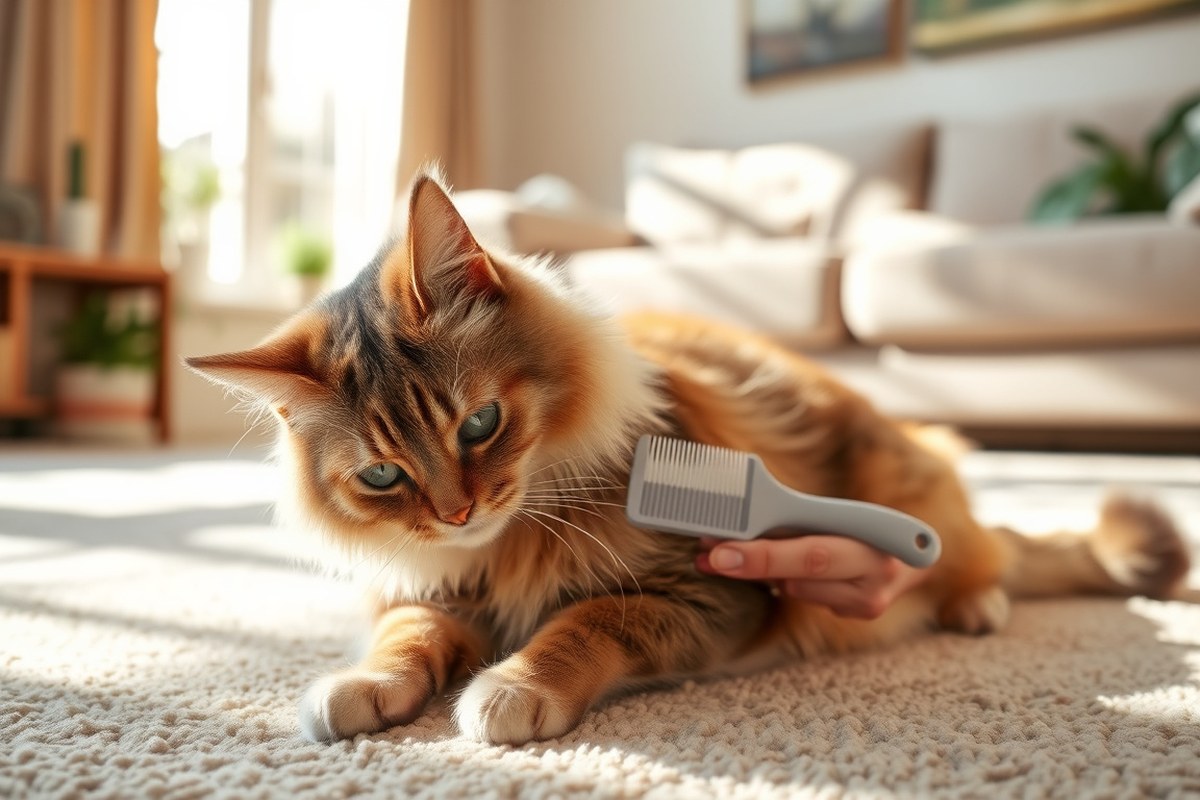
Using a flea comb properly and regularly is essential in natural flea control for cats. Flea combing removes adult fleas and their eggs from your cat’s fur, helping reduce infestation while supporting other treatments. Aim to comb your cat daily until fleas disappear, then maintain a routine to keep them away.
Correct Flea Combing Technique
A flea comb is a fine-toothed tool designed to catch adult fleas and their eggs as you gently stroke through your cat’s fur. Use patience and care to avoid stressing your cat. Focus on common flea hiding spots like around the neck, behind the ears, under the legs, and near the tail base. Follow these exact steps for effective flea combing:
- Choose a flea comb with very fine metal teeth spaced close together to trap fleas.
- Have a bowl of warm soapy water ready to dip the comb into after each stroke, killing the fleas on the comb.
- Hold your cat comfortably on your lap or a secure surface.
- Part your cat’s fur to comb through the coat in small sections, gently running the comb from the skin outwards.
- After each comb stroke, dunk the comb into soapy water and clean off any fleas and debris caught in the teeth.
- Work slowly around key areas prone to fleas: neck, ears, armpits, belly, sides, and tail base.
- Be gentle to avoid pinching your cat’s skin or pulling on mats, calming your cat if it becomes restless.
Using a comb with metal teeth prevents fleas from escaping, but avoid plastic combs since their teeth are too widely spaced to catch fleas effectively.
Best Frequency for Flea Combing
Daily flea combing is highly recommended during an active flea infestation because it continuously removes fleas and prevents eggs from hatching into new adults. After several days without finding fleas, reduce frequency to 2, 3 times a week for ongoing control. For kittens under 8 weeks, flea combing is important and should be done daily because they cannot use most treatments and are vulnerable to anemia from flea bites.
Consistency is key. Repeated combing combined with natural treatments ensures fleas are removed before they multiply again. Flea combing alone rarely eliminates all life stages, but it significantly reduces the flea population.
What to Do with Fleas and Debris
Proper disposal of fleas and flea eggs caught in the comb stops them from reinfesting your cat. Always kill fleas immediately after combing by dipping the comb into warm soapy water, this suffocates the fleas and stops egg development.
After combing, wipe your cat’s fur with a damp cloth to remove any remaining flea dirt or eggs. Wash your cat’s bedding and vacuum your home regularly to prevent flea eggs and larvae from developing.
Observe the flea debris you collect to monitor progress. Flea dirt looks like small dark specks and will become reddish when moistened, indicating flea presence. This feedback helps know when to continue or adjust your flea control efforts.
Never flick or shake fleas off your cat near the floor or furniture, as flea eggs will drop and create new infestations.
3. Understanding Flea Life Cycle to Break Infestations
The flea life cycle includes four stages: egg, larva, pupa, and adult. Understanding these stages helps explain why targeting only adult fleas with natural remedies rarely solves a full infestation. Eggs laid on your cat or in your home often hatch days later into larvae, which then grow into pupae and eventually emerge as adults. This cycle spans about 2 to 4 weeks under typical conditions, but can extend longer depending on temperature and humidity.
Natural treatments like flea combs, citrus oil, or herbal sprays usually only remove or repel adult fleas on your cat’s coat. While effective at reducing immediate discomfort and flea numbers, they do not affect eggs, larvae hidden in carpets or bedding, or pupae that can remain dormant before hatching. This means new fleas continue to develop and re-infest your cat unless the entire life cycle is addressed. For example, if you remove adult fleas but leave eggs and pupae untreated, a fresh batch of fleas will appear in about 2 to 3 weeks, forcing you to restart the process.
Consistent treatment over 4 to 6 weeks is necessary to control the full cycle. This period allows natural methods to catch newly hatched adults each time they emerge, preventing them from reproducing. Because these methods don’t kill eggs or pupae, patience and persistence are essential. Combining approaches, such as using a flea comb daily while applying herbal deterrents and cleaning your cat’s environment, increases your chances of control.
Resistance can develop if the same natural remedy is used repeatedly. Rotating different natural options, like alternating between cedar oil sprays and diatomaceous earth applications, helps prevent fleas from adapting. Still, natural methods alone often manage only light flea issues or serve as a safe option for very young kittens under 8 weeks, who can’t use most medications.
For moderate to heavy infestations, sustained natural efforts may not fully break the flea life cycle. In such cases, a vet-approved product that targets all stages is usually required to stop reinfestation. For example, many veterinary flea medications contain insect growth regulators (IGRs), which specifically interrupt egg and larva development, a shortcoming of natural remedies.
Daily checks with a flea comb and observing your cat’s behavior can help you detect whether natural methods are working or if flea numbers remain stable or increase. If you notice fleas persisting after 3 to 4 weeks of consistent natural control, consult your veterinarian about safe treatment options that can disrupt the life cycle more effectively.
4. Safe Bathing Techniques to Remove Fleas on Cats
Bathing your cat with natural, gentle products is an effective way to remove fleas, especially when combined with other treatments. Using lukewarm water and mild dish soap or a cat-safe shampoo helps drown fleas without harsh chemicals. Handling a water-averse cat requires patience, calmness, and some preparation to reduce stress for both of you.
Choosing a Mild Natural Shampoo
Using a mild, fragrance-free dish soap diluted in warm water is one of the safest and most accessible options for flea removal. Dish soap breaks the surface tension that allows fleas to stay on your cat’s fur, causing them to sink and drown quickly. Look for a brand like Dawn, which is known for killing fleas safely and effectively.
If you prefer a product specifically made for cats, opt for a natural, hypoallergenic flea shampoo designed to be gentle on sensitive skin. Avoid shampoos with strong fragrances or harsh chemicals that can irritate your cat’s skin or cause allergic reactions.
Preparing Your Cat for Bathing
Most cats dislike water, so preparation is key to minimize their stress and resistance. Choose a warm, quiet bathroom or laundry area where you can control the environment and minimize distractions. Place a non-slip mat or towel in the sink or tub to help your cat feel secure.
Before bringing your cat to the bathing area, trim their nails to reduce scratching and gently brush away tangles or mats. Prepare all your supplies, shampoo, a cup or spray bottle for rinsing, and towels, within easy reach. Use warm water around 90°F to 100°F (32°C to 38°C) to keep your cat comfortable during the bath.
Speak calmly and soothingly to your cat, and consider wrapping them in a towel if they are especially nervous. Avoid spraying large amounts of water suddenly; instead, use a damp cloth or lightly mist their fur to reduce shock.
Step-by-Step Bathing Process
The following steps help you bathe your cat safely while effectively removing fleas. Use diluted dish soap with about 1, 2 drops per 2 cups (500 mL) of warm water for the wash if using dish soap instead of shampoo.
- Place your cat gently into the sink or tub on the towel or non-slip surface.
- Slowly wet the cat’s fur using a cup or spray bottle, avoiding the head and ears.
- Apply the diluted dish soap or natural shampoo, lathering gently but thoroughly, focusing on the neck, back, and tail areas where fleas gather.
- Let the shampoo sit for 3 to 5 minutes to ensure fleas are suffocated and drowned.
- Rinse each section carefully with warm water, removing all soap to prevent skin irritation.
- Use a damp cloth to clean the face and avoid water in the eyes or ears.
- Wrap your cat in a warm towel and dry them thoroughly with gentle strokes to prevent chills.
- Offer treats and comfort immediately after the bath to reduce anxiety and build positive associations.
Bathing frequency depends on your cat’s sensitivity and flea severity. Usually, one bath every 7 to 10 days is enough when combined with regular flea combing. Excessive bathing can strip natural oils, causing dry, irritated skin, so avoid more frequent baths unless your vet advises it for severe infestations.
5. Cleaning Your Home to Eliminate Flea Eggs and Larvae
Removing flea eggs and larvae from your home is essential to fully control a flea infestation, since around 95% of the problem lives off your cat in the environment. Focus on cleaning spaces where your cat rests, sleeps, and roams most often. These include bedding, carpets, rugs, upholstered furniture, and any soft fabrics your cat touches. Daily vacuuming in these areas helps pick up flea eggs, larvae, and even some adult fleas waiting for a host.
Washing your cat’s bedding in hot water at least every one to two weeks kills eggs and larvae. Adding a cup of lemon juice to the laundry can further reduce remaining flea bugs naturally. Steam cleaning carpets and furniture can boost flea removal by killing adults and larvae, but known flea eggs may survive this, so frequent cleaning is necessary.
- Vacuum floors, furniture, and cat resting spots daily during an active infestation.
- Wash pet bedding in hot water every 1, 2 weeks, adding lemon juice to laundry if desired.
- Steam clean carpets or upholstery occasionally for deeper flea control.
- Dispose of vacuum bags or empty canisters outside promptly to prevent fleas from escaping.
- Focus cleaning on spots your cat frequents most to target breeding grounds.
- Continue rigorous cleaning for several weeks, as flea life stages take time to clear.
Regular cleaning must happen alongside treating your cat, or fleas will quickly return to your home environment.
Consistency is key. Many mild infestations begin to improve within one to two weeks of daily vacuuming and frequent hot washing. Severe cases might take months of cleaning, grooming, and natural treatment to fully resolve. When vacuuming, move furniture to reach hidden areas and vacuum edges and corners where larvae tend to hide. Thorough cleaning lowers flea populations and breaks their life cycle effectively without chemicals.
Price-wise, a good vacuum cleaner with a HEPA filter can run between $80 and $200 but is an investment that benefits pet health beyond flea removal. Using basic household supplies like lemon juice keeps costs low. Special attention helps prevent reinfestation and minimizes the need for harsh chemicals or professional pest control, making natural flea treatment safer for sensitive or young cats.
6. Applying Diatomaceous Earth and Yard Treatments Safely
Diatomaceous earth (DE) is safe to use on cats and in the home if you choose a food-grade type and apply it carefully. This natural powder works by dehydrating fleas, damaging their exoskeletons. To apply it effectively indoors, sprinkle a thin layer on your cat’s bedding, carpets, and furniture where fleas are likely to hide. Wait several hours before vacuuming to allow it to work, then vacuum thoroughly and repeat every 7 to 10 days for about two weeks to break the flea life cycle. Avoid applying excessive amounts to prevent dust inhalation, which can irritate your cat’s respiratory system.
When using diatomaceous earth outside, focus on shaded areas and spots where your cat spends time. The best time to apply it is in the morning when dew has dried but before windy or rainy weather, as moisture reduces its effectiveness. Reapply weekly and after rain or lawn watering to maintain results. Spread just enough to cover the ground lightly without creating visible dust clouds. Wear a mask when handling DE to protect yourself from breathing in the fine powder. While DE helps reduce flea populations in your yard, it should be part of a broader flea control approach.
Natural yard treatments that repel fleas include beneficial nematodes and cedar chips. Beneficial nematodes are microscopic worms that infect and kill flea larvae in soil. Spread them in early spring on your lawn and garden, focusing on damp, shady areas, to reduce flea breeding. Nematodes require moist conditions to survive, so apply when it’s not too hot or dry, and follow the package instructions for best results.
Cedar chips placed around the perimeter of your yard and near your cat’s bedding can create a flea-repellent barrier. Fleas dislike the scent and texture of cedar, which discourages them from infesting those areas. Spread a 1- to 2-inch layer of cedar chips in shaded spots and places your cat frequents. Replace or replenish the chips every few months as the scent fades over time. Both cedar and nematodes are safe options that complement diatomaceous earth without exposing your cat to harsh chemicals.
Use caution when trying other natural remedies, such as essential oils, as many are toxic to cats. Always research product safety and consult your veterinarian with concerns. Combining safe treatments like food-grade diatomaceous earth, beneficial nematodes, cedar chips, regular vacuuming, and washing your cat’s bedding creates a safer environment while managing fleas effectively. Avoid overuse of any powdery substances to protect both your cat and household air quality.
7. How Long to Treat and When to Consult a Vet
Natural flea treatments for cats usually require consistent application over 4 to 8 weeks to achieve full control. Flea infestations persist because fleas go through four stages, egg, larva, pupa, and adult, and most natural remedies primarily kill adult fleas. Eggs and larvae hidden in your cat’s environment can hatch later, so you need to repeat treatments regularly until you see no new fleas or flea dirt on your cat for at least two consecutive weeks.
During the treatment period, monitor your cat’s skin and behavior closely. Good results show a visible reduction in scratching and flea activity within the first two weeks, with gradual clearing following. When fleas continue to multiply or your cat’s itching worsens after two weeks of treatment, it may mean the natural approach isn’t sufficient. Allergic or sensitive cats, kittens under eight weeks, or cats with underlying health issues should see a vet sooner because they can develop serious complications quickly.
Stop home natural treatments and consult your veterinarian immediately if your cat shows signs of negative reactions. These include redness, swelling, excessive scratching or grooming around the treatment area, hair loss, breathing difficulties, vomiting, diarrhea, lethargy, or swelling of the face or eyes. These symptoms might indicate an allergic response or toxicity. Prompt veterinary care ensures safe, effective treatment and prevents worsening of skin problems or systemic illness.
When flea control isn’t progressing or your cat is very uncomfortable, your veterinarian can recommend safe, effective medications, including prescription flea preventives that work faster than natural options. Monthly veterinarian-prescribed flea treatments are often necessary for long-term control, especially in regions with warm or humid climates where fleas stay active year-round. Veterinary guidance is essential if your cat is very young, old, has other health concerns, or if the fleas persist despite all home care efforts.
Maintain treatment consistency by applying safe natural remedies as directed, usually weekly or biweekly, and combining them with frequent flea combing and environmental cleaning. Keep detailed notes of your cat’s response each week to help you and your vet decide if continuing natural methods is working or if professional intervention is needed. This approach balances thorough flea control with your cat’s safety and comfort.
8. Preventing Future Flea Infestations Naturally
Preventing flea infestations on cats naturally involves a combination of seasonal care, treating all pets, proper diet, and avoiding common treatment errors. You need to adjust prevention methods by season and ensure every pet in your home is involved. Nutrition also plays a role, and skipping usual mistakes improves your chances of staying flea-free.
Seasonal Flea Prevention Strategies
Flea pressure changes with the seasons. In spring and summer, fleas become more active as temperatures rise above 50°F, so increase your prevention efforts during these months. Fall and winter may require less intense treatment but do not ignore protection if you live in a mild climate.
Using natural repellents like lemon spray made from diluted lemon juice can repel fleas outdoors and reduce infestations. Consider collars with long-lasting protection, such as the Elanco Seresto Flea & Tick Treatment & Prevention Collar for Cats, which can provide up to 8 months of coverage. Always consult your vet before applying new products to ensure they suit your cat’s health.
- Use natural citronella or lemon-based sprays outside during warm months
- Apply flea combing sessions weekly in summer and biweekly in cooler months
- Keep your yard trimmed and free of leaf litter to reduce flea habitat
- Consider collar options that provide extended natural protection year-round
- Regularly clean bedding areas to avoid egg buildup
- Discuss seasonal flea risk with your vet for targeted treatments
Adjust the intensity of natural flea treatments to the season and flea activity level to avoid unnecessary stress on your cat.
Treating All Pets in the Household
Fleas do not discriminate; every pet in the home can carry and spread fleas, even animals that seem unaffected. Treating only one cat while ignoring other cats, dogs, or small pets can lead to ongoing infestations. Households with multiple animals must apply flea prevention measures to all, ensuring no pet serves as a flea reservoir.
Natural flea treatments should be safe for all pets, but tailor each application to species and size. Cats require cat-specific products. Coordinating treatments and combing schedules across all pets shortens the infestation cycle.
- Use flea combs regularly on all pets
- Apply cat-safe natural repellents or collars to every animal
- Wash pet bedding once a week in hot water
- Keep pets’ rest areas clean and flea-free
- Monitor all pets closely for signs of flea irritation
Ignoring any pet in the home during flea treatment can cause persistent infestations no matter how thoroughly you treat your cat.
Diet and Flea Resistance
Providing a balanced diet with nutrients like omega-3 fatty acids can strengthen your cat’s immune system and reduce their susceptibility to fleas. A healthy cat is better equipped to withstand flea bites and irritation. Some cat foods enriched with essential fatty acids promote skin and coat health, which creates less hospitable skin for fleas.
No natural flea remedy replaces a nutritious diet. Consult your veterinarian to select a high-quality cat food and consider supplements if needed. Also, keep your cat well-hydrated and avoid excessive treats that may upset skin health.
Avoiding Common Mistakes
Natural flea control requires consistent effort and correct application. Common errors include stopping treatment too soon, neglecting home cleaning, using harsh substances unsafe for cats, and ignoring other pets. Overreliance on a single method, like flea combing alone, often fails to break the flea cycle. To avoid setbacks, follow a prevention checklist:
- Keep treating spots on your cat and home for at least 4 weeks after fleas disappear
- Avoid citrus products directly on cats with sensitive skin or open wounds
- Do not substitute flea treatments with unproven home remedies alone
- Regularly vacuum floors and wash fabrics to remove eggs and larvae
- Consult a vet if flea signs persist despite natural treatments
- Avoid applying dog flea products to cats as they may be toxic
Step-by-Step Action Plan for Natural Flea Control on Cats
Follow these steps to safely remove fleas from your cat, treat your home, and prevent future infestations without harsh chemicals.
- Day 1: Start with Daily Flea Combing, Use a fine-toothed flea comb every day to remove adult fleas and eggs. You’ll know it’s working when you see fewer fleas on the comb and your cat starts scratching less.
- Day 2: Bathe Your Cat Safely, Give your cat a gentle bath with lukewarm water and a mild natural soap or flea shampoo made for cats. Effectiveness shows as washed-off fleas and less itching afterward.
- Day 3, 7: Apply Diatomaceous Earth Carefully, Lightly sprinkle food-grade diatomaceous earth on your cat’s bedding and areas your cat frequents. Make sure it doesn’t get into the cat’s eyes or nose. Flea activity should drop as eggs and larvae dry out and die.
- Week 1: Deep Clean Your Home, Vacuum carpets, furniture, and floors thoroughly, then wash all pet bedding in hot water. Repeat vacuuming every 2, 3 days to remove flea eggs and larvae. Success shows as fewer fleas reappearing on your cat.
- Week 2: Treat Your Yard Naturally, Apply natural yard treatments like nematodes or diatomaceous earth around outdoor resting spots. Reduced flea encounters on your cat outside indicate this is working.
- Weeks 3, 4: Continue Regular Flea Comb Sessions, Keep combing your cat 2, 3 times a week to catch any new fleas. A decrease in fleas on the comb confirms progress.
- After 4 Weeks: Assess and Consult Your Vet If Needed, If fleas persist after a month of natural treatment, contact your veterinarian to explore safe alternatives or check for allergies or infections.
- Ongoing: Prevent Future Infestations, Maintain regular combing, keep your cat’s environment clean, and use natural repellents occasionally to avoid rebuilding flea populations.
Frequently Asked Questions
What Natural Ingredients Can Effectively Kill Fleas on Cats?
Apple cider vinegar, cedar chips, and oregano can help repel and kill fleas naturally, but vinegar, baking soda, and salt are less effective. Choose remedies that are safe and non-toxic to your cat’s skin.
Can Changing My Cat’s Diet Reduce Flea Problems?
A high-quality diet won’t prevent fleas but can reduce your cat’s severe reactions to flea bites. Improved nutrition strengthens their immune system, making flea bites less irritating.
Are Essential Oils Safe for Naturally Treating Fleas on Cats?
Most essential oils are toxic to cats, so avoid using them directly. Some oils like lavender or chamomile may help repel fleas but should be used with caution and under vet guidance.
How Can I Prevent Flea Infestations Without Chemicals?
Use natural repellents like cedar chips and apple cider vinegar, regularly comb your cat, and keep the home clean. Consistency breaks the flea life cycle and lowers infestation risk.
Can Natural Flea Treatments Be Used on Kittens?
For kittens over 8 weeks, lukewarm baths with cat-safe shampoo and gentle combing are safe natural methods. Avoid harsh remedies and consult a vet before trying new treatments on young kittens.
How Long Does It Take for Natural Flea Treatments to Work?
It can take several weeks of consistent application to fully rid fleas naturally because these methods focus on breaking the flea life cycle gradually rather than killing fleas instantly.
Wrapping Up
Using natural methods to get rid of fleas on your cat offers a safe way to protect your pet without harsh chemicals. Start today by regularly combing your cat with a flea comb to remove any live fleas and eggs. This simple action helps reduce the flea population while you work on other treatments around your home.