How to Market Pest Control Services: 10 Proven Strategies for More Customers
How to market pest control services starts with using the right mix of channels like local SEO, pay-per-click ads, and content marketing to reach potential customers where they search and spend time. Optimizing your Google My Business profile improves local visibility, while targeted ads boost ROI by focusing on pest problems common in your area. Managing reviews and creating a conversion-friendly website also help convert interest into appointments.
This information is aimed at small business owners and marketing managers who want to increase leads and grow their pest control company. You’ll get clear strategies for both online and offline marketing, advice on tracking results, pointers on avoiding common mistakes, and tips for seasonal and referral marketing that bring steady business improvements.
Key Takeaways
- Prioritize Google My Business optimization with accurate info, photos, and regular posts to boost local pest control search visibility.
- Target pay-per-click ads on high-conversion keywords like “pest control near me” with geo-targeting for better ROI.
- Produce educational blog content and share pest prevention tips on social media to build trust and authority.
- Encourage satisfied customers to leave reviews and display testimonials prominently to improve online reputation.
- Include clear calls to action and easy contact options on your website to increase pest control service conversions.
- Combine direct mail, local events, and community sponsorships to complement digital efforts and reach non-online audiences.
1. What Are the Most Effective Marketing Channels for Pest Control Services?
Digital marketing channels offer targeted ways to reach customers actively seeking pest control services. Paid search ads on platforms like Google can capture local intent effectively by appearing when someone searches “exterminator near me.” Organic local SEO helps maintain steady inbound leads with lower ongoing cost but takes longer to build. Social media, especially Facebook, fosters community engagement and brand awareness through posts, promotions, and customer interaction. Email marketing supports follow-up and referral requests efficiently by staying in regular contact with current customers at minimal cost.
Offline methods remain important for pest control businesses with local footprints. Direct mail can produce measurable response rates if well-targeted by zip code and designed to prompt calls or web visits. Door hangers provide a clear local presence at a low cost but require manual distribution. Local radio and flyers in community centers boost brand recognition, particularly in neighborhoods with less online engagement. Trade partnerships with real estate agents and property managers also generate consistent leads through trusted referrals.
Blending channels works best to maximize reach. Use paid search to capture immediate demand, support it with local SEO and social media for ongoing presence, and reinforce with targeted offline efforts in core neighborhoods. This mix combats competition and captures customers who prefer different ways of discovering services. Testing budget splits and measuring calls and inquiries from each channel helps adjust for your market.
| Marketing Channel | Cost Range | Difficulty Level | Expected ROI | Typical Time to See Results |
|---|---|---|---|---|
| Google Paid Search Ads | $500, $2,000/month | Medium | High when optimized | Immediate to 2 weeks |
| Local SEO (Google My Business, Website) | $300, $1,000/month or DIY cost | Medium to High | Moderate to High long-term | 3 to 6 months |
| Facebook and Social Media | $200, $1,000/month | Medium | Moderate | 1 to 3 months |
| Email Marketing | $20, $200/month (software) | Low | Moderate | Immediate to 1 month |
| Direct Mail (Postcards, Flyers) | $0.50, $2 per piece | Low | Variable, usually moderate | 2 to 4 weeks |
| Door Hangers | $0.30, $1 per piece | Low | Low to Moderate | 2 to 4 weeks |
| Local Radio Ads | $1,000, $3,000/month | High | Moderate | Immediate to 1 month |
Choosing channels depends on your budget, staffing, and customer habits. Pay-per-click suits businesses ready to invest in fast lead capture and can manage ongoing optimization. Local SEO needs steady effort but lowers cost-per-lead over time. Social media demands content and engagement but builds community trust. Offline can target areas competitors miss or reinforce your presence physically. Balancing these and tracking leads by source secures smarter spending.
2. How to Optimize Local SEO and Google My Business for Pest Control
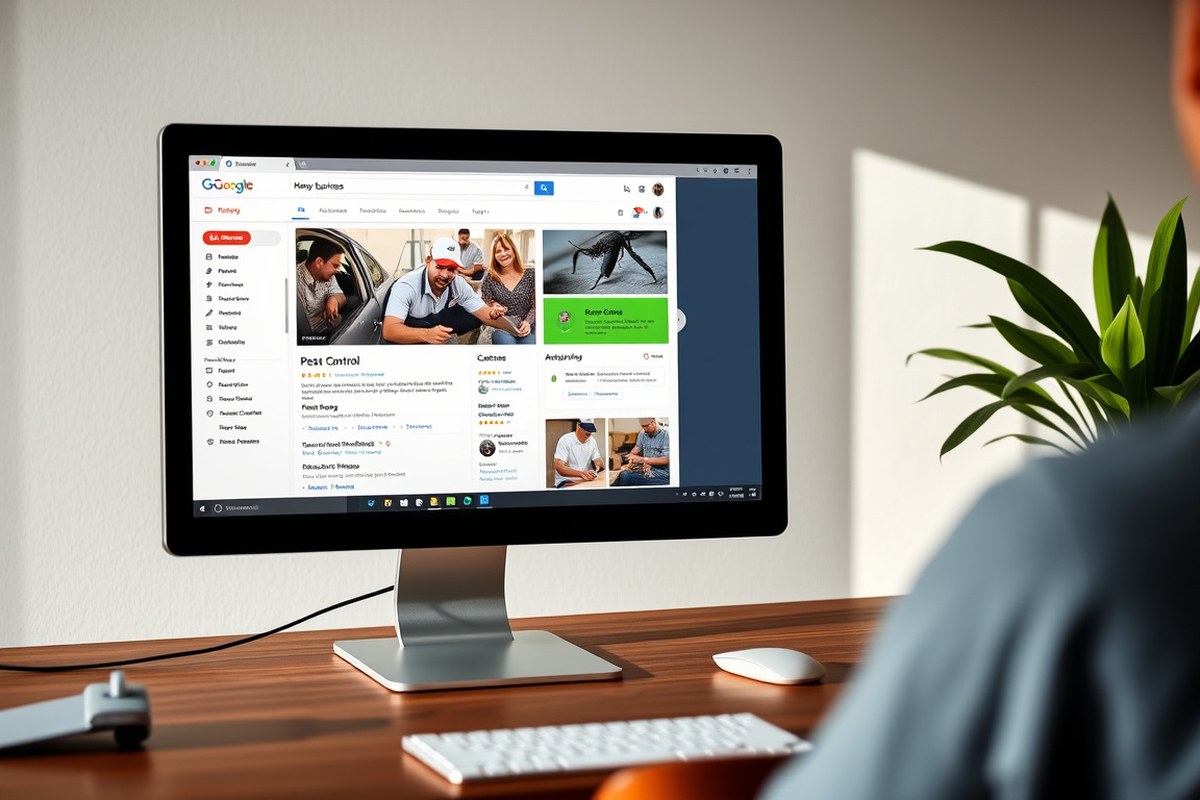
Improving your local search presence starts with properly setting up and optimizing your Google My Business (GMB) profile and targeting local keywords relevant to pest control services. These steps help attract customers nearby who actively seek pest control solutions.
Claiming and Verifying Your Business
Claiming your Google My Business profile is essential to control how your pest control company appears in local search results and on Google Maps. Verification confirms ownership and unlocks tools to update your listing and communicate with customers. Follow these steps to claim and optimize your GMB listing effectively:
- Search for your business on Google to check if a GMB profile already exists. If it does, click “Claim this business.”
- Sign in with a Google account that you want to associate with the business.
- Enter and confirm your business details including the exact name, address, phone number (use a local number), and business category. Choose “Pest Control Service” or the closest match.
- Request verification, typically by postcard sent to your business address, which takes 5, 14 days. Some businesses qualify for phone or email verification.
- Complete your profile by adding hours, photos of your team and trucks, service descriptions, and accepted payment methods.
- Set up messaging to respond quickly to customer inquiries directly from the GMB dashboard or mobile app.
- Monitor your profile and update information if your hours or services change.
Filling out every field accurately helps your listing rank higher; missing or inconsistent info can lower your visibility in local search results.
Targeting Local Pest Control Keywords
Choosing the right local keywords connects your services with people searching in your service area. The most valuable keywords combine your service type with location terms, such as town names or neighborhoods. Selecting keywords should follow this rule: prioritize terms with real search volume and clear intent, like “ant removal in [city]” or “pest control near me.” Avoid overly broad phrases like “pest control” without a location modifier, which are too competitive and less likely to attract local customers.
Use free tools like Google Keyword Planner or Moz Local to identify keywords with moderate competition and reasonable monthly searches. Also include long-tail keywords to capture specific needs such as “mice infestation treatment in [zip code].” Incorporate these keywords naturally into your website, GMB description, posts, and service pages.
Encouraging and Managing Customer Reviews
Customer reviews influence local rankings and buyer decisions. More positive, recent reviews improve your reputation and can boost your GMB ranking. Aim for a steady flow rather than sudden spikes in reviews, which Google might flag.
Ask for reviews soon after completing a service when the experience is fresh. Provide simple instructions in follow-up emails or text messages on how to leave a Google review, including a direct link. You might say: “If you’re happy with our service, please take 2 minutes to leave us a review on Google.” Avoid offering incentives, as this violates Google policies and risks penalties.
Respond promptly and professionally to all reviews. Thank customers for positive feedback and address negative reviews by offering to resolve issues offline. Consistent management of reviews signals to Google that you value customer experience and can improve your search rankings over time.
3. What Pay-Per-Click Strategies Deliver the Best ROI for Pest Control?
PPC campaigns perform best for pest control when focused on local intent with platforms like Google Ads and Microsoft Advertising. Google Ads offers precise geo-targeting and a vast audience, allowing you to bid mainly on location-specific keywords such as “pest control near me,” “exterminator in [city],” and “termite treatment [area].” Bing Ads can supplement search volume at a lower average cost per click. Facebook Ads works well for brand awareness and lead forms targeting local homeowners, but search campaigns for direct conversions show stronger ROI.
Start by grouping keywords into tightly themed ad groups, like “rodent control” or “bed bug treatment,” to increase relevance. Bid costs vary widely but expect $3 to $15 per click depending on location and competition. For example, urban areas with many pest control companies can drive costs above $10 per click on competitive terms. To avoid wasted spend, use negative keywords to exclude irrelevant queries such as “DIY pest control” or “pest control jobs.” Setting a daily budget between $30 to $100 per location is typical to gather enough data and conversions without overspending early.
Effective ad copy focuses on solutions and trust. Use clear calls to action like “Schedule a Free Inspection” or “Same-Day Service Available.” Highlight certifications, guarantees, or free estimates where possible to stand out. Include location mention and special offers, for example: “Trusted Local Exterminator, 10% Off First Treatment.” Keep headlines direct and body text under 90 characters to fit most ad formats. Testing multiple ad versions helps identify what messaging converts best.
Track conversions closely using conversion tracking pixels or codes on thank-you pages or lead forms. Connect these to Google Ads and Microsoft Advertising platforms to see which keywords and ads generate phone calls or form submissions. Without conversion tracking, you’ll waste budget bidding blindly. Use call tracking if phone inquiries are common. Monitor click-through, cost per lead, and conversion rate weekly, adjusting bids up on high performers and pausing those underperforming.
For a sample campaign, allocate $60 daily for Google Ads focused on three geo-targeted ad groups: “general pest control,” “termite services,” and “rodent removal.” Assume a $7 average CPC and a 5% conversion rate (calls or form fills). This results in approximately 8 leads daily, costing about $7.50 per lead. Comparing with Facebook Ads for brand awareness, you might spend $60 for 15,000 impressions but get only 1-2 leads, showing search ads’ better cost per acquisition for immediate service needs.
Many pest control businesses make the mistake of running broad keywords like “pest control” without location or service qualifiers, leading to wasted clicks. Not setting negative keywords or neglecting conversion tracking also drains the budget without insights. Adjust bids by device type and time of day, mobile often drives more calls, so consider raising bids by 10-20% on mobile. Restrict ads to service hours to reduce wasted spend outside business times.
4. How to Use Content Marketing and Social Media to Build Authority
Using content marketing and social media helps pest control companies show expertise, educate potential customers, and build trust. Tailored content topics attract homeowners and businesses concerned about specific pests or prevention tips. A regular posting schedule keeps your audience engaged without overwhelming your resources. Social media platforms serve different roles from lead generation to reputation management.
Identifying Relevant Content Topics
Content should focus on pest problems your local audience frequently encounters, seasonal threats, treatment methods, and preventive maintenance. Publishing how-to guides, signs of infestation, and safety tips offers clear value. Case studies showing before-and-after results can build credibility. Include updates on any regulatory changes affecting pest control practices as well.
Addressing common questions customers ask on phone calls or in reviews provides ready-made ideas. You can also create content about the environmental impact of treatments or the benefits of choosing professional services versus DIY. Visual content like short videos showing your technicians at work or pest identification can increase engagement.
Scheduling Posts for Consistency
Posting regularly signals reliability and keeps your company top of mind. For most pest control businesses, posting two to three times per week on Facebook, once or twice per week on Instagram, and one time per week on LinkedIn strikes a reasonable balance between presence and time investment. Twitter and TikTok may work if your target market is younger or you want to highlight quick tips and updates. Here’s a sample weekly schedule tailored to pest control firms:
- Monday: Facebook post, Seasonal pest tips or service reminder
- Wednesday: Instagram, Before/after photos or short video of technician
- Friday: Facebook, Customer testimonial or case study story
- Tuesday (biweekly): LinkedIn, Articles on innovations or regulations
Adapting this schedule depends on your staff’s capacity and audience response. Using tools like Hootsuite or Buffer simplifies scheduling across platforms. Consistency builds trust; random or burst postings confuse followers and may reduce engagement.
Engagement and Community Building Tips
Respond promptly to comments and messages to show you value customer interaction. Social media offers a unique chance to answer pest questions publicly, demonstrating knowledge and customer care. Running seasonal contests, such as pest-free yards, encourages interaction while promoting your service.
Use your profiles to share safety information before using chemicals, which can ease customers’ concerns and boost trust. Cross-posting links to your blog or website content drives traffic and supports SEO efforts. Avoid heavy sales pitches; focus on educating first to build authority. Some effective strategies include:
- Reply to all reviews, thanking positive and addressing negative professionally
- Post polls asking followers about their pest concerns or experiences
- Share community announcements or partnerships to demonstrate local involvement
- Feature employee spotlights to personalize your business
- Use hashtags carefully to join relevant conversations and increase reach
Social media can boost leads by attracting inquiries and demonstrating professional reliability. Maintaining an informative, consistent presence helps turn followers into customers over time. Avoid ignoring messages or only posting promotional content, which can damage your reputation and reduce engagement rates.
5. How to Manage Online Reputation Using Reviews and Testimonials
Collecting, displaying, and responding to customer reviews and testimonials builds trust for your pest control business and can improve your search engine rankings. Asking for reviews promptly after service, featuring them prominently on your website, and handling negative feedback professionally strengthens your reputation and attracts new customers.
Asking Customers for Reviews
Requesting reviews soon after completing pest control services increases the chance customers will share their experience. Personal outreach by phone or a clear, polite email works best because it feels genuine. Keep the request straightforward and provide instructions on where and how to leave a review. Here are steps to ask for reviews effectively:
- Follow up with the customer within 1 to 3 days after service, while the experience is still fresh.
- Use a friendly, professional tone that thanks them for choosing your service.
- Explain briefly how their review helps others make informed decisions.
- Include direct links to your Google Business profile or trusted review sites.
- Offer help if they have questions or need assistance posting the review.
- Keep it short to respect the customer’s time.
Use this email script to request a review by email:
Thank you for trusting us with your pest control needs. We’d appreciate if you could share your experience by leaving a quick review on our Google page: [insert link]. It helps others find reliable service. Please let us know if you have any questions.
This phone script works for a follow-up call:
Hi [Customer Name], this is [Your Name] from [Company]. I wanted to check that your pest control service met your expectations. If you’re satisfied, could you take a moment to leave us a review on Google? I can send you a direct link by email.
Publishing Testimonials for Maximum Impact
Showcasing reviews and testimonials prominently on your website builds credibility and reassures potential customers. Highlight specific details customers mention about your service quality, punctuality, and effective pest removal. Use real names and locations if allowed, as anonymity lowers trust.
Organize testimonials on a dedicated page and sprinkle them on your homepage, service pages, and case studies to reach visitors at different stages of their decision process. Embedding Google reviews also supports your local SEO by associating your business with positive keywords and frequent updates.
Make sure your web platform can handle review widgets or plugins for easy updates without manual copying. Avoid removing less-than-perfect reviews unless they are clearly false or violate guidelines, since a mix of ratings appears more authentic.
Feature testimonials with photos or short video clips when possible, these formats boost trust more than text alone.
Handling Negative Feedback Professionally
Responding promptly and politely to negative reviews shows you care about customer satisfaction and can help repair your reputation. Address specific complaints without getting defensive or argumentative. Offering to resolve issues offline reduces public back-and-forth and limits damage. Use a consistent approach to negative reviews to demonstrate professionalism:
- Acknowledge the customer’s experience and thank them for their feedback.
- Apologize if they had a problem without admitting fault prematurely.
- Explain any steps taken to investigate or resolve the issue.
- Invite them to contact you directly to discuss solutions.
- Keep the tone calm and positive to encourage future trust.
This template works for responding to negative feedback:
Thank you for sharing your concerns. We’re sorry to hear that our service did not meet your expectations. We take issues like this seriously and would like to address it directly. Please contact us at [phone/email], so we can understand more and work toward a solution.
6. Which Offline Marketing Methods Are Most Effective for Pest Control?
Offline marketing methods can still play a significant role for pest control businesses, especially when paired with smart timing around pest seasons. Direct mail, door hangers, and local event participation offer tangible ways to reach your target customers who may not respond to digital ads as often. Direct mail remains cost-effective when campaigns are tightly targeted by neighborhood or zip code, aiming for areas with older homes or known pest issues.
Door hangers provide nearly guaranteed local visibility. Your message lands directly on the homeowner’s door, often in places where digital ads won’t reach. Combining door hanger campaigns with a clear call to action, like a unique discount code valid only in the coming month, can help boost immediate responses. You should schedule door hanger drops a few weeks before anticipated pest spikes, such as ant season in early spring or rodent season in fall.
Local events such as home shows, fairs, or community markets generate face-to-face opportunities to educate homeowners and build trust. These typically work better in urban or suburban areas with steady foot traffic. You’ll need a well-trained staff member or technician ready to answer questions and collect leads, along with brochures or flyers tailored to common local pest issues.
| Offline Tactic | Estimated Cost per Campaign | Expected ROI Range | Best Timing | Key Success Factors |
|---|---|---|---|---|
| Direct Mail (Targeted Postcards) | $0.75, $2.00 per piece | 100, 250% (depends on targeting and offer) | 2, 4 weeks before pest season peaks | Precise targeting, strong offer, clear call to action |
| Door Hangers | $0.20, $0.50 per piece plus distribution | 150, 300% (higher due to local saturation) | 1, 3 weeks before seasonal infestations | Professional design, focused message, local timing |
| Local Events (Booths or Sponsorships) | $300, $1,500 per event | Varies; good for brand awareness and lead capture | Year-round, aligned with community calendar | Staff preparation, clear messaging, follow-up process |
| Print Ads in Local Magazines | $200, $800 per insertion | Low to moderate; best for branding | Monthly or quarterly, supporting seasonality | Targeted publications, compelling visuals and text |
Plan your offline marketing around a seasonal pest calendar to maximize dollar efficiency. For example, target termite treatments with direct mail in spring before their swarming season. Focus door hangers for rodent control in late fall when populations seek indoor shelter. Here is a simplified seasonal calendar aligned with common U.S. Pest patterns:
- Spring (March, May): Termites, ants, wasps
- Summer (June, August): Stinging insects, spiders, mosquitoes peak
- Fall (September, November): Rodents, cockroaches, stored product pests start rising
- Winter (December, February): Focus on rodent prevention and indoor pest inspections
Direct mail campaigns work best with persistent follow-ups and fresh designs every season to avoid becoming background noise. You can limit costs by buying mailing lists targeting high-risk neighborhoods, which lowers wasted spend. A simple direct mail script might say:
Headline: Protect Your Home from Termites This Spring! Body: Termites cause over $5 billion in damage annually. Act now with a free home inspection. Call us at (555) 123-4567 or visit examplepestcontrol.com to schedule. Offer: Book by April 15 and receive 10% off your first treatment.
Combining these offline efforts with your online presence can magnify results. Test small campaigns, track leads carefully, and refine offers based on response. Avoid scattering your efforts by focusing on neighborhoods or customer segments that align with your service specialties and seasonal pests.
7. How to Create a Conversion-Optimized Pest Control Website
Your pest control website should focus on clear service information, easy navigation, and strong calls to action to convert visitors into leads. You need essential pages that explain your services and expertise, persuasive content that addresses customer concerns, and technical SEO to help your site rank in search engines.
Essential Website Pages
Your website must include a home page that introduces your company with a clear value proposition and a simple way to contact you, such as a phone number visible on every page. A dedicated services page or multiple pages for key pest control treatments (like termite, rodent, or bed bug control) should detail what you offer and why clients should choose you. Include an about page to build trust by sharing your certifications, experience, and service guarantees. You also need a contact page with a form and your service area clearly listed, plus a FAQ section that answers common questions to reduce buyer hesitation. Adding a blog or resource page can support ongoing SEO and content marketing efforts by providing helpful information about pest prevention and treatment.
Optimizing Content for Conversions
Write your service descriptions focusing on benefits customers care about, like safety, quick results, and upfront pricing. Start with a headline that names the service clearly, such as “Termite Control That Protects Your Home Year-Round.” Follow with a short paragraph explaining how you identify the problem, treat it, and offer follow-up inspections. Use simple language and avoid jargon. Finish with a call to action like “Schedule your free termite inspection today.” It is best to include a phone number and a contact button on the same page to make converting easy. A sample text could be: “Our rodent control service provides a thorough inspection and guaranteed removal using EPA-approved methods. We seal entry points to prevent return visits. Call us now to protect your home.” Persuasive content also needs trust signals like customer testimonials or badges from industry groups. Make sure every page has a clear call to action above the fold.
Technical SEO Essentials
Ensure your website loads quickly and is mobile-friendly since many users search from phones and slow-loading sites increase bounce rates. Use descriptive title tags and meta descriptions with important terms like “pest control” and your city to help search engines understand your pages. Organize URLs cleanly, for example, yoursite.com/services/bed-bug-control, which signals relevancy. Add structured data markup to your contact details and service information so search engines can display rich snippets, improving click-through rates. Avoid duplicate content by using canonical tags and make sure your sitemap.xml is updated for better indexing. Finally, secure your site with HTTPS to provide a safe browsing experience, which Google favors in rankings.
8. How to Track Pest Control Marketing Performance and Calculate ROI
Tracking marketing performance and calculating ROI for pest control services requires setting up specific tools that capture leads and conversions, focusing on key performance indicators (KPIs) like lead volume and cost per acquisition, and attributing these results accurately to marketing channels. You can link online and offline results by integrating customer relationship management (CRM) software with web analytics and using unique tracking methods for offline contacts.
Setting Up Analytics and CRM Tracking
Begin by implementing tracking tools that measure how potential customers find and contact your pest control service. Google Analytics is fundamental to tracking website traffic, user behavior, and conversion events like form submissions or calls. Complement this with a CRM system to record leads, customer interactions, and closed sales, enabling end-to-end tracking from inquiry to purchase.
Plan to connect your CRM with tools like Google Analytics and call-tracking software (e.g., CallRail) to unify online and offline lead data. Installing tracking pixels and setting up conversion goals within Analytics lets you see which marketing efforts lead to calls or form fills. Call-tracking assigns phone inquiries to specific campaigns by providing unique numbers for each channel or ad.
- Install Google Analytics on your website and link it with Google Ads if you use pay-per-click campaigns.
- Define conversion goals such as form submissions, phone clicks, or booking confirmations within Google Analytics.
- Choose and set up call-tracking software to assign unique phone numbers to online ads, print ads, or flyers.
- Implement a CRM that can capture leads from forms, calls, and store customer data such as service type and status.
- Integrate CRM with Google Analytics and call tracking tools to sync lead and conversion data.
- Train your team to log offline leads into the CRM and update their status regularly to keep data accurate.
Tracking tools require initial time investment and technical setup but multiplying your control over lead sources makes it worthwhile; avoid skipping CRM integration, as it limits the accuracy of ROI calculations.
Identifying Your Most Important Metrics
Track metrics directly linked to revenue generation instead of vanity metrics like total website visits alone. Key performance indicators include:
- Lead volume: Number of contacted prospects from each marketing channel.
- Conversion rate: Percentage of website visitors or inquiries that become paying customers.
- Cost per lead (CPL): Marketing spend divided by leads generated per channel.
- Customer acquisition cost (CAC): Total marketing expenses divided by number of new customers acquired.
- Revenue per customer: Average amount each new customer spends on pest control services.
Tracking these metrics lets you compare channels and campaigns quantitatively. For example, if Facebook ads bring 30 leads at $50 CPL while local flyers bring 10 leads at $75 CPL, you can prioritize the more efficient channel. Track conversion rates from lead to sale to refine this further.
Attributing Leads Across Multiple Channels
Accurate attribution is critical because customers often interact with several marketing channels before booking pest control. Use multi-touch attribution to assign credit proportionally based on interactions.
Offline leads create extra challenges since customers may call directly or use non-trackable methods. Use call-tracking numbers on printed materials and ask new customers how they heard about your service, recording this in the CRM. Regularly reconcile CRM data with marketing platform reports to validate results.
- Assign unique phone numbers to each offline and online campaign to capture call sources.
- Use UTM parameters in digital links to track specific ad or content performance in Google Analytics.
- Set up CRM fields to record lead source, campaign name, and inquiry date.
- Ask new customers for referral source during initial contact and enter this data promptly.
- Analyze lead and conversion data weekly or monthly, comparing across channels and campaigns.
- Calculate ROI by using the formula: ROI = (Revenue from campaign − Cost of campaign) ÷ Cost of campaign.
- Adjust campaigns based on ROI by shifting budget to higher-performing channels or optimizing conversion paths.
For instance, if you spend $2,000 on Google Ads and generate $8,000 in new pest control contracts, your ROI is (8,000 − 2,000) ÷ 2,000 = 3, or 300%. Factor in customer lifetime value for longer-term gains.
9. What Common Pest Control Marketing Mistakes to Avoid
Common marketing mistakes can seriously limit the growth of your pest control business. Avoiding legal non-compliance, poor customer targeting, and weak lead follow-up are key. Address these areas with specific actions and tools to protect your company and improve conversion rates.
Understanding Advertising Regulations
Pest control advertising is subject to state and sometimes federal rules because it involves chemicals and public health claims. Ignoring these rules can lead to fines, legal trouble, and damage your reputation. Ads should not make unprovable claims like “100% guaranteed pest elimination” or suggest services for pests not licensed for treatment in your area. How to ensure compliance:
- Review state pest control advertising guidelines and pesticide labeling regulations regularly.
- Use clear language about services without overstating results or safety.
- Avoid showing images or claims about restricted pesticides unless properly certified.
- Disclose any licensing and certification your company holds openly in ads.
- Keep copies of all marketing materials for legal review.
Non-compliance costs vary by state but can include warnings, fines in the thousands, or license suspension. A simple internal checklist or working with legal counsel familiar with pest control laws saves much more money and trouble.
Targeting the Right Customer Segments
Ads that reach people outside your service area or those who don’t need pest control increase your cost per lead and reduce effectiveness. Different customer types require different messaging and channels. Take these targeting steps:
- Restrict digital ads geographically to only the service zones where you operate.
- Segment customers by pest problem types, such as termite control vs. Rodent removal, for tailored messaging.
- Use demographic data to focus on homeowners or property managers most likely to need ongoing pest control.
- Exclude commercial or industrial prospects if you only serve residential customers.
- Adjust targeting seasonally, for example focusing on ant control ads in spring and early summer.
Careful targeting reduces wasted impressions and improves lead quality, which lowers your cost per acquisition. Noticing many unqualified inquiries suggests that your targeting likely needs refinement.
Effective Lead Follow-Up Techniques
Failing to follow up promptly and with the right approach results in lost sales. Pest control leads often contact several companies before choosing one. Your first response can make the difference. Successful follow-up means contact within hours, clear communication, and objection handling. Use this script to respond by phone or email:
“Hello [Name], thanks for reaching out to [Your Company]. I’d like to understand your pest issue better so we can provide an accurate estimate. Are there specific pests you’re dealing with? What areas have you noticed them? We offer a free inspection and will tailor a treatment plan based on your situation. When would be a good time for our technician to visit?”
To handle common objections like price concerns or scheduling:
Price objection: “I understand budget matters a lot. Our technicians will recommend the most effective and affordable treatment, and we can discuss payment options to fit your needs.” Scheduling objection: “We’ll do our best to accommodate your preferred time and aim for minimal disruption to your day.” Need to think it over: “Feel free to take your time. I’m happy to answer any questions to help you decide.”
Quick, consistent follow-up improves booking rates by up to 30 percent compared to delayed or no follow-up. Track leads with a CRM to automate reminders and avoid drop-offs.
10. How to Use Seasonal and Referral Marketing to Grow Your Pest Control Business
Seasonal promotions targeted around pest activity periods and a well-structured referral program can effectively boost leads and keep your customers loyal. Timing discounts with pest surges maximizes relevance while referral programs turn satisfied clients into your best advertisers.
Timing Promotions by Pest Season
Align your marketing discounts with the lifecycle of common pests in your service area. For example, ants and termites typically become active in late spring and early summer, while rodents tend to invade homes more in late fall and winter. Planning a discount or package deal that starts a month before these periods can catch customers as they begin noticing pest problems.
Create a seasonal pest marketing calendar listing pests by month. For instance, March through June for ants and termites, July through September for mosquitoes, and October through February for rodents. Offer specific promotions like 15% off initial treatments or a combined inspection and treatment package. Avoid discounts during low pest activity months to maintain perceived service value.
Costs for seasonal promotions generally include the discount itself and any marketing efforts like email campaigns or social media ads. Good results mean an increase in new bookings during targeted months and higher retention if seasonal treatments are part of ongoing contracts. Common pitfalls include offering too steep a discount, which can erode profit, or running promotions out of sync with local pest cycles, reducing effectiveness.
Designing a Customer Referral Program
An effective referral program motivates your current customers to recommend your service to friends and family by offering clear, straightforward rewards. A common approach is to provide a $25 credit to the referring customer for each new client who signs a treatment agreement, and a similar or slightly smaller initial discount or credit to the new customer.
Use a simple script to communicate the program: “Refer a neighbor and get $25 off your next service once they sign up for our pest control plan. They’ll receive $15 off their first treatment too.” This straightforward offer clarifies benefits for both sides without confusing terms.
Track referrals with basic CRM tools or dedicated referral software to monitor leads and payouts, ensuring transparency. Referral programs typically cost you the referral credits but pay off in extending customer lifetime value and reducing acquisition costs. Low engagement often results from complicated processes or unclear rewards, so keep sign-up and redemption quick and easy.
Integrating Seasonal and Referral Marketing
Combine seasonal promotions with referral incentives by encouraging customers to share timely offers when their neighbors face the same pest issues. For example, during ant season, promote both a discount on treatments and the referral credit, highlighting the opportunity to save together on a common problem.
Include referral reminders in seasonal emails and on social media posts linked to your seasonal pest calendar. This dual approach boosts the relevance of your messaging and use customer networks efficiently. Use marketing software to align campaign timing, segment your audience by service area, and automate reward notifications following referrals during peak seasons.
This integrated approach demands coordination between sales, marketing, and customer service to avoid confusion in messaging and reward distribution. Regularly review conversion rates seasonally and referral program uptake to adjust offer amounts or timing. Properly executed, integrating these strategies creates a cycle where seasonal pests drive immediate demand and referrals sustain long-term growth.
Your First 30 Days: A Quick-Start Plan
Follow this step-by-step plan to set up and launch an effective marketing strategy for your pest control services. Each phase targets a key area to boost leads, conversions, and client loyalty.
- Before You Start, Set Up Local SEO and Google My Business
Claim and verify your Google My Business listing. Add accurate contact info, service areas, business hours, and photos. This improves your visibility for local searches. Check that your listing appears in local pack results for keywords like “pest control near me” within 3 days. - Day 3, Launch a Conversion-Optimized Website
Build or update your website with clear calls to action, easy contact forms, and service descriptions. Make sure it loads fast and works well on phones. Monitor bounce rates and contact form submissions over the next week to confirm visitors engage with your site. - Week 1, Start Pay-Per-Click (PPC) Campaigns Focused on Local Keywords
Set a small daily budget ($20 to $50) targeting geo-specific search terms like “exterminator [city]” and “termite treatment near me.” Use negative keywords to filter irrelevant traffic. Track click-through and conversion rates weekly to optimize offers and bids. - Week 2, Post and Promote Content on Social Media
Share tips on pest prevention, seasonal pest alerts, and customer testimonials on platforms like Facebook and Nextdoor. Aim for 3 posts per week. Engagement (comments, shares) is a sign your audience finds the content relevant and builds your authority. - Week 3, Collect and Manage Online Reviews
Request reviews from satisfied customers by email or SMS with direct links to your Google or Yelp page. Respond professionally to all reviews. Aim for at least 5 new positive reviews per month to improve reputation and local rankings. - Week 4, Launch an Offline Referral Program
Offer customers $25 referral rewards or discounts when they refer someone who books service within 30 days. Promote this program on invoices and service calls. Track referrals monthly to measure effectiveness and adjust rewards if needed. - After 30 Days, Analyze Marketing Performance and Adjust
Review website analytics, PPC cost per lead, and review growth. Calculate your return by comparing marketing spend to new customer revenue. Drop underperforming ads, increase investment in top channels, and plan seasonal campaigns for the next quarter based on your findings.
Frequently Asked Questions
How Do I Set Competitive Pricing for Pest Control Marketing Campaigns?
Set pricing based on your service area and competition; check local average CPC and adjust bids to maximize leads without overspending. Track cost per acquisition closely to avoid paying more than a customer’s lifetime value.
What Are Good Email Marketing Approaches for Pest Control Businesses?
Use segmented lists to send targeted offers and seasonal tips. Regular newsletters with helpful content build trust and keep your brand top of mind. Personalization and clear calls-to-action improve open and response rates.
How Can Partnerships with Local Businesses Boost Pest Control Marketing?
Partnering with real estate agents or property managers helps target specific customer groups ready to buy. Referral incentives motivate partners to send more leads, increasing your reach without high ad spend.
Is Video Marketing Effective for Promoting Pest Control Services?
Video helps explain treatments and build customer trust by showing professionalism. Short, clear videos demonstrating pest problems and solutions perform well on social media and websites. Keep videos under 2 minutes for engagement.
What Role Does Customer Follow-Up Play in Pest Control Marketing?
Following up with customers after service encourages repeat business and positive reviews. Automated email or call reminders improve retention and lead generation through word of mouth. Consistency builds strong long-term relationships.
How Often Should Pest Control Companies Update Their Marketing Strategies?
Adjust your marketing strategies at least quarterly to respond to seasonality, competitors, and customer feedback. Regular reviews help allocate budget efficiently and refine messaging for better results. Stay flexible to changes in local pest trends.
Wrapping Up
Focusing on a few proven marketing channels tailored to your service area will yield the best results. Start by optimizing your Google My Business listing today with accurate contact details, updated service menus, and encouraging recent customer reviews to boost local visibility. That single step can increase calls from potential clients and improve your ranking in local searches, directly driving more leads to your pest control business.